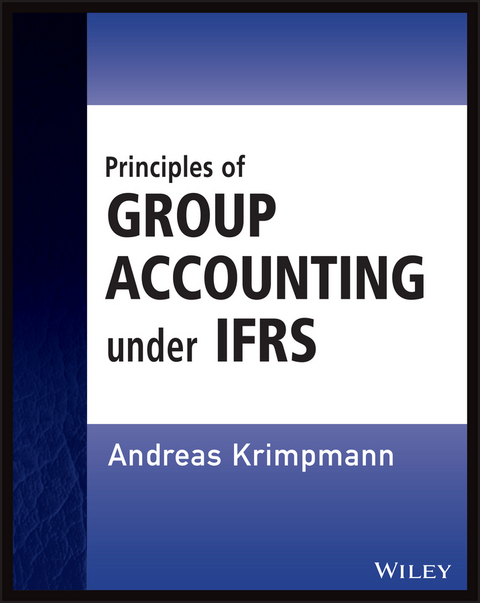
Principles of Group Accounting under IFRS (eBook)
John Wiley & Sons (Verlag)
978-1-118-75138-1 (ISBN)
The new International Financial Reporting Standards (IFRS) 10, 11, and 12 are changing group accounting for many businesses. As business becomes increasingly global, more and more firms will need to transition using the codes and techniques described in Principles of Group Accounting under IFRS. This book is a practical guide and reference to the standards related to consolidated financial statements, joint arrangements, and disclosure of interests. Fully illustrated with a step-by-step case study, Principles of Group Accounting under IFRS is equally valuable as an introductory text and as a reference for addressing specific issues that may arise in the process of consolidating group accounts.
The new international standards will bring about significant changes in group reporting, and it is essential for accountants, auditors, and business leaders to understand their implications. Author Andreas Krimpmann is an internationally recognized authority on the transition from GAAP to IFRS, and this new text comes packaged with GAAP/IFRS comparison resources that will help make the changes clear. Other bonus resources include an Excel-based consolidation tool, checklists, and a companion website with the latest information. Learn about:
- Definitions, requirements, processes, and transition techniques for IFRS 10, 11, and 12 covering group level accounting
- Practical implementation strategies demonstrated through a clear case study of a midsize group
- Key concepts related to consolidated financial statements, joint ventures, management consolidation, and disclosure of interests
- Comparisons between GAAP and IFRS to clarify the required changes for international firms
Whatever stage of the consolidation process you are in, you will appreciate the professional perspective in Principles of Group Accounting under IFRS.
A professional perspective to implementing IFRS 10, 11, and 12 The new International Financial Reporting Standards (IFRS) 10, 11, and 12 are changing group accounting for many businesses. As business becomes increasingly global, more and more firms will need to transition using the codes and techniques described in Principles of Group Accounting under IFRS. This book is a practical guide and reference to the standards related to consolidated financial statements, joint arrangements, and disclosure of interests. Fully illustrated with a step-by-step case study, Principles of Group Accounting under IFRS is equally valuable as an introductory text and as a reference for addressing specific issues that may arise in the process of consolidating group accounts. The new international standards will bring about significant changes in group reporting, and it is essential for accountants, auditors, and business leaders to understand their implications. Author Andreas Krimpmann is an internationally recognized authority on the transition from GAAP to IFRS, and this new text comes packaged with GAAP/IFRS comparison resources that will help make the changes clear. Other bonus resources include an Excel-based consolidation tool, checklists, and a companion website with the latest information. Learn about: Definitions, requirements, processes, and transition techniques for IFRS 10, 11, and 12 covering group level accounting Practical implementation strategies demonstrated through a clear case study of a midsize group Key concepts related to consolidated financial statements, joint ventures, management consolidation, and disclosure of interests Comparisons between GAAP and IFRS to clarify the required changes for international firms Whatever stage of the consolidation process you are in, you will appreciate the professional perspective in Principles of Group Accounting under IFRS.
Andreas Krimpmann, Berlin, Germany, is a Certified Public Accountant and owner of Krimpmann MBA CPA, providing consulting and services in financial and management accounting. He is Head of the IFRS and Controlling working group of the Internationaler Controllerverein and Head of the IFRS-Practice Committee of the German CPA Society. Andreas is also an Associate Professor at Berlin universities (Beuth University of Applied Sciences and HTW University of Applied Sciences) for accounting, management accounting and taxes and teaches IFRS and group accounting at various training academies and educational institutions (e.g. Haufe Academy).
List of figures xiv
List of tables xvii
Preface xix
Introduction to the book xx
A The case study 1
1. About the group 1
2. Allocation of examples 1
B Legal requirements for consolidated financial statements4
1. IFRS standards 5
2. Exemptions 18
3. Local accounting standards 19
4. Taxation 20
5. Definitions 21
C Definition of groups 22
1. The control concept 23
2. Joint control 28
3. Loss of control 31
4. Group compositions 33
5. Special cases 34
D Preparation of consolidated financial statements and annualreports 37
1. Lifecycle of subsidiaries 38
2. Structures 39
3. The preparation process 48
4. Organization 54
E Initial consolidation 55
1. Basics 56
2. Mergers and acquisitions 62
3. Purchase price allocation 66
4. Other aspects of purchase price allocations 94
5. Consolidation techniques 96
6. Special cases 107
F Subsequent consolidation 121
1. Basics 122
2. Subsidiary preparation 125
3. Equity consolidation 131
4. Debt consolidation 136
5. Consolidation of income and expenses 144
6. Unrealized profits 156
7. Non-controlling interests 170
8. Group-level transactions 173
9. Special cases 186
G Associated companies 213
1. Basics 214
2. Consolidation techniques 216
3. Treatment of losses 236
4. Impairments 237
5. Special cases 238
H Joint arrangements 242
1. Basics 243
2. Accounting and consolidation 246
3. Disposals / Deconsolidation 249
I Changes in control 253
1. Basics 254
2. The parent's view 254
3. Increase in investments 255
4. Decrease in investments 266
5. Acquisitions and disposals without changes in control 275
6. Special cases 285
J Disposals and deconsolidation 288
1. Basics 289
2. Control 290
3. Deconsolidation techniques 291
4. Discontinued Operations 306
K Special areas 320
1. Currency translation of foreign operations 321
2. Deferred taxes in groups 334
3. Cash flow statements 344
4. Partnerships 350
5. Restructuring of groups 352
L Management consolidation 361
1. Basics 362
2. Business units 363
3. Projects and cost units 368
4. Dependency between management consolidations and consolidatedfinancial statements 370
M Consolidated financial statements 371
1. Basics 372
2. Statements 372
3. Notes & group disclosures 373
4. Management report 377
Appendix I: Fair value measurement ccclxxix
1. History ccclxxix
2. Definition ccclxxx
3. Measurement ccclxxxi
4. Measurement techniques for selected assets and liabilitiesccclxxxiii
Appendix II: IFRS - US-GAAP comparison ccclxxxv
Appendix III: IFRS ccclxxxviii
1. List of IFRS ccclxxxviii
2. IFRIC and SIC interpretations ccclxxxix
Reference list cccxci
Glossary cccxcii
Index cccxcvi
LIST OF FIGURES
- Fig A.1 Business unit structure Flexing Cables
- Fig A.2 Group legal structure Flexing Cables
- Fig B.1 Overall transition procedure to apply IFRS 10
- Fig B.2 Application options of IFRS 3 and IFRS 10
- Fig B.3 Retrospective handling as a subsidiary based on a purchase price allocation and its subsequent accounting
- Fig B.4 Retrospective handling as an associate based on a purchase price allocation and its subsequent accounting
- Fig B.5 Retrospective handling as a financial investment based on fair value and its subsequent accounting
- Fig C.1 Structure of rights and interests
- Fig C.2 Workflow in determining joint control
- Fig C.3 Dependency between types of investment and their control
- Fig C.4 Typical example of a limited partnership structure
- Fig D.1 Lifecycle of a subsidiary in a group
- Fig D.2 Typical structure of an accounting corporate centre
- Fig D.3 Environment of a shared service centre
- Fig D.4 Example of an account structure of the split-account method
- Fig D.5 Example of an enhanced group chart of accounts
- Fig D.6 Accounting standard conversion at group level
- Fig D.7 Accounting standard conversion on reporting level
- Fig D.8 Accounting standard conversion at local level
- Fig D.9 Implementation in accounting systems
- Fig D.10 Closing process of the group
- Fig E.1 Lifecycle of a corporation: Initial consolidation
- Fig E.2 Accounting steps of the integration of a new subsidiary in the group
- Fig. E.3 Accounting hierarchy in a group
- Fig E.4 Accounting step: IFRS conversion to prepare the opening balance sheet
- Fig E.5 Timing of the IFRS conversion during the initial consolidation
- Fig E.6 Accounting step: Purchase price allocation
- Fig E.7 Embedded purchase price allocation as part of the initial consolidation
- Fig E.8 Possible acquisition dates
- Fig E.9 Measurement period and its related accounting
- Fig E.10 Treatment of asset with no further use
- Fig E.11 Measurement period – Adjustment of assets acquired and liabilities assumed
- Fig E.12 Workflow to initially account for intangible assets
- Fig E.13 Lease matrix
- Fig E.14 Goodwill calculation, purchased goodwill method
- Fig E.15 Goodwill calculation, full goodwill method
- Fig E.16 Workflow during measurement period
- Fig E.17 Example of a reconciliation schedule
- Fig E.18 Accounting step: Adjustments and consolidation
- Fig E.19 Reverse acquisitions: accounting allocations
- Fig E.20 Allocation scheme for unvested share-based payment
- Fig E.21 Classification of pre-existing relationships
- Fig E.22 Calculation scheme for the accounting of contractual pre-existing relationships
- Fig E.23 Non-material parent company
- Fig F.1 Lifecycle of a corporation: Subsequent consolidation
- Fig F.2 Preparation mechanics of consolidated financial statements
- Fig F.3 Required process tasks in subsequent consolidations
- Fig F.4 Timing of business transaction
- Fig F.5 Intercompany reconciliation matrix for debts
- Fig F.6 Structure of offset differences
- Fig F.7 Types of cut-off differences
- Fig F.8 Simple settlement process
- Fig F.9 Netting process
- Fig F.10 Example of multi-currency netting
- Fig F.11 Base transaction for immediate sale by external supply
- Fig F.12 Base transaction for immediate sale by inventory use
- Fig F.13 Base transaction for later sale
- Fig F.14 Base transaction for later sale in the subsequent year
- Fig F.15 Base transaction for own use
- Fig F.16 Transactions for own consumption
- Fig F.17 Underlying business model of profit & loss statement by nature
- Fig F.18 Intercompany reconciliation matrix for profit & loss
- Fig F.19 Unrealized profit scheme
- Fig F.20 Cost allocation scheme for transactions for later sale
- Fig F.21 Cost allocation scheme for transactions for own use
- Fig F.22 Dependency between transfer pricing and group accounting
- Fig F.23 Valuation chain in groups
- Fig F.24 Group loans
- Fig F.25 Basic guarantee applications
- Fig F.26 Tax dependencies
- Fig F.27 Reporting structure for transfer pricing purposes
- Fig F.28 Workflow of the impairment test
- Fig F.29 Dependency between nominal rate and real rate
- Fig F.30 Discount rate gross-up
- Fig F.31 Discount formula of value in use
- Fig F.32 Workflow of impairment test of a cash-generating unit considering corporate assets
- Fig F.33 Example of cash-generating units structure
- Fig F.34 Calculation of disposed goodwill
- Fig F.35 Workflow of recording an impairment loss of a cash-generating unit
- Fig F.36 Timing of impairment loss and its reversal
- Fig F.37 Timing of profit distribution
- Fig F.38 Profit transfer options
- Fig F.39 System of group internal sale of non-current assets
- Fig F.40 Level II components of intercompany sales
- Fig F.41 Typical structure of multi-level groups
- Fig F.42 Treatment of non-controlling interests in multi-level groups
- Fig F.43 Structure of a chain consolidation
- Fig F.44 Calculation scheme of adjustments to non-controlling interests
- Fig F.45 Calculation scheme of goodwill and level III adjustments
- Fig F.46 Timing of acquisitions in multi-level groups
- Fig F.47 Structure of a simultaneous consolidation
- Fig F.48 Shareholder matrix
- Fig F.49 Multi-parent structures in groups
- Fig F.50 Reciprocal interests
- Fig F.51 Associates as parents
- Fig G.1 Purchase price allocation scheme of the initial consolidation of associates
- Fig G.2 Auxiliary calculation for the investments in associates company
- Fig G.3 Adjustments as part of the subsequent consolidation of an associated
- Fig G.4 Upstream and downstream transactions
- Fig G.5 Timing of associate disposal
- Fig H.1 Scope check of IFRS 11 to determine joint ventures and joint operations
- Fig H.2 Examples of contractual agreements on voting rights and the impact on joint control
- Fig H.3 Business transactions with joint operations
- Fig I.1 Lifecycle of a corporation: Transitional consolidation
- Fig I.2 Typical acquisition structure of step acquisitions
- Fig I.3 Timing of partial disposals of associates
- Fig I.4 Calculation of remaining book value
- Fig I.5 Calculation of remaining book value
- Fig I.6 Calculation of remaining book value
- Fig I.7 Timing of purchases of financial investments
- Fig I.8 Changes in joint ventures and their accounting
- Fig I.9 Calculation of attributable non-controlling interests based on percentages
- Fig I.10 Calculation of attributable non-controlling interests based on fair values
- Fig J.1 Lifecycle of a corporation: Deconsolidation
- Fig J.2 Types of loss of control
- Fig J.3 Transfer of control
- Fig J.4 Goodwill calculation on disposal
- Fig J.5 IFRS 5 disposal timing and the decision date
- Fig J.6 Measurement scheme for disposal groups and discontinued operations
- Fig J.7 IFRS 5 Timing of valuation adjustments
- Fig J.8 Sample balance sheet including the presentation of discontinued operations
- Fig J.9 Sample profit & loss statement including the presentation of discontinued operations
- Fig J.10 Costs to sell as part of business combinations
- Fig K.1 System of currency translations
- Fig K.2 Translation scenarios
- Fig K.3 Exchanges differences due to different exchange rates
- Fig K.4 Example of temporary differences
- Fig...
| Erscheint lt. Verlag | 18.3.2015 |
|---|---|
| Reihe/Serie | Wiley Regulatory Reporting |
| Wiley Regulatory Reporting | Wiley Regulatory Reporting |
| Sprache | englisch |
| Themenwelt | Recht / Steuern ► Wirtschaftsrecht |
| Wirtschaft ► Betriebswirtschaft / Management ► Rechnungswesen / Bilanzen | |
| Schlagworte | accountants • Accounting • Accounting Special Topics • Advanced Accounting • Andreas Krimpmann • auditors • Business Leaders • Case study • Consolidated Financial Statements • consolidating group accounts • consolidation process • consolidation tool • disclosure of interests • Financial Accounting • Finanzbuchhaltung • GAAP • GAAP/IFRS comparison • Group Accounting • group level accounting • group reporting • IFRS 10, 11, and 12 • International Financial Reporting Standards • international firms • International standards • joint arrangements • management consolidation • midsize group • Principles of Group Accounting under IFRS • Rechnungswesen • Rechnungswesen / Diplom • Spezialthemen Rechnungswesen • transition techniques |
| ISBN-10 | 1-118-75138-8 / 1118751388 |
| ISBN-13 | 978-1-118-75138-1 / 9781118751381 |
| Informationen gemäß Produktsicherheitsverordnung (GPSR) | |
| Haben Sie eine Frage zum Produkt? |
 EPUB (Adobe DRM)
Kopierschutz: Adobe-DRM
Adobe-DRM ist ein Kopierschutz, der das eBook vor Mißbrauch schützen soll. Dabei wird das eBook bereits beim Download auf Ihre persönliche Adobe-ID autorisiert. Lesen können Sie das eBook dann nur auf den Geräten, welche ebenfalls auf Ihre Adobe-ID registriert sind.
Details zum Adobe-DRM
Dateiformat: EPUB (Electronic Publication)
EPUB ist ein offener Standard für eBooks und eignet sich besonders zur Darstellung von Belletristik und Sachbüchern. Der Fließtext wird dynamisch an die Display- und Schriftgröße angepasst. Auch für mobile Lesegeräte ist EPUB daher gut geeignet.
Systemvoraussetzungen:
PC/Mac: Mit einem PC oder Mac können Sie dieses eBook lesen. Sie benötigen eine
eReader: Dieses eBook kann mit (fast) allen eBook-Readern gelesen werden. Mit dem amazon-Kindle ist es aber nicht kompatibel.
Smartphone/Tablet: Egal ob Apple oder Android, dieses eBook können Sie lesen. Sie benötigen eine
Geräteliste und zusätzliche Hinweise
Buying eBooks from abroad
For tax law reasons we can sell eBooks just within Germany and Switzerland. Regrettably we cannot fulfill eBook-orders from other countries.
aus dem Bereich