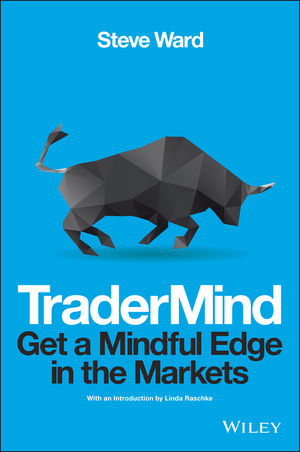
TraderMind (eBook)
John Wiley & Sons (Verlag)
978-1-118-31673-3 (ISBN)
Become a savvy trader with a 'mindful' edge...
TraderMind is an essential resource for understanding and applying mindfulness-based approaches that help to enhance an individual trader's overall performance. Based upon extensive research and practical application in the real world of the trading floor, TraderMind includes methods, tactics and techniques to build and enhance awareness and insight, which help manage thoughts and emotions and maximize trading performance.
The author demonstrates how to overcome habitual or impulsive trading behaviours, manage energy levels, become more attuned to and responsive to the market, more situationally aware and build patterns of effective trading behaviour. By developing these skills and good behaviours, traders can overcome inherent biases and, ultimately, improve their trading decisions.
The techniques outlined in TraderMind can be utilized as core competencies of trading psychology or can be used to complement other behavioural methods and strategies. The TraderMind tool-set does not replace the need for basic trading skills, knowledge, strategy, or key performance enablers such as preparation and performance analysis. Rather, TraderMind is designed to act as a facilitator or multiplier to enhance trader decision-making and improve overall performance. 'A thoughtful read with 'bang-for-the buck' practical strategies for time pressed traders.' - Linda Raschke, President at LBRGroup, Inc., CTA
Also includes the TraderMind 8 Week Training Program.
Steve Ward works with financial traders, trading teams and leaders in proprietary trading groups, energy companies, banks and funds across the world, utilising his expertise in the areas of performance, psychology, lifestyle management and making decisions under conditions of high stress, risk and uncertainty. He is the author of High Performance Trading and Sportsbetting To Win, and was the consultant trading performance coach to BBC television's Million Dollar Traders series.
Become a savvy trader with a "e;mindful"e; edge... TraderMind is an essential resource for understanding and applying mindfulness-based approaches that help to enhance an individual trader's overall performance. Based upon extensive research and practical application in the real world of the trading floor, TraderMind includes methods, tactics and techniques to build and enhance awareness and insight, which help manage thoughts and emotions and maximize trading performance. The author demonstrates how to overcome habitual or impulsive trading behaviours, manage energy levels, become more attuned to and responsive to the market, more situationally aware and build patterns of effective trading behaviour. By developing these skills and good behaviours, traders can overcome inherent biases and, ultimately, improve their trading decisions. The techniques outlined in TraderMind can be utilized as core competencies of trading psychology or can be used to complement other behavioural methods and strategies. The TraderMind tool-set does not replace the need for basic trading skills, knowledge, strategy, or key performance enablers such as preparation and performance analysis. Rather, TraderMind is designed to act as a facilitator or multiplier to enhance trader decision-making and improve overall performance. "e;A thoughtful read with 'bang-for-the buck' practical strategies for time pressed traders."e; Linda Raschke, President at LBRGroup, Inc., CTA Also includes the TraderMind 8 Week Training Program.
Steve Ward works with financial traders, trading teams and leaders in proprietary trading groups, energy companies, banks and funds across the world, utilising his expertise in the areas of performance, psychology, lifestyle management and making decisions under conditions of high stress, risk and uncertainty. He is the author of High Performance Trading and Sportsbetting To Win, and was the consultant trading performance coach to BBC television's Million Dollar Traders series.
About the Author ix
Foreword by Linda Raschke xi
Acknowledgements xiii
Introduction: The Evolution of TraderMind xv
1 What is Mindfulness? 1
2 Developing Your Mindfulness Muscle 23
3 The Attention and Awareness Advantage 43
4 Thinking About Thinking 59
5 Embracing Emotions 83
6 Managing Urges and Impulses 105
7 Trading With the Body in Mind 119
8 Habits, Behaviour, Action 141
9 Turning Towards Difficulty 161
10 The Mindful Trader and Investor 185
TraderMind: Mindfulness-Based Trading and Investing Training Programme 191
References 199
Index 209
Introduction: The Evolution of TraderMind
The Challenges of Trading and Investing
Trading and investing performance occurs at the point where the trader and the market meet, where decisions are made and P&L (profit and loss) is ultimately won or lost. Traders and fund managers must take risk under conditions of uncertainty and be able to manage the outcomes of those decisions and their consequences, as well as coping with the wider pressures and stresses that trading can bring. This is a psychologically challenging environment. Humans favour certainty over uncertainty, and when you take financial risk in such an ambiguous environment, with imperfect information and with high consequences, you are influenced (largely outside your awareness) by a whole number of brain, mind and even body processes that can influence your decision making and behaviour in ways that lead to market returns which are sub-optimal. Emotions, your mood, your thoughts, beliefs and perceptions, your attention, mental shortcuts, your energy levels, the environment you are in, your past and recent performance, your hormones and your patterns and habits of behaviour are all factors that can play a part in your trading and investing decisions.
Furthermore, changes in market conditions, increased competition in the markets, regulatory changes, institutional restructuring, growing automation and the rise of high-frequency trading, information overload and increasing pressures to perform have exacerbated the demands placed on traders and fund managers over recent years.
Trader meets market.
Beyond Skills and Strategy
Karl is a commodities trader who trades predominantly intraday with some overnights being held where required. Over the last few months he has been trying to run his trades a little further. He has a good belief in the levels that he selects in the markets, and his performance over the last few months has been relatively stable despite some choppy market conditions. When we meet he is keen to look at ways to hold his trades for longer. His profit targets are typically around ten ticks (price movements) and yet he is more often than not getting out at around three ticks as a reaction to noise in the market, or his position moving offside (against him), only to see on many occasions that his original target level eventually gets hit. He knows what he wants to achieve from his trades, and believes in his ability to pick good levels at which to enter and exit the market, yet more often than not he doesn't follow through with his plans.
Take a moment to reflect on your own trading and investing experience. Have you ever:
- Taken profits too early, before your profit level was hit?
- Run losses too far or moved your stop further away to avoid a loss?
- Taken trades that were not part of your strategy or approach?
- Not taken trades that were part of your strategy or approach?
- Taken too much risk; traded too big?
- Taken too little risk; traded too small?
- Chased your losses, or revenge traded?
- Overtraded in a state of euphoria?
- Traded through boredom?
All of these – as I can testify from my experience in working with thousands of traders and fund managers across the globe and across asset classes – are quite common trading behaviours.
As early as 1759 in The Theory of Moral Sentiments,1 Adam Smith described the battle between the “impartial spectator” and the “passions”, between knowing what is right and best and the challenge of temptation and instant gratification. Not much has changed in all those years – Warren Buffett talks in a similar way about traders and investors needing to avoid the “temptations and urges” that get other traders into trouble. We are still fitted with the same mental software, the same brain information-processing systems, and as a result we are still experiencing the same dilemma. The key challenge in trading is not so much “Knowing What To Do” (KWTD) as “Doing What You Know” (DWYK). This creates the psychological gap that exists between having a strategy with a positive expectancy and actually trading it in such a way that it returns something close to those expected profits. One very experienced trader I worked with in a training session at a leading investment bank remarked how just being able to get better at running his profits and cutting his losses would have a considerable impact on his P&L, and how this was true for other traders in his team and across the trading floor.
To perform well in the markets you need more than just skills, knowledge and a strategy with an edge or some competitive advantage. You need to have a mindset that is resilient, that allows you to take risk, navigate uncertainty, manage the pressures and stresses of the trading environment and its results orientation. You need to have the levels of awareness required to manage your thoughts and emotions and to be able to regulate your own trading behaviour, to be able to sustain focus, resist the temptations to react on impulses and reduce the impact of behavioural tendencies and biological responses. A strong psychological approach is integral to producing consistent and successful trading performance, to maximise the returns on your trading strategy.
The Rise of Trading Psychology
When I began working in sports psychology in the early 2000s it was in its relevant infancy in the UK, although in eastern Europe, the USA and Australia it was far more developed. The mindset of many sports people was that sports psychology was for people who had performance dysfunction, or clinical issues – it was seen as pathological. Very few sports people talked about visiting the sports psychologist and many teams did not at that time fully utilise or embrace sports psychology. Over the years that mindset has shifted significantly to the point where sports psychologists are available to most athletes and teams; they are used openly and recognised as part of the coaching and performance team. This behavioural shift has largely been down to the evolution of the drive by teams and athletes to seek every possible advantage when they are competing, the rise in the popularity of psychology in general and the move of the sports psychologist's role from being about fixing problems (pathological) to enhancing performance. This pattern is similar in trading, where even since my first involvement in early 2005 I have seen the attitudes of traders towards psychology move from strong scepticism to being much more open and embracing. The global market events of 2008 and the challenges of trading the markets in the years since that time may have helped somewhat in this evolution, alongside the rise in popularity of behavioural finance and the increasing number of academic studies and books that focus on financial decision making and its psychological aspects.
With this rise in interest in trading psychology, more and more traders have realised, or perhaps admitted, that being able to develop their psychological approach would have benefits on their trading decisions, performance and profits. More traders are open to reading about trading psychology, attending workshops or having one-to-one coaching than ever, even though some may still be hesitant or sceptical. This growing trend was identified in an online article published by Reuters in September 2012 entitled “FX traders seek coaching in battle for dominance”2 and in an article entitled “Finding your inner trader”3 published in Bloomberg Markets Magazine (April 2014):
In the take-no-prisoners world of foreign exchange dealing, asking traders to look inside themselves and confront their inner demons may seem a forlorn endeavour. Yet some banks are turning to performance coaches to give their traders an edge in the battle to make money in the $4.5 trillion dollar a day FX market. This soft skills approach contrasts with the popular stereotype of FX traders hurling prices – and abuse – at each other across the dealing room floor. But while some dismiss techniques to develop a ‘clear-headed space’ in which to trade as touchy-feely gimmickry, many are keen to embrace any tactic to outwit other market participants, whether human or machine.
“FX traders seek coaching in battle for dominance”, Reuters
If you are reading this then it is pretty likely that you are, at a minimum, slightly curious about how you could improve your trading performance via the use of psychological approaches, or you may be further along the continuum – a convert to trading psychology but looking for a different approach or methodology to help you overcome the challenges you face. Whichever you are, TraderMind provides an opportunity for you to develop your mental and emotional skills and to enhance your trading psychology skills, and enhance your decision-making process and market returns.
The New Contenders: Neuroscience and Mindfulness
Over the years, trading psychology has evolved. In its early stages, understanding and approaches were derived primarily from existing cognitive, behavioural and performance-based psychological approaches. Then we saw the introduction and rapid uptake of interest in behavioural finance, behavioural economics and decision science. More recently, growing interest in the human brain has...
| Erscheint lt. Verlag | 9.10.2014 |
|---|---|
| Sprache | englisch |
| Themenwelt | Recht / Steuern ► Wirtschaftsrecht |
| Wirtschaft ► Betriebswirtschaft / Management ► Finanzierung | |
| Schlagworte | Börsenhandel • Börsenhandel • emotions and trading • Finance & Investments • Finanz- u. Anlagewesen • how to become a mindful trader • perception and trading • psychological techniques for trading • strategies for successful trading • Trading • trading behaviors • trading behaviours • visualization and trading • winning trading mindset |
| ISBN-10 | 1-118-31673-8 / 1118316738 |
| ISBN-13 | 978-1-118-31673-3 / 9781118316733 |
| Informationen gemäß Produktsicherheitsverordnung (GPSR) | |
| Haben Sie eine Frage zum Produkt? |
 EPUB (Adobe DRM)
Kopierschutz: Adobe-DRM
Adobe-DRM ist ein Kopierschutz, der das eBook vor Mißbrauch schützen soll. Dabei wird das eBook bereits beim Download auf Ihre persönliche Adobe-ID autorisiert. Lesen können Sie das eBook dann nur auf den Geräten, welche ebenfalls auf Ihre Adobe-ID registriert sind.
Details zum Adobe-DRM
Dateiformat: EPUB (Electronic Publication)
EPUB ist ein offener Standard für eBooks und eignet sich besonders zur Darstellung von Belletristik und Sachbüchern. Der Fließtext wird dynamisch an die Display- und Schriftgröße angepasst. Auch für mobile Lesegeräte ist EPUB daher gut geeignet.
Systemvoraussetzungen:
PC/Mac: Mit einem PC oder Mac können Sie dieses eBook lesen. Sie benötigen eine
eReader: Dieses eBook kann mit (fast) allen eBook-Readern gelesen werden. Mit dem amazon-Kindle ist es aber nicht kompatibel.
Smartphone/Tablet: Egal ob Apple oder Android, dieses eBook können Sie lesen. Sie benötigen eine
Geräteliste und zusätzliche Hinweise
Buying eBooks from abroad
For tax law reasons we can sell eBooks just within Germany and Switzerland. Regrettably we cannot fulfill eBook-orders from other countries.
aus dem Bereich