


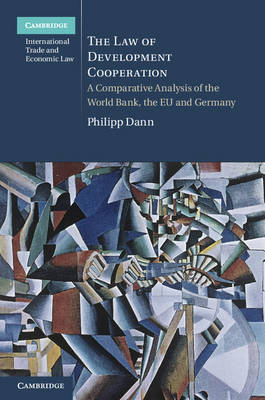
The Law of Development Cooperation (eBook)
Cambridge University Press (Verlag)
978-1-107-45372-2 (ISBN)
Development interventions are agreed by states and international organisations which administer public development funds of huge proportions. They have done so with debatable success, but, unlike the good governance of recipients, the rules applying to donors have hitherto received little scrutiny. This analysis of the normative structures and conceptual riddles of development co-operation argues that development co-operation is increasingly structured by legal rules and is therefore no longer merely a matter of politics, economics or ethics. By focusing on the rules of development co-operation, it puts forward a new perspective on the institutional law dealing with the process, instruments and organisation of this co-operation. Placing the law in its theoretical and political context, it provides the first comparative study on the laws of foreign aid as a central field of global public policy and asks how accountability, autonomy and human rights can be preserved while combating poverty.
Development interventions are agreed by states and international organisations which administer public development funds of huge proportions. They have done so with debatable success, but, unlike the good governance of recipients, the rules applying to donors have hitherto received little scrutiny. This analysis of the normative structures and conceptual riddles of development co-operation argues that development co-operation is increasingly structured by legal rules and is therefore no longer merely a matter of politics, economics or ethics. By focusing on the rules of development co-operation, it puts forward a new perspective on the institutional law dealing with the process, instruments and organisation of this co-operation. Placing the law in its theoretical and political context, it provides the first comparative study on the laws of foreign aid as a central field of global public policy and asks how accountability, autonomy and human rights can be preserved while combating poverty.
| Erscheint lt. Verlag | 7.11.2013 |
|---|---|
| Übersetzer | Andrew Hammel |
| Sprache | deutsch |
| Themenwelt | Recht / Steuern ► Allgemeines / Lexika |
| Recht / Steuern ► EU / Internationales Recht | |
| Sozialwissenschaften ► Politik / Verwaltung ► Europäische / Internationale Politik | |
| ISBN-10 | 1-107-45372-0 / 1107453720 |
| ISBN-13 | 978-1-107-45372-2 / 9781107453722 |
| Informationen gemäß Produktsicherheitsverordnung (GPSR) | |
| Haben Sie eine Frage zum Produkt? |
 PDF (Adobe DRM)
Kopierschutz: Adobe-DRM
Adobe-DRM ist ein Kopierschutz, der das eBook vor Mißbrauch schützen soll. Dabei wird das eBook bereits beim Download auf Ihre persönliche Adobe-ID autorisiert. Lesen können Sie das eBook dann nur auf den Geräten, welche ebenfalls auf Ihre Adobe-ID registriert sind.
Details zum Adobe-DRM
Dateiformat: PDF (Portable Document Format)
Mit einem festen Seitenlayout eignet sich die PDF besonders für Fachbücher mit Spalten, Tabellen und Abbildungen. Eine PDF kann auf fast allen Geräten angezeigt werden, ist aber für kleine Displays (Smartphone, eReader) nur eingeschränkt geeignet.
Systemvoraussetzungen:
PC/Mac: Mit einem PC oder Mac können Sie dieses eBook lesen. Sie benötigen eine
eReader: Dieses eBook kann mit (fast) allen eBook-Readern gelesen werden. Mit dem amazon-Kindle ist es aber nicht kompatibel.
Smartphone/Tablet: Egal ob Apple oder Android, dieses eBook können Sie lesen. Sie benötigen eine
Geräteliste und zusätzliche Hinweise
Buying eBooks from abroad
For tax law reasons we can sell eBooks just within Germany and Switzerland. Regrettably we cannot fulfill eBook-orders from other countries.


