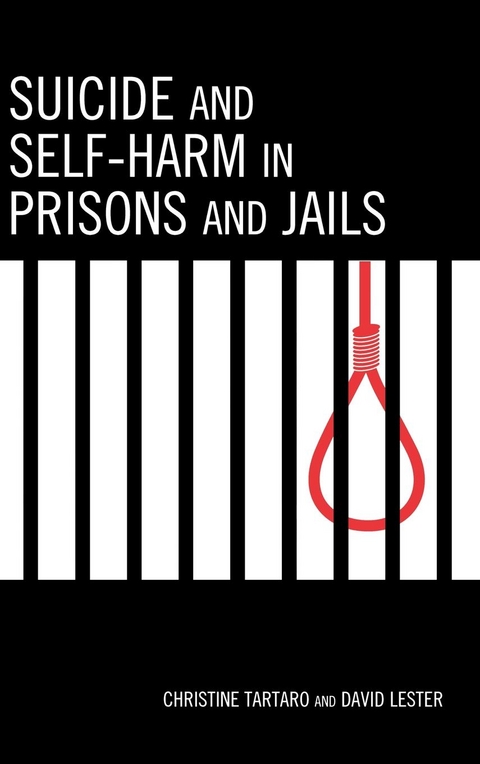
Suicide and Self-Harm in Prisons and Jails (eBook)
238 Seiten
Lexington Books (Verlag)
978-1-4616-3424-9 (ISBN)
Police and corrections personnel must always be mindful of the possibility that those in their custody may attempt suicide or commit an act of self-mutilation. Persons housed in prisons, jails, and police lockups tend to be at a higher risk for such destructive behavior than members of the general population. Reasons for this can be found by examining the mental health, substance abuse, and physical/sexual abuse histories of inmates in addition to deficits in their coping skills and the stress and uncertainty generated by incarceration. This book explores several topics pertaining to suicide and deliberate self-harm in the corrections setting, including who tends to commit these acts; where, when, and how these incidents occur; screening mechanisms; the role of environmental stimuli in facilitating or preventing acts of self harm; interpersonal relations among inmates and between inmates and staff; and the role of the courts in setting and ruling on suicide prevention policies. The authors discuss the role of prevention techniques that offer a balance between strict opportunity-reduction and softer motivation-reduction strategies. The book also includes suggestions for diversion programs that can keep mentally ill inmates out of prisons and jails and transition planning programs to better prepare outgoing inmates for their re-entry into the community.
Christine Tartaro is associate professor of criminal justice at the Richard Stockton College of New Jersey.David Lester is distinguished professor of psychology at the Richard Stockton College of New Jersey.
Chapter 1. IntroductionChapter 2. Who Commits Suicide While Incarcerated?Chapter 3. When, Where, and How Suicides in Prisons and Jails OccurChapter 4. Suicidal Ideation, Suicide Attempts, and Self-MutilationChapter 5. Screening and AssessmentChapter 6. Crisis Intervention and CounselingChapter 7. Facility Design and Suicide PreventionChapter 8. Diversion and Transition ProgramsChapter 9. Litigation IssuesChapter 10. Suggestions for the Future
| Erscheint lt. Verlag | 12.7.2010 |
|---|---|
| Sprache | englisch |
| Themenwelt | Sonstiges ► Geschenkbücher |
| Geisteswissenschaften ► Psychologie ► Allgemeine Psychologie | |
| Geisteswissenschaften ► Psychologie ► Persönlichkeitsstörungen | |
| Recht / Steuern ► Strafrecht ► Kriminologie | |
| Sozialwissenschaften ► Pädagogik | |
| Sozialwissenschaften ► Soziologie ► Mikrosoziologie | |
| Schlagworte | attempted suicide • Criminology • Diversion • Litigation • Mental health courts • Mental Illness • Self-Harm • Self-injury • Sociology • Suicide in jail • Suicide in prison • Suicide Prevention • Suicide screening |
| ISBN-10 | 1-4616-3424-5 / 1461634245 |
| ISBN-13 | 978-1-4616-3424-9 / 9781461634249 |
| Informationen gemäß Produktsicherheitsverordnung (GPSR) | |
| Haben Sie eine Frage zum Produkt? |
 EPUB (Adobe DRM)
Kopierschutz: Adobe-DRM
Adobe-DRM ist ein Kopierschutz, der das eBook vor Mißbrauch schützen soll. Dabei wird das eBook bereits beim Download auf Ihre persönliche Adobe-ID autorisiert. Lesen können Sie das eBook dann nur auf den Geräten, welche ebenfalls auf Ihre Adobe-ID registriert sind.
Details zum Adobe-DRM
Dateiformat: EPUB (Electronic Publication)
EPUB ist ein offener Standard für eBooks und eignet sich besonders zur Darstellung von Belletristik und Sachbüchern. Der Fließtext wird dynamisch an die Display- und Schriftgröße angepasst. Auch für mobile Lesegeräte ist EPUB daher gut geeignet.
Systemvoraussetzungen:
PC/Mac: Mit einem PC oder Mac können Sie dieses eBook lesen. Sie benötigen eine
eReader: Dieses eBook kann mit (fast) allen eBook-Readern gelesen werden. Mit dem amazon-Kindle ist es aber nicht kompatibel.
Smartphone/Tablet: Egal ob Apple oder Android, dieses eBook können Sie lesen. Sie benötigen eine
Geräteliste und zusätzliche Hinweise
Buying eBooks from abroad
For tax law reasons we can sell eBooks just within Germany and Switzerland. Regrettably we cannot fulfill eBook-orders from other countries.
aus dem Bereich