


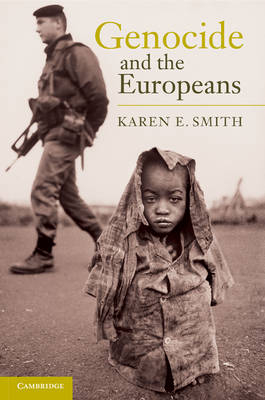
Genocide and the Europeans (eBook)
Cambridge University Press (Verlag)
978-0-511-85523-8 (ISBN)
Genocide is one of the most heinous abuses of human rights imaginable, yet reaction to it by European governments in the post-Cold War world has been criticised for not matching the severity of the crime. European governments rarely agree on whether to call a situation genocide, and their responses to purported genocides have often been limited to delivering humanitarian aid to victims and supporting prosecution of perpetrators in international criminal tribunals. More coercive measures - including sanctions or military intervention - are usually rejected as infeasible or unnecessary. This book explores the European approach to genocide, reviewing government attitudes towards the negotiation and ratification of the 1948 Genocide Convention and analysing responses to purported genocides since the end of the Second World War. Karen E. Smith considers why some European governments were hostile to the Genocide Convention and why European governments have been reluctant to use the term genocide to describe atrocities ever since.
Genocide is one of the most heinous abuses of human rights imaginable, yet reaction to it by European governments in the post-Cold War world has been criticised for not matching the severity of the crime. European governments rarely agree on whether to call a situation genocide, and their responses to purported genocides have often been limited to delivering humanitarian aid to victims and supporting prosecution of perpetrators in international criminal tribunals. More coercive measures - including sanctions or military intervention - are usually rejected as infeasible or unnecessary. This book explores the European approach to genocide, reviewing government attitudes towards the negotiation and ratification of the 1948 Genocide Convention and analysing responses to purported genocides since the end of the Second World War. Karen E. Smith considers why some European governments were hostile to the Genocide Convention and why European governments have been reluctant to use the term genocide to describe atrocities ever since.
| Erscheint lt. Verlag | 8.12.2010 |
|---|---|
| Sprache | englisch |
| Themenwelt | Geisteswissenschaften ► Geschichte |
| Recht / Steuern ► EU / Internationales Recht | |
| Recht / Steuern ► Öffentliches Recht ► Völkerrecht | |
| Sozialwissenschaften ► Politik / Verwaltung ► Europäische / Internationale Politik | |
| ISBN-10 | 0-511-85523-0 / 0511855230 |
| ISBN-13 | 978-0-511-85523-8 / 9780511855238 |
| Informationen gemäß Produktsicherheitsverordnung (GPSR) | |
| Haben Sie eine Frage zum Produkt? |
 PDF (Adobe DRM)
Kopierschutz: Adobe-DRM
Adobe-DRM ist ein Kopierschutz, der das eBook vor Mißbrauch schützen soll. Dabei wird das eBook bereits beim Download auf Ihre persönliche Adobe-ID autorisiert. Lesen können Sie das eBook dann nur auf den Geräten, welche ebenfalls auf Ihre Adobe-ID registriert sind.
Details zum Adobe-DRM
Dateiformat: PDF (Portable Document Format)
Mit einem festen Seitenlayout eignet sich die PDF besonders für Fachbücher mit Spalten, Tabellen und Abbildungen. Eine PDF kann auf fast allen Geräten angezeigt werden, ist aber für kleine Displays (Smartphone, eReader) nur eingeschränkt geeignet.
Systemvoraussetzungen:
PC/Mac: Mit einem PC oder Mac können Sie dieses eBook lesen. Sie benötigen eine
eReader: Dieses eBook kann mit (fast) allen eBook-Readern gelesen werden. Mit dem amazon-Kindle ist es aber nicht kompatibel.
Smartphone/Tablet: Egal ob Apple oder Android, dieses eBook können Sie lesen. Sie benötigen eine
Geräteliste und zusätzliche Hinweise
Buying eBooks from abroad
For tax law reasons we can sell eBooks just within Germany and Switzerland. Regrettably we cannot fulfill eBook-orders from other countries.


