-David Louton, Professor of Finance, Bryant University
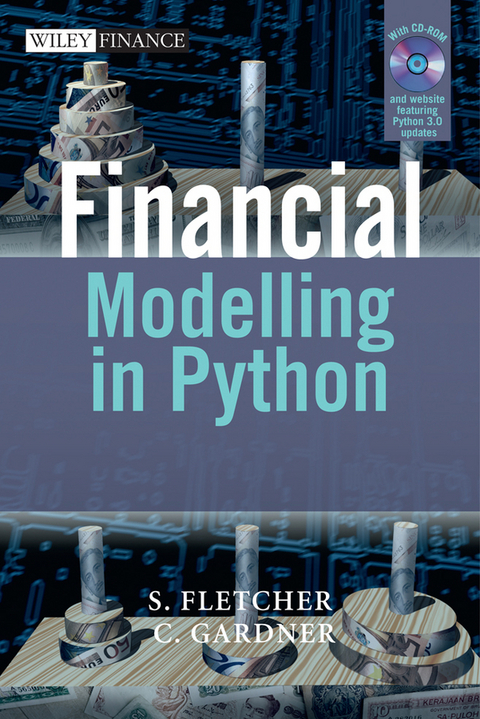
This book is directed at both industry practitioners and students interested in designing a pricing and risk management framework for financial derivatives using the Python programming language.
It is a practical book complete with working, tested code that guides the reader through the process of building a flexible, extensible pricing framework in Python. The pricing frameworks' loosely coupled fundamental components have been designed to facilitate the quick development of new models. Concrete applications to real-world pricing problems are also provided.
Topics are introduced gradually, each building on the last. They include basic mathematical algorithms, common algorithms from numerical analysis, trade, market and event data model representations, lattice and simulation based pricing, and model development. The mathematics presented is kept simple and to the point.
The book also provides a host of information on practical technical topics such as C++/Python hybrid development (embedding and extending) and techniques for integrating Python based programs with Microsoft Excel.
SHAYNE FLETCHER has a BSc. from the University of Sydney, Australia. He has had more than 10 years experience working for major investment banks in London, The Netherlands and Japan. In 2009 he founded QuantSoft (http://www.quantsoft.co.jp) providing technical consulting services to meet the financial engineering programming needs of its clients.
CHRISTOPHER GARDNER has a PhD in Applied Mathematics from King's College, London. He began his career working for UKAEA Fusion at Culham Laboratory before moving to the City of London. He has 10 years experience working as a Quantitative analyst. He is currently working on the pricing of Life derivatives for the Asset Management Pricing Desk at Swiss Re.
"e;Fletcher and Gardner have created a comprehensive resource that will be of interest not only to those working in the field of finance, but also to those using numerical methods in other fields such as engineering, physics, and actuarial mathematics. By showing how to combine the high-level elegance, accessibility, and flexibility of Python, with the low-level computational efficiency of C++, in the context of interesting financial modeling problems, they have provided an implementation template which will be useful to others seeking to jointly optimize the use of computational and human resources. They document all the necessary technical details required in order to make external numerical libraries available from within Python, and they contribute a useful library of their own, which will significantly reduce the start-up costs involved in building financial models. This book is a must read for all those with a need to apply numerical methods in the valuation of financial claims."e; David Louton, Professor of Finance, Bryant University This book is directed at both industry practitioners and students interested in designing a pricing and risk management framework for financial derivatives using the Python programming language. It is a practical book complete with working, tested code that guides the reader through the process of building a flexible, extensible pricing framework in Python. The pricing frameworks' loosely coupled fundamental components have been designed to facilitate the quick development of new models. Concrete applications to real-world pricing problems are also provided. Topics are introduced gradually, each building on the last. They include basic mathematical algorithms, common algorithms from numerical analysis, trade, market and event data model representations, lattice and simulation based pricing, and model development. The mathematics presented is kept simple and to the point. The book also provides a host of information on practical technical topics such as C++/Python hybrid development (embedding and extending) and techniques for integrating Python based programs with Microsoft Excel.
SHAYNE FLETCHER has a BSc. from the University of Sydney, Australia. He has had more than 10 years experience working for major investment banks in London, The Netherlands and Japan. In 2009 he founded QuantSoft (href="http://www.quantsoft.co.jp/">http://www.quantsoft.co.jp) providing technical consulting services to meet the financial engineering programming needs of its clients. CHRISTOPHER GARDNER has a PhD in Applied Mathematics from King's College, London. He began his career working for UKAEA Fusion at Culham Laboratory before moving to the City of London. He has 10 years experience working as a Quantitative analyst. He is currently working on the pricing of Life derivatives for the Asset Management Pricing Desk at Swiss Re.
1 Welcome to Python.
1.1 Why Python?
1.2 Common misconceptions about Python.
1.3 Roadmap for this book.
2 The PPF Package.
2.1 PPF topology.
2.2 Unit testing.
2.3 Building and installing PPF.
3 Extending Python from C++.
3.1 Boost.Date Time types.
3.2 Boost.MultiArray and special functions.
3.3 NumPy arrays.
4 Basic Mathematical Tools.
4.1 Random number generation.
4.2 N(.)
4.3 Interpolation.
4.4 Root finding.
4.5 Linear algebra.
4.6 Generalised linear least squares.
4.7 Quadratic and cubic roots.
4.8 Integration.
5 Market: Curves and Surfaces.
5.1 Curves.
5.2 Surfaces.
5.3 Environment.
6 Data Model.
6.1 Observables.
6.2 Flows.
6.3 Adjuvants.
6.4 Legs.
6.5 Exercises.
6.6 Trades.
6.7 Trade utilities.
7 Timeline: Events and Controller.
7.1 Events.
7.2 Timeline.
7.3 Controller.
8 The Hull-White Model.
8.1 A component-based design.
8.2 The model and model factories.
8.3 Concluding remarks.
9 Pricing using Numerical Methods.
9.1 A lattice pricing framework.
9.2 A Monte-Carlo pricing framework.
9.3 Concluding remarks.
10 Pricing Financial Structures in Hull-White.
10.1 Pricing a Bermudan.
10.2 Pricing a TARN.
10.3 Concluding remarks.
11 Hybrid Python/C++ Pricing Systems.
11.1 nth imm of year revisited.
11.2 Exercising nth imm of year from C++.
12 Python Excel Integration.
12.1 Black-scholes COM server.
12.2 Numerical pricing with PPF in Excel.
Appendices.
A Python.
A.1 Python interpreter modes.
A.2 Basic Python.
A.3 Conclusion.
B Boost.Python.
B.1 Hello world.
B.2 Classes, constructors and methods.
B.3 Inheritance.
B.4 Python operators.
B.5 Functions.
B.6 Enums.
B.7 Embedding.
B.8 Conclusion.
C Hull-White Model Mathematics.
D Pickup Value Regression.
Bibliography.
Index.
| Erscheint lt. Verlag | 28.10.2010 |
|---|---|
| Reihe/Serie | The Wiley Finance Series | Wiley Finance Series |
| Sprache | englisch |
| Themenwelt | Recht / Steuern ► Wirtschaftsrecht |
| Wirtschaft ► Betriebswirtschaft / Management ► Finanzierung | |
| Schlagworte | Finance & Investments • Financial Engineering • Finanztechnik • Finanz- u. Anlagewesen • Python, quantitative analyst, quantitative finance community, Python programming language, financial modeling, financial engineering, Python for financial modeling |
| ISBN-13 | 9780470747896 / 9780470747896 |
| Informationen gemäß Produktsicherheitsverordnung (GPSR) | |
| Haben Sie eine Frage zum Produkt? |
 PDF (Adobe DRM)
Kopierschutz: Adobe-DRM
Adobe-DRM ist ein Kopierschutz, der das eBook vor Mißbrauch schützen soll. Dabei wird das eBook bereits beim Download auf Ihre persönliche Adobe-ID autorisiert. Lesen können Sie das eBook dann nur auf den Geräten, welche ebenfalls auf Ihre Adobe-ID registriert sind.
Details zum Adobe-DRM
Dateiformat: PDF (Portable Document Format)
Mit einem festen Seitenlayout eignet sich die PDF besonders für Fachbücher mit Spalten, Tabellen und Abbildungen. Eine PDF kann auf fast allen Geräten angezeigt werden, ist aber für kleine Displays (Smartphone, eReader) nur eingeschränkt geeignet.
Systemvoraussetzungen:
PC/Mac: Mit einem PC oder Mac können Sie dieses eBook lesen. Sie benötigen eine
eReader: Dieses eBook kann mit (fast) allen eBook-Readern gelesen werden. Mit dem amazon-Kindle ist es aber nicht kompatibel.
Smartphone/Tablet: Egal ob Apple oder Android, dieses eBook können Sie lesen. Sie benötigen eine
Geräteliste und zusätzliche Hinweise
Buying eBooks from abroad
For tax law reasons we can sell eBooks just within Germany and Switzerland. Regrettably we cannot fulfill eBook-orders from other countries.
aus dem Bereich