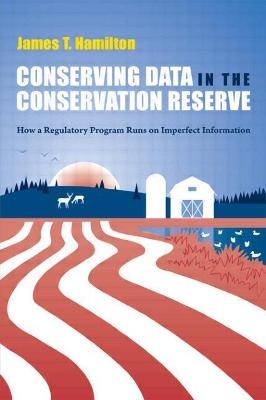
Conserving Data in the Conservation Reserve
Resources for the Future Press (RFF Press) (Verlag)
9781933115818 (ISBN)
Enrolling over 30 million acres, the U.S. Conservation Reserve Program (CRP) is the largest conservation program in the United States. Under the guidelines of the CRP, the federal government pays farmers to stop farming their land in the hopes of achieving a variety of conservation goals, including the reduction of soil erosion, improvement of water quality, and creation of wildlife habitat. In Conserving Data, James T. Hamilton explores the role of information in the policy cycle as it relates to the CRP. The author asks how the creation and distribution of information about what is going on across these millions of enrolled acres has influenced the development of the program itself. Of the many CRP stakeholders, each accesses a different set of information about the CRP‘s operations. Regulators have developed the Environmental Benefits Index as a rough indicator of a fields conservation benefits and adopted that measure as a way to determine which lands should be granted conservation contracts. NGOs have used publicly available data from these contracts to show how CRP monies are allocated. Members of Congress have used oversight hearings and GAO reports to monitor the Farm Service Agency‘s conservation policy decisions. Reporters have localized the impact of the CRP by writing stories about increases in wildlife and hunting on CRP fields in their areas. Conserving Data brings together and analyzes these various streams of information, drawing upon original interviews with regulators, new data from Freedom of Information Act requests, and regulatory filings. Using the CRP as a launch point, Hamilton explores the role of information, including 'hidden information,' in the design and implementation of regulatory policy.
James T. Hamilton is the Charles S. Sydnor Professor of Public Policy, at the Sanford School of Public Policy, Duke University and Director of the DeWitt Wallace Center for Media and Democracy. His prior books include Regulation Through Revelation: The Origin, Politics, and Impacts of the Toxics Release Inventory Program and All the News That‘s Fit to Sell: How the Market Transforms Information into News.
Acknowledgments
Introduction
1. Information through the Policy Cycle
2. Defining the Environmental Benefits Index
3. Interpreting the Conservation Reserve Program in the Field(s)
4. The Mechanics of Monitoring: GAO, Congress, and the Federal Register
5. The Environmental Working Group Pulls the Pieces Together
6. Media Coverage and Academic Analyses: Cycles of Praise and Criticism
7. Information and Regulatory Implementation
References
Index
| Erscheint lt. Verlag | 1.3.2010 |
|---|---|
| Verlagsort | Washington |
| Sprache | englisch |
| Maße | 156 x 234 mm |
| Gewicht | 274 g |
| Themenwelt | Naturwissenschaften ► Biologie ► Ökologie / Naturschutz |
| Recht / Steuern ► EU / Internationales Recht | |
| ISBN-13 | 9781933115818 / 9781933115818 |
| Zustand | Neuware |
| Informationen gemäß Produktsicherheitsverordnung (GPSR) | |
| Haben Sie eine Frage zum Produkt? |
aus dem Bereich