


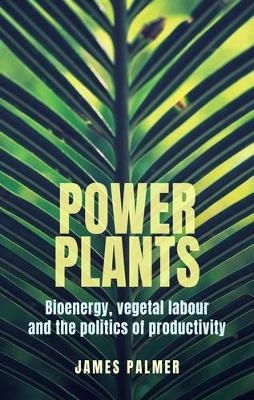
Power Plants
Bioenergy, Vegetal Labour and the Politics of Productivity
Seiten
2026
Manchester University Press (Verlag)
978-1-5261-9212-7 (ISBN)
Manchester University Press (Verlag)
978-1-5261-9212-7 (ISBN)
- Noch nicht erschienen (ca. Juni 2026)
- Versandkostenfrei
- Auch auf Rechnung
- Artikel merken
Power Plants exposes the underappreciated stakes of an expanding global bioenergy sector. As the pursuit of net zero climate targets comes to rely heavily on the industrial burning of crops and trees, this book argues that a closer attention to plants could yet foster energy futures concerned not with growth, but human satisfaction and wellbeing. -- .
Power Plants offers an unflinching assessment of society’s underappreciated but growing addiction to the industrial burning of crops and trees for energy. As vehicles increasingly run on fuels made from sugarcane and oil-palm, wood pellets replace coal, and scientists rush to engineer crops to produce renewable jet fuel, this book blows apart bioenergy’s reputation as a simple, benign substitute for fossil fuels. Scrutinising modern bioenergy systems in the UK, Europe and United States, Power Plants shows how vegetal lifeforms are being enrolled to reinforce energy cultures centred around logics of efficiency, productivity and economic growth at all costs. Nonetheless, the book insists that a closer attention to plants could yet provoke a rethink of the social and economic purposes of all kinds of energy, with radical implications for ideas about growth, waste, prosperity and even pleasure. -- .
Power Plants offers an unflinching assessment of society’s underappreciated but growing addiction to the industrial burning of crops and trees for energy. As vehicles increasingly run on fuels made from sugarcane and oil-palm, wood pellets replace coal, and scientists rush to engineer crops to produce renewable jet fuel, this book blows apart bioenergy’s reputation as a simple, benign substitute for fossil fuels. Scrutinising modern bioenergy systems in the UK, Europe and United States, Power Plants shows how vegetal lifeforms are being enrolled to reinforce energy cultures centred around logics of efficiency, productivity and economic growth at all costs. Nonetheless, the book insists that a closer attention to plants could yet provoke a rethink of the social and economic purposes of all kinds of energy, with radical implications for ideas about growth, waste, prosperity and even pleasure. -- .
James Palmer is Senior Lecturer in Environmental Governance at the University of Bristol -- .
Introduction | Power plants: Bringing energy to life
1 | Dead stocks to living flows? Bioenergy as vegetal labour
2 | The new biofuel rush: Cars, crops, climate and coloniality
3 | Growing energy on trees? Reinventing working forests as carbon conveyors
4 | Living oil fields: Reprogramming crops to mine the sun
5 | Going global: Mobilising vegetal labour for climate stabilisation
Conclusion | Rethinking plant power: For vegetal energy cultures -- .
| Erscheint lt. Verlag | 23.6.2026 |
|---|---|
| Zusatzinfo | 9 figures and 2 tables |
| Verlagsort | Manchester |
| Sprache | englisch |
| Maße | 156 x 234 mm |
| Themenwelt | Naturwissenschaften ► Biologie ► Ökologie / Naturschutz |
| Technik ► Elektrotechnik / Energietechnik | |
| Technik ► Umwelttechnik / Biotechnologie | |
| Wirtschaft ► Volkswirtschaftslehre | |
| ISBN-10 | 1-5261-9212-8 / 1526192128 |
| ISBN-13 | 978-1-5261-9212-7 / 9781526192127 |
| Zustand | Neuware |
| Informationen gemäß Produktsicherheitsverordnung (GPSR) | |
| Haben Sie eine Frage zum Produkt? |
Mehr entdecken
aus dem Bereich



aus dem Bereich
Methoden – Lösungen – Anwendungen
Buch | Hardcover (2025)
Hanser (Verlag)
CHF 69,95


