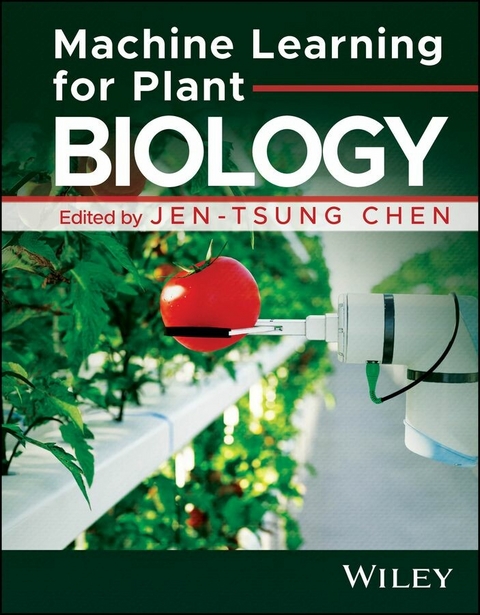
Machine Learning for Plant Biology (eBook)
967 Seiten
Wiley (Verlag)
978-1-394-32962-5 (ISBN)

A comprehensive and current summary of machine learning-based strategies for constructing digital plant biology
Machine Learning for Plant Biology provides a comprehensive summary of the latest developments in machine learning (ML) technologies, emphasizing their role in analyzing complex biological networks of plants and in modeling the responses of major crops to biotic and abiotic stresses. The combinatorial strategies discussed in this book enable readers to further their understanding of plant biology, stress physiology, and protection.
Machine Learning for Plant Biology includes information on:
- Intelligent breeding for stress-resistant and high-yield crops, contributing to sustainable agriculture, the Sustainable Development Goals (SDGs), and the Paris Agreement
- Interactions between plants, pathogens, and environmental stresses through omics approaches, functional genomics, genome editing, and high-throughput technologies
- State-of-the-art AI tools, including machine and deep learning models, as well as generative AI
- Applications include species identification, systems biology, functional genomics, genomic selection, phenotyping, synthetic biology, spatial omics, plant disease diagnosis and protection, and plant secondary metabolism
Machine Learning for Plant Biology is an essential reference on the subject for scientists, plant biologists, crop breeders, and students interested in the development of sustainable agriculture in the face of a changing global climate.
JEN-TSUNG CHEN is a Professor of Cell Biology at the Department of Life Sciences, National University of Kaohsiung, Taiwan, where he teaches courses on cell biology, genomics, proteomics, plant physiology, and plant biotechnology. His research interests include bioactive compounds, chromatography techniques, plant molecular biology, plant biotechnology, bioinformatics, and systems pharmacology. In 2023 and 2024, Elsevier and Stanford University recognized Dr. Chen as one of the 'World's Top 2% Scientists'.
A comprehensive and current summary of machine learning-based strategies for constructing digital plant biology Machine Learning for Plant Biology provides a comprehensive summary of the latest developments in machine learning (ML) technologies, emphasizing their role in analyzing complex biological networks of plants and in modeling the responses of major crops to biotic and abiotic stresses. The combinatorial strategies discussed in this book enable readers to further their understanding of plant biology, stress physiology, and protection. Machine Learning for Plant Biology includes information on: Intelligent breeding for stress-resistant and high-yield crops, contributing to sustainable agriculture, the Sustainable Development Goals (SDGs), and the Paris Agreement Interactions between plants, pathogens, and environmental stresses through omics approaches, functional genomics, genome editing, and high-throughput technologies State-of-the-art AI tools, including machine and deep learning models, as well as generative AI Applications include species identification, systems biology, functional genomics, genomic selection, phenotyping, synthetic biology, spatial omics, plant disease diagnosis and protection, and plant secondary metabolism Machine Learning for Plant Biology is an essential reference on the subject for scientists, plant biologists, crop breeders, and students interested in the development of sustainable agriculture in the face of a changing global climate.
List of Contributors
N. Abinesh
Hindusthan College of Arts & Science, Coimbatore, India
Arunachalam Abitha
Department of Human Genetics and Molecular Biology, Bharathiar University, Coimbatore, Tamil Nadu, India
Boris Adam
INRAE Centre Clermont-Auvergne-Rhône-Alpes, Clermont-Ferrand, France
Sarfraz Ahmad
Department of Genetics and Plant Breeding, College of Agriculture Mandawa, Swami Keshwanand Rajasthan Agriculture University, Bikaner, Rajasthan, India
Eman A. Ahmed
Department of Community Organization, Faculty of Social Work, Assiut University, Assiut, Egypt
Arumugam Vijaya Anand
Department of Human Genetics and Molecular Biology, Bharathiar University, Coimbatore, Tamil Nadu, India
Jeyabal Philomenathan Antony Prabhu
Department of Human Genetics and Molecular Biology, Bharathiar University, Coimbatore, Tamil Nadu, India
Esakkimuthu Balaji
Sudha Fertility Hospital, Hyderabad, Telangana, India
Vikas Belwal
Department of Tree Improvement, College of Forestry Ranichauri, VCSG Uttarakhand University of Horticulture and Forestry, Bharsar, Uttarakhand, India
Vadivelu Bharathi
Department of Biochemistry, Thanthai Periyar Government College, Tiruchirappalli, Tamil Nadu, India
Natasha Charaya
Department of Biotechnology, Guru Jambheshwar University of Science & Technology (GJUS&T) Hisar, Haryana, India
Ankan Das
Palli Siksha Bhavana (Institute of Agriculture), Visva-Bharati University, Sriniketan, West Bengal, India
Soumya Shephalika Dash
Institute of Agriculture, Visva-Bharati, Sriniketan, West Bengal, India
Juel Debnath
College of Agriculture, Kerala Agricultural University, Thiruvananthapuram, Kerala, India
Sandip Debnath
Department of Genetics and Plant Breeding, Institute of Agriculture, Visva-Bharati University, Sriniketan, Birbhum, West Bengal, India
Nathan Drogue
INRAE Centre Clermont-Auvergne-Rhône-Alpes, Clermont-Ferrand, France
Haragopal Dutta
Division of Genetics, ICAR- Indian Agricultural Research Institute, New Delhi, India
Suman Dutta
School of Agriculture and Rural Development, Ramakrishna Mission Vivekananda Educational and Research Institute, Belur Math, Howrah, West Bengal, India
Atef M. El-Sagheer
Agricultural Zoology and Nematology Department, Faculty of Agriculture, Al-Azhar University, Assiut, Egypt
Julien Garnier
Laboratoire Angevin de Recherche en Ingénierie des Systèmes (LARIS), UMR INRAe-IRHS, Université d’Angers, Angers, France
Shanmugam Gavaskar
Department of Computer Application, Bharathiar University, Coimbatore, Tamil Nadu, India
Subhadwip Ghorai
Department of Agriculture, Brainware University, Barasat, Kolkata, West Bengal, India
Mohamed M.M. Hamd
Foundations of Education, Faculty of Education, Assiut University, Assiut, Egypt
Shanmugasundaram Hariharan
Department of Artificial Intelligence and Data Science, Vardhaman College of Engineering, India
Soham Hazra
Department of Agriculture, Brainware University, Barasat, Kolkata, West Bengal, India
Shimi Jose
Hawkesbury Institute for the Environment, Western Sydney University, Richmond, Australia
Kalaichelvi Kalaignan
Department of Agronomy, Krishi Vigyan Kendra, Virdhachalam, India
Monika Kalia
Department of Entomology, Dr YS Parmar University of Horticulture & Forestry, COH & F, Neri, Hamirpur (HP), India
Sonika Kalia
Department of Biotechnology, School of Applied and Life Sciences, Uttaranchal University, Dehradun, India
Annasamy Kaliyan
Department of Horticulture, Pushkaram College of Agriculture Sciences, Pudukkottai, India
Sahely Kanthal
Department of Agriculture, Brainware University, Barasat, Kolkata, West Bengal, India
Rubina Khan
Department of Genetics and Plant Breeding, Sri Karan Narendra College of Agriculture Jobner, Sri Karan Narendra Agriculture University, Jobner, Rajasthan, India
Pankaj Kumar
Department of Crop Improvement, College of Forestry Ranichauri, VCSG Uttarakhand University of Horticulture and Forestry, Bharsar, Uttarakhand, India
Sudhir Kumar
Division of Plant Physiology, ICAR-IARi, New Delhi, India
Shilpi Kumari
Department of Biotechnology, School of Applied and Life Sciences, Uttaranchal University, Dehradun, India
Karthiba Loganathan
Department of Plant Pathology, Tamil Nadu Agricultural University, Coimbatore, India
Ramasamy Manikandan
Department of Biochemistry, Shrimati Indira Gandhi College, Tiruchirappalli, Tamil Nadu, India
Mani Manoj
Department of Human Genetics and Molecular Biology, Bharathiar University, Coimbatore, Tamil Nadu, India
Jeya Rani Maria Michael
Department of Agronomy, Pushkaram College of Agriculture Sciences, Pudukkottai, India
Sanjay Mochary
Department of Agriculture, Brainware University, Barasat, Kolkata, West Bengal, India
Sneha Mohan
College of Agriculture, Kerala Agricultural University, Thiruvananthapuram, Kerala, India
Rajdeep Mohanta
Department of Agriculture, Brainware University, Barasat, Kolkata, West Bengal, India
Sucharita Mohapatra
College of Agriculture, Odisha University of Agriculture and Technology, Bhubaneswar, Odisha, India
Thamaraiselvan Nandhini Devi
Department of Biomedical Engineering, Selvam College of Technology, Namakkal, Tamil Nadu, India
Gyanisha Nayak
Crop Improvement Division, ICAR-National Rice Research Institute, Cuttack, Odisha, India
Sahfigul Ameed Nihaal Fathima
Department of Human Genetics and Molecular Biology, Bharathiar University, Coimbatore, Tamil Nadu, India
Ehsas Pachauri
Department of Genetics and Plant Breeding, IARI-Central Arid Zone Research Institute, Jodhpur, India
Murali Sankar Perumal
Department of Plant Pathology, Pushkaram College of Agriculture Sciences, Pudukkottai, India
Anantha Raju Pokkaru
Department of Plant Breeding and Genetics, Cotton Research Station, Veppanthattai, India
Sourish Pramanik
Department of Plant Pathology, Punjab Agricultural University, Ludhiana, Punjab, India; Ethophilia Research Foundation, Santiniketan, West Bengal, India
Mohammad Ghani Raghib
Department of Horticulture, Faculty of Agriculture, Nangarhar University, Afghanistan
Mehdi Rahimi
Department of Biotechnology, Institute of Science and High Technology and Environmental Sciences, Graduate University of Advanced Technology, Kerman, Iran
Mehjebin Rahman
College of Agriculture, Assam Agricultural University, Assam, India
Krishna Kumar Rai
Department of Biotechnology, Amity School of Biological Sciences, Amity University Punjab, Mohali, Punjab, India
Pejman Rasti
Laboratoire Angevin de Recherche en Ingénierie des Systèmes (LARIS), UMR INRAe-IRHS, Université d’Angers, Angers, France
Indra Rautela
Department of Biotechnology, School of Applied and Life Sciences, Uttaranchal University, Dehradun, India
Simon Ravé
Laboratoire Angevin de Recherche en Ingénierie des Systèmes (LARIS), UMR INRAe-IRHS, Université d’Angers, Angers, France
Raveena Ravi
Department of Environmental Sciences, Tamil Nadu Agricultural University, Coimbatore,...
| Erscheint lt. Verlag | 17.11.2025 |
|---|---|
| Sprache | englisch |
| Themenwelt | Naturwissenschaften ► Biologie ► Botanik |
| Schlagworte | machine learning agriculture • machine learning biology • machine learning ecology • machine learning genes • machine learning genome • machine learning genomics • machine learning phenotype • machine learning rna sequence |
| ISBN-10 | 1-394-32962-8 / 1394329628 |
| ISBN-13 | 978-1-394-32962-5 / 9781394329625 |
| Informationen gemäß Produktsicherheitsverordnung (GPSR) | |
| Haben Sie eine Frage zum Produkt? |
 EPUB (Adobe DRM)
Kopierschutz: Adobe-DRM
Adobe-DRM ist ein Kopierschutz, der das eBook vor Mißbrauch schützen soll. Dabei wird das eBook bereits beim Download auf Ihre persönliche Adobe-ID autorisiert. Lesen können Sie das eBook dann nur auf den Geräten, welche ebenfalls auf Ihre Adobe-ID registriert sind.
Details zum Adobe-DRM
Dateiformat: EPUB (Electronic Publication)
EPUB ist ein offener Standard für eBooks und eignet sich besonders zur Darstellung von Belletristik und Sachbüchern. Der Fließtext wird dynamisch an die Display- und Schriftgröße angepasst. Auch für mobile Lesegeräte ist EPUB daher gut geeignet.
Systemvoraussetzungen:
PC/Mac: Mit einem PC oder Mac können Sie dieses eBook lesen. Sie benötigen eine
eReader: Dieses eBook kann mit (fast) allen eBook-Readern gelesen werden. Mit dem amazon-Kindle ist es aber nicht kompatibel.
Smartphone/Tablet: Egal ob Apple oder Android, dieses eBook können Sie lesen. Sie benötigen eine
Geräteliste und zusätzliche Hinweise
Buying eBooks from abroad
For tax law reasons we can sell eBooks just within Germany and Switzerland. Regrettably we cannot fulfill eBook-orders from other countries.
aus dem Bereich