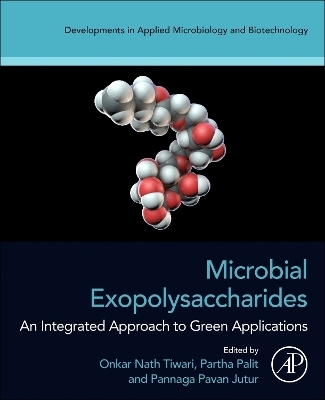
Microbial Exopolysaccharides
Academic Press Inc (Verlag)
978-0-443-36619-2 (ISBN)
- Noch nicht erschienen (ca. Juni 2026)
- Versandkostenfrei
- Auch auf Rechnung
- Artikel merken
The book offers in-depth insights into the principles of EPS and their wide range of applications as sustainable solutions to challenges in the food, health, environmental, and biotechnology sectors.
With a focus on green technology and sustainable practices, this book offers cost-effective utilization of natural EPS, their application in diverse sectors, and serves as an informative resource for those interested in the innovative application of natural bio-macromolecules.
Prof. Onkar Nath Tiwari is a Professor and Principal Scientist at ICAR-Indian Agricultural Research Institute, with over 25 years of experience in Agriculture, Horticulture, Microbiology, and Biotechnology. He earned a PhD in Life Sciences from the University of Allahabad, and has conducted postdoctoral work in the USA, and was a Visiting Professor at the UTEX Culture Collection of Algae, The University of Texas at Austin. Prof. Tiwari has authored numerous publications in international and national journals and over 30 book chapters. He has led major R&D projects, guided PhD scholars, and received accolades such as the Best Scientist Award at the Algal Biomass Summit in the U.S.A. He has a strong background in bioresources development and collaborative research having previously worked as a Scientist at the DBT-Institute for Bioresources and Sustainable Development, Imphal, Manipur, India. Prof. Tiwari's current research focuses on bioremediation, microbial fuel cells, biodiesel production, and sustainable livelihood development. Dr. Partha Palit is currently an Assistant Professor in the Department of Pharmaceutical Sciences at Assam University, Silchar, India. He has a PhD in Pharmacy, and his research achievements have been recognized through awards such as the Fast Track Young Scientist award from the Department of Science and Technology, an Endeavour Postdoc Research Fellowship, and selection as an Australian research ambassador from India by the Australian Government. As a dedicated mentor, he is currently supervising PhD students and has successfully guided several students in their research endeavors. He has authored numerous research publications in national and international journals as well as contributed to several book chapters in Elsevier publications. His research area of interest is drug discovery and development from natural, synthetic, and ethnic medicinal plants and through repurposing against inflammation, auto-immune disorders, cancer, neurological disorders, and microbial infection. Dr. Pannaga Pavan Jutur is a Group Leader of the Omics of Algae Group at the International Centre for Genetic Engineering and Biotechnology (ICGEB) in New Delhi, India. He received his MPhil and PhD in Biochemistry and Molecular Biology from Pondicherry University in Pondicherry, India and further advanced his analytical and technical skills as a postdoctoral research associate at the University of Nebraska in Lincoln, Nebraska, U.S.A. With a background in algal biology and omics/metabolic engineering, he focuses on utilizing an integrative multi-omics approach to understand microalgal systems for biofuel production. His research aims to develop strategies for converting light and carbon sources into biomass, biofuels, and bio-renewables. Dr. Jutur has published 70 research papers and mentored numerous pre-doctoral and postdoctoral fellows, as well as graduate and postgraduate students. His future goals include advancing molecular tools for metabolic pathway regulation in microalgae to enhance next-generation biofuel production.
1. Natural Exopolysaccharides. Introduction, structural classification, and importance as a nanobiomaterial
2. Exopolysaccharides. Different natural sources, physical, chemical characterization, biological properties, and structural features
3. Latest advancements in green technologies for the eco-friendly extraction and processing of biomaterials derived from natural extracellular polysaccharides (EPS). Benefits, advantages on sustainability and renewability
4. Green extraction and production of high-yielded exopolysaccharides and optimization of different regulatory process parameters for industrial scale-up
5. Role of exopolysaccharides as prebiotic in health-promoting nutraceuticals formulation development
6. Probiotic potential of novel natural exopolysaccharides. Prospects and scope
7. EPS-producing probiotics and their applications on translational medicine
8. Impacts of EPS on gut microbiome and associated lifestyle disorders
9. EPS. A potential source for bio-fertilizers in eco-friendly green farming for crop improvement and productivity
10. EPS as raw nano-biomaterials for 3D printing technology
11. Potential application of EPS as a cleansing agent
12. Recent progress and outlook of natural EPS for biomedical application
13. Potential application of EPS in nano biosensor development towards biomedical diagnosis
14. Potential application of natural EPS in pest control in organic farming
15. EPS as a potential nano-theragnostic agent. Current perspectives and scope
16. EPS. A promising antioxidant and anti-biofilm agent
17. EPS. A potential anti-inflammatory agent
18. EPS. A potential application in bone tissue engineering for repairing and regeneration
19. EPS. A potential agent as wound healer
20. The significant role of exopolysaccharides in biodegradable, renewable, and sustainable bioplastic production technology
21. Chemico-structural features and respective biomedical utility co-relationships of different categorized exopolysaccharides
22. Current status and advancements of natural EPS as potential excipients and adjuvants in the pharmaceutical field
23. Latest status and advancements of EPS in the food industry and eco-friendly packaging
24. Safety and toxicity assessment of EPS for food applications
25. Integrated application of exopolysaccharides as herbicides and pesticides for green cultivation
26. Recent developments, deep insights into opportunities, failures, and the challenges of exopolysaccharides in biotechnological applications
27. Current regulations governing EPS application and commercialization for food, pharmaceutical, and medical applications
28. The emerging technology of biofuel production from exopolysaccharides
| Erscheint lt. Verlag | 1.6.2026 |
|---|---|
| Reihe/Serie | Developments in Applied Microbiology and Biotechnology |
| Verlagsort | San Diego |
| Sprache | englisch |
| Maße | 191 x 235 mm |
| Gewicht | 450 g |
| Themenwelt | Naturwissenschaften ► Biologie ► Mikrobiologie / Immunologie |
| ISBN-10 | 0-443-36619-5 / 0443366195 |
| ISBN-13 | 978-0-443-36619-2 / 9780443366192 |
| Zustand | Neuware |
| Informationen gemäß Produktsicherheitsverordnung (GPSR) | |
| Haben Sie eine Frage zum Produkt? |
aus dem Bereich