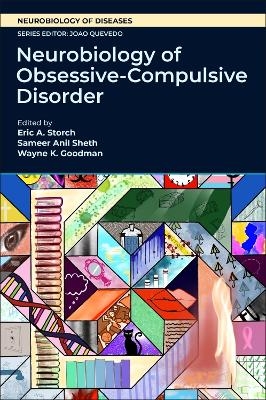
Neurobiology of Obsessive-Compulsive Disorder
Academic Press Inc (Verlag)
978-0-443-27446-6 (ISBN)
- Noch nicht erschienen (ca. Juni 2026)
- Versandkostenfrei
- Auch auf Rechnung
- Artikel merken
Special attention is given to PANDAS/PANS as mechanisms of OCD pathogenesis and the insights gained from animal models. Subsequent chapters cover diagnosis, pharmacological treatments, and a range of psychotherapeutic and behavioral interventions, including CBT, ERP, and ACT, as well as neuromodulation techniques. Finally, the book presents neurobiology-informed treatment approaches, personalized medicine, and integrative strategies, concluding with discussions on current challenges, ethical considerations, and future research directions. This comprehensive guide is essential for advancing the understanding and treatment of OCD.
Dr. Eric Storch is McIngvale Presidential Endowed Chair & Professor at Baylor College of Medicine. Dr. Storch has received multiple grants from federal agencies for his research (i.e., NIH, CDC), is a Fulbright Scholar, and has published over 14 books and over 500 articles and chapters. He specializes in the nature and treatment of childhood and adult obsessive-compulsive disorder and related conditions, anxiety disorders, and anxiety among youth with autism. Dr. Sheth graduated Summa Cum Laude from Harvard University with a degree in Physics and Astronomy. He then entered the Medical Scientist Training Program at the UCLA School of Medicine, where he received both his MD and PhD degrees. Dr. Sheth trained in Neurological Surgery at the Massachusetts General Hospital and Harvard Medical School. Dr. Sheth specializes in the treatment of patients with Movement Disorders, Epilepsy, Brain Tumors, Trigeminal Neuralgia, Hydrocephalus, and certain Psychiatric Disorders. He enjoys bringing a personalized approach to each patient in order to arrive at an individually tailored treatment plan optimized for the patient and his or her family. He works with a world-class multi-disciplinary team of surgeons, neurologists, psychiatrists, radiologists, and others to provide compassionate, state-of-the-art care for his patients. Among the many techniques at his disposal are stereotactic neurosurgery, deep brain stimulation, ablative techniques, awake brain mapping, electrode recordings, computer-guided navigation, and microsurgery. Dr. Sheth is also a neuroscientist, with PhD and post-doctoral training in neurophysiology. His research interests are centered on a desire to better understand brain function. Dr. Sheth’s research is motivated by the belief that if we can understand how the brain works at the level of individual neurons and circuits, we will be much better equipped to repair it. By understanding normal brain processes such as motor control, reward processing, and decision-making, we can understand disease processes such as movement disorders, addiction, and anxiety disorders. Dr. Sheth’s research has been funded by the NIH, the Harvard Catalyst, the MGH Cancer Center, and the American Association of Neurological Surgeons. Wayne Goodman is an American psychiatrist and researcher who specializes in Obsessive-Compulsive Disorder (OCD). He is the principal developer, along with his colleagues, of the Yale-Brown Obsessive Compulsive Scale (Y-BOCS). In 2016, Goodman was appointed the D.C and Irene Ellwood Professor and chair of the Menninger Department of Psychiatry and Behavioral Sciences at Baylor College of Medicine. He is also an adjunct professor in the Department of Electrical and Computer Engineering at Rice University.
1. Understanding OCD
2. Genetics and Family Studies
3. Neuroanatomy of OCD
4. Neurochemistry and Neurotransmitters
5. Neuropsychological Findings
6. Neurodevelopmental Factors
7. PANDAS/PANS
8. Animal Models of OCD
9. Diagnosis
10. Pharmacological Treatments
11. Psychotherapy and Behavioral Interventions
12. Neurobiology-Informed Treatment Approaches
13. Challenges and Future Directions
| Erscheint lt. Verlag | 1.6.2026 |
|---|---|
| Reihe/Serie | Neurobiology of Disease |
| Verlagsort | San Diego |
| Sprache | englisch |
| Maße | 152 x 229 mm |
| Gewicht | 450 g |
| Themenwelt | Naturwissenschaften ► Biologie ► Humanbiologie |
| Naturwissenschaften ► Biologie ► Zoologie | |
| ISBN-10 | 0-443-27446-0 / 0443274460 |
| ISBN-13 | 978-0-443-27446-6 / 9780443274466 |
| Zustand | Neuware |
| Informationen gemäß Produktsicherheitsverordnung (GPSR) | |
| Haben Sie eine Frage zum Produkt? |
aus dem Bereich