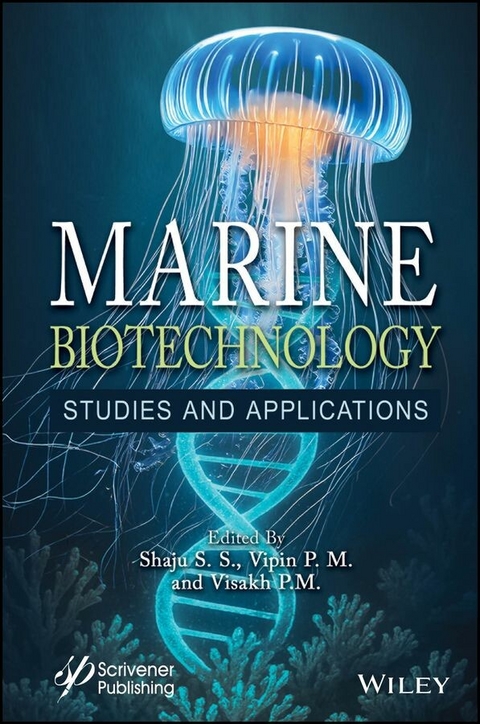
Marine Biotechnology (eBook)
522 Seiten
Wiley-Scrivener (Verlag)
978-1-394-30130-0 (ISBN)
Discover the cutting-edge field of marine biotechnology with this comprehensive guide, offering expert insights and real-world case studies demonstrating its wide range of applications.
Marine biotechnology is a cutting-edge field leading to a more sustainable future through the extraction of biocompounds. This book introduces the fundamentals of marine biotechnology and its applications. Through expert insights and real-world case studies, the book serves as a comprehensive guide for a wide range for concepts, including the evolution of marine biotechnology and biodiscovery, bio-molecular components extracted from marine bioresources, and biotechnological advances to extend the use of marine bioresources for industrial and agricultural applications. This book is an essential resource for beginners and seasoned professionals looking towards the future of marine biotechnology.
Readers will find this volume:
- Presents real-world studies and applications to demonstrate the evolution of marine biotechnology and biodiversity;
- Provides in-depth explorations of niche concepts, such as bioprospecting of natural products from marine phytoplanktons, pharmaceutical and nutraceutical applications of marine micro-algae, and the application of marine gelatin and chitosan edible nanocomposite film for food coating and packaging;
- Explores methods to help researchers find solutions to both fundamental and applied problems in the area of marine biotechnology.
Audience
Marine scientists, aquaculture technologists, marine engineers, and academics interested in the cutting-edge applications of marine biotechnology.
Shaju S. S., PhD is an assistant professor in the Department of Chemical Oceanography at Cochin University of Science and Technology, Kerala, India. He has authored 19 peer-reviewed publications, one book, and contributed to seven technical reports. Additionally, he has participated in 22 oceanographic scientific expeditions, spending approximately 400 days at sea. His research focuses on the validation of satellite ocean color sensors, the development of retrieval algorithms, marine pollution studies, and natural marine products and resources.
Vipin P. M., PhD is a senior instructor in Fishing Biology at the Central Institute of Fisheries Nautical and Engineering Training, Kochi, India. He has published two books and more than 13 research and review articles in peer-reviewed national and international journals. He specializes in marine ecology, deep-sea fish, fish biology, and fisheries resource management.
Visakh P.M., PhD works in the Natural Bioactive Materials Laboratory, Department of Bioengineering, Ege University, Bornova/Izmir, Turkey. He has published 45 books, 22 research articles, four reviews, and more than 50 book chapters. His areas of research include polymer sciences, polymer nanocomposites, material sciences, bionanocomposites, and marine sciences.
Discover the cutting-edge field of marine biotechnology with this comprehensive guide, offering expert insights and real-world case studies demonstrating its wide range of applications. Marine biotechnology is a cutting-edge field leading to a more sustainable future through the extraction of biocompounds. This book introduces the fundamentals of marine biotechnology and its applications. Through expert insights and real-world case studies, the book serves as a comprehensive guide for a wide range for concepts, including the evolution of marine biotechnology and biodiscovery, bio-molecular components extracted from marine bioresources, and biotechnological advances to extend the use of marine bioresources for industrial and agricultural applications. This book is an essential resource for beginners and seasoned professionals looking towards the future of marine biotechnology. Readers will find this volume: Presents real-world studies and applications to demonstrate the evolution of marine biotechnology and biodiversity; Provides in-depth explorations of niche concepts, such as bioprospecting of natural products from marine phytoplanktons, pharmaceutical and nutraceutical applications of marine micro-algae, and the application of marine gelatin and chitosan edible nanocomposite film for food coating and packaging; Explores methods to help researchers find solutions to both fundamental and applied problems in the area of marine biotechnology. Audience Marine scientists, aquaculture technologists, marine engineers, and academics interested in the cutting-edge applications of marine biotechnology.
1
Marine Biotechnology: Studies and Applications—State-of-the-Art and New Challenges
Shaju S. S.1, Vipin. P. M.2, Visakh. P.M.3* and Shiv Kumari Panda4
1Department of Chemical Oceanography, School of Marine Sciences, Cochin University of Science and Technology, Cochin, Kerala, India
2Central Institute of Fisheries Nautical and Engineering Training (CIFNET), (Department of Fisheries, Ministry of Fisheries, Animal Husbandry and Dairying, Government of India) Kochi, India
3Natural Bioactive Materials Laboratory, Department of Bioengineering, Ege University, Bornova/Izmir, Turkey
4PI: OURIIP SEED FUND, Govt. of Odisha. Udayanath Autonomous College of Science & Technology, Adaspur, Cuttack, Odisha, India
Abstract
In this chapter, a short version of all chapters is provided covering different chapter topics such as exploring the therapeutic potential of microalgae-derived compounds, pharmaceutical and nutraceutical applications of marine microalgae, extraction of drugs and food ingredients from marine macroalgae, biotechnological applications of marine bacteria: marine biotechnology, nanoparticles and phytoconstituents from marine mangrove plant, mesopelagic fish protein hydrolysates, mesopelagic fishes: potential use for anticancer and antimicrobial biotechnological applications, marine-derived drugs: recent advances in cancer therapy and immune signaling, and marine bivalve-derived bioactive compounds: anticancer and antimicrobial effects.
Keywords: Marine biotechnology, microalgae, marine bacteria, marine mangrove plant, nanoparticles, phytoconstituents, mesopelagic fish protein, anticancer
1.1 Exploring the Therapeutic Potential of Microalgae-Derived Compounds
Microalgae are reported to be rich in nutrients such as proteins, pigments, polyunsaturated omega-3 fatty acids, polysaccharides, vitamins, and minerals. However, their nutritional composition is reported to vary with the type of species, geographical conditions, culture conditions etc. Microalgae are reported to be a rich source of pigments such as phycobiliproteins, β-carotene, astaxanthin, luteine, and cantaxanthin. The colorant attributes, coupled with its bioactivities, boosts the applications of microalgal-based pigments in different sectors such as food, feed, biomedical, and cosmetics. Microalgal β-carotene comprises a mixture of all-trans and 9-cis isomers, which have been proven to have high bioaccessibility and potential antioxidant activity, whereas synthetic carotene has only all-trans isomers [1]. Natural astaxanthin is reported to be more esterified, up to 95%, than its synthetic counterpart aiding in high energy production and conferring protection to tissues from oxidative damage. Lipids, especially omega-3 polyunsaturated fatty acids (PUFAs), are reported to have important positive implications on human health. Consumption of foods rich in omega-3 PUFAs is reported to offer protection from different ailments such as inflammatory disorder, neurological disorders, and cardiovascular diseases. The content of lipids, especially fatty acids, is reported to be influenced by the type and species of microalgae and its cultivation conditions, such as temperature, light, and nutrients. It has been reported that marine microorganisms are reported to produce more PUFAs than freshwater because of the frequent exposure to the salt conditions [2]. The major microalgal polysaccharides include starch, cellulose, sugar, etc. [3].
Microalgal polysaccharides are often classified based on their function such as structure or storage or as matrix polysaccharides. The matrix-based polysaccharides that are entirely released into the environment are often referred to as extracellular polysaccharides (EPSs). In general, microalgal-based polysaccharides are heteropolymers in nature [4]. Microalgal-based EPSs are often present as a viscous mass surrounding a cell or group of cells, which are produced either as a protection mechanism or in response to fluctuating environmental conditions [5]. The microalgal-based polysaccharides are finding applications in the nutraceutical, feed and cosmetic industries as they have immense bioactivities such as antioxidant, antibacterial, antitumor, and anti-inflammatory activity [6]. Zhao et al. [7] reported the promising potential of UAE as a pre-treatment step in recovering carbohydrates from microalgal biomass as a renewable feedstock for bio-fermentation process. Binary mixtures of green solvents, such as water–DMSO and water–ethanol, were reported to be effective for recovering phenolic compounds and carotenoids from microalgae via an ultrasound-assisted extraction [8]. Sierra et al. [9] employed enzymatic extraction as an effective pre-treatment step for enhancing the recovery of lipids and protein. Zhang et al. [10] optimized enzymatic hydrolysis as an effective method for recovering lipids from the microalgae, Scenedesmus sp. Zhong et al. [11] reported a hydrothermal-based method for the bio-production of acetic acid from microalgae. Huang et al. [12] detailed the use of a deep eutectic solvent-assisted hydrothermal extraction method as an environment-friendly process for recovering microalgal lipids. Silva et al. [13] employed a biorefinery-based framework for biofuel production from microalgae using hydrothermal liquefaction. Mohit et al. [14] also employed LCA for evaluating the environmental benefits associated with microalgal-mediated biofuel production. Arbour et al. [15] employed LCA as a tool to evaluate the utilization of microalgae for waste water utilization from shrimp recirculating aquaculture firms. Nannochloropsis is used mainly for aquaculture, as it represents one of the major sources of EPA (eicosapentaenoic acid), an omega-3 fatty acid [16]. It is used to enrich the nutritional profile of feed for fish and shrimp enhancing their growth and health [17]. The high EPA content of Nannochloropsis maintains cardiovascular health, reduces inflammation, and improves the general health of aquatic organisms [18].
Chlorella is the other well-known microalga applied mainly as a dietary supplement. It becomes valuable due to its high content of chlorophyll, proteins, and also some vitamins (C, E) and minerals (zinc, magnesium) that are essential [19]. Chlorella is used in cosmetics and personal care products due to its feature of rejuvenating the skin [20]. It detoxifies the body by removing heavy metals, thus already proving its detoxifying effect [21].
1.2 Pharmaceutical and Nutraceutical Applications of Marine Microalgae
The benefits to the food and pharmaceutical industries have led to a growing interest in algae. Antioxidant and photoprotective characteristics are seen in two substances found in several species of marine algae. These are a type of amino acid called mycosporin and a type of organic pigment called carotenoid [22, 23]. Microalgae can survive in extreme environments and can grow in any place with light and humidity as they are amazing organisms [24]. Chemical compounds of microalgal origin called bioactive compounds, like phycocyanin, beta carotene, oleic acid, linolenic acid, cobalamin (vitamin B12), vitamin E, lutein, cyanovirin, and zeaxanthin, have exhibited anti-enzymatic, antimicrobial, anticarcinogenic, antibiotic actions, photoprotective, anti-inflammatory, antioxidant, anti-aging, and hypocholesterolemic properties [25].
Other major functions of microalgae include its capability to improve stabilization of the marine ecosystem as they are fed upon by other marine organisms. Resources, like microalgal technology, are used due to the increase in demand of microalgae as sources of bioenergy, food, and pharmaceuticals and thus meet their growing market potential [26]. Nutraceutical is a combination of two words—nutrient and pharmaceutical. These compounds have shown to be of high health benefits and supplemented through diet. Nutraceuticals of marine origin is called marine nutraceuticals and have become of great importance in recent years. Seaweed, microalgae, fish and fish by-products, crustaceans, marine fungi, and bacteria are the ones of interest as sources of ingredients that promote health or as healthy food. Microalgae do not require freshwater or arable land; they do not require pesticides or fertilizer either. They are an environment-friendly food source and are sustainable. They are also safe for the environment. They are highly efficient in accessing water and nutrients. Their photosynthetic machinery is efficient too. They have high productivity and short growth cycle [27, 28]. Microalgae have high nutritional value and are a source of pigments, proteins, and fatty acids that are required for human consumption. Nutraceutical and pharmaceutical components are produced from microalgae because of their excellent properties. Microalgal technology is an applicable resource that meets the market potential because of the increasing need for food, bioenergy, and other bioactive compounds. Microalgae have pharmaceutical applications that are dependent upon their anticancer, antioxidant, antimicrobial, and anti-inflammatory properties. The water-soluble antioxidants present in microalgae are polyphenols, phycobiliproteins, and vitamins that help in inhibiting cancer by causing the regression of premalignant lesions.
Vitamin B helps in red blood cell movement,...
| Erscheint lt. Verlag | 8.10.2025 |
|---|---|
| Reihe/Serie | Marine Sciences and Technology |
| Sprache | englisch |
| Themenwelt | Naturwissenschaften ► Biologie ► Ökologie / Naturschutz |
| ISBN-10 | 1-394-30130-8 / 1394301308 |
| ISBN-13 | 978-1-394-30130-0 / 9781394301300 |
| Informationen gemäß Produktsicherheitsverordnung (GPSR) | |
| Haben Sie eine Frage zum Produkt? |
 EPUB (Adobe DRM)
Kopierschutz: Adobe-DRM
Adobe-DRM ist ein Kopierschutz, der das eBook vor Mißbrauch schützen soll. Dabei wird das eBook bereits beim Download auf Ihre persönliche Adobe-ID autorisiert. Lesen können Sie das eBook dann nur auf den Geräten, welche ebenfalls auf Ihre Adobe-ID registriert sind.
Details zum Adobe-DRM
Dateiformat: EPUB (Electronic Publication)
EPUB ist ein offener Standard für eBooks und eignet sich besonders zur Darstellung von Belletristik und Sachbüchern. Der Fließtext wird dynamisch an die Display- und Schriftgröße angepasst. Auch für mobile Lesegeräte ist EPUB daher gut geeignet.
Systemvoraussetzungen:
PC/Mac: Mit einem PC oder Mac können Sie dieses eBook lesen. Sie benötigen eine
eReader: Dieses eBook kann mit (fast) allen eBook-Readern gelesen werden. Mit dem amazon-Kindle ist es aber nicht kompatibel.
Smartphone/Tablet: Egal ob Apple oder Android, dieses eBook können Sie lesen. Sie benötigen eine
Geräteliste und zusätzliche Hinweise
Buying eBooks from abroad
For tax law reasons we can sell eBooks just within Germany and Switzerland. Regrettably we cannot fulfill eBook-orders from other countries.
aus dem Bereich