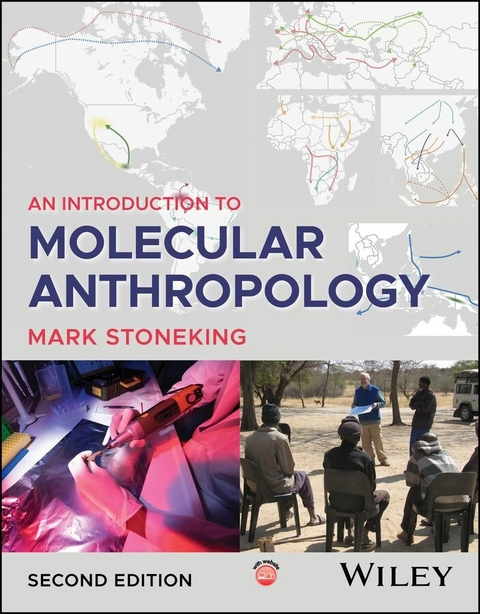
An Introduction to Molecular Anthropology (eBook)
467 Seiten
Wiley (Verlag)
978-1-394-26261-8 (ISBN)
A freshly updated discussion of the foundations of-and latest developments in-molecular anthropology
In the newly revised second edition of An Introduction to Molecular Anthropology, retired researcher Dr. Mark Stoneking delivers an essential primer on genetics and molecular anthropology. The book is an accessible resource that covers key recent developments in the production and analysis of genome-wide data that highlights advances in methods and technologies, as well as the latest findings from ancient DNA.
The updated chapters build on basic genetics and evolutionary concepts to demonstrate how to make inferences about human population history and human evolution in the genomics age. It explores how evolution influences genes, how genes evolve, the different kinds of genetic variation in humans and how they are analyzed, and the latest technologies and ethical issues that arise from the sampling of modern populations.
Readers will also find:
- A thorough introduction to the genetic evidence of human origins and the spread of humans around the world
- Comprehensive explorations of the role of selection and adaptation in human evolution
- Practical discussions of the impact of culture on human genetic variation
- Complete treatments of likely future developments within molecular anthropology in the genomics era
Perfect for anthropology students and others studying introductory human evolution, An Introduction to Molecular Anthropology will also benefit practicing anthropologists and researchers in a variety of fields that touch on this topic.
Mark Stoneking, PhD, (retired) was a Group Leader at the Max Planck Institute for Evolutionary Anthropology, and an Honorary Professor of Biological Anthropology at the University of Leipzig. He now holds an Emeritus research position at the University of Lyon and the CNRS Laboratory in Biometry and Evolutionary Biology in Lyon, France.
A freshly updated discussion of the foundations of and latest developments in molecular anthropology In the newly revised second edition of An Introduction to Molecular Anthropology, retired researcher Dr. Mark Stoneking delivers an essential primer on genetics and molecular anthropology. The book is an accessible resource that covers key recent developments in the production and analysis of genome-wide data that highlights advances in methods and technologies, as well as the latest findings from ancient DNA. The updated chapters build on basic genetics and evolutionary concepts to demonstrate how to make inferences about human population history and human evolution in the genomics age. It explores how evolution influences genes, how genes evolve, the different kinds of genetic variation in humans and how they are analyzed, and the latest technologies and ethical issues that arise from the sampling of modern populations. Readers will also find: A thorough introduction to the genetic evidence of human origins and the spread of humans around the worldComprehensive explorations of the role of selection and adaptation in human evolutionPractical discussions of the impact of culture on human genetic variationComplete treatments of likely future developments within molecular anthropology in the genomics era Perfect for anthropology students and others studying introductory human evolution, An Introduction to Molecular Anthropology will also benefit practicing anthropologists and researchers in a variety of fields that touch on this topic.
| Erscheint lt. Verlag | 25.9.2025 |
|---|---|
| Sprache | englisch |
| Themenwelt | Naturwissenschaften ► Biologie |
| Schlagworte | Adaptation • Ancient DNA • Archaic humans • Evolutionary genetics • genes and culture • Human Evolution • Migration • molecular anthropology methods • molecular anthropology technology • Population Genetics • Population History • selection |
| ISBN-10 | 1-394-26261-2 / 1394262612 |
| ISBN-13 | 978-1-394-26261-8 / 9781394262618 |
| Informationen gemäß Produktsicherheitsverordnung (GPSR) | |
| Haben Sie eine Frage zum Produkt? |
 PDF (Adobe DRM)
Kopierschutz: Adobe-DRM
Adobe-DRM ist ein Kopierschutz, der das eBook vor Mißbrauch schützen soll. Dabei wird das eBook bereits beim Download auf Ihre persönliche Adobe-ID autorisiert. Lesen können Sie das eBook dann nur auf den Geräten, welche ebenfalls auf Ihre Adobe-ID registriert sind.
Details zum Adobe-DRM
Dateiformat: PDF (Portable Document Format)
Mit einem festen Seitenlayout eignet sich die PDF besonders für Fachbücher mit Spalten, Tabellen und Abbildungen. Eine PDF kann auf fast allen Geräten angezeigt werden, ist aber für kleine Displays (Smartphone, eReader) nur eingeschränkt geeignet.
Systemvoraussetzungen:
PC/Mac: Mit einem PC oder Mac können Sie dieses eBook lesen. Sie benötigen eine
eReader: Dieses eBook kann mit (fast) allen eBook-Readern gelesen werden. Mit dem amazon-Kindle ist es aber nicht kompatibel.
Smartphone/Tablet: Egal ob Apple oder Android, dieses eBook können Sie lesen. Sie benötigen eine
Geräteliste und zusätzliche Hinweise
Buying eBooks from abroad
For tax law reasons we can sell eBooks just within Germany and Switzerland. Regrettably we cannot fulfill eBook-orders from other countries.
aus dem Bereich