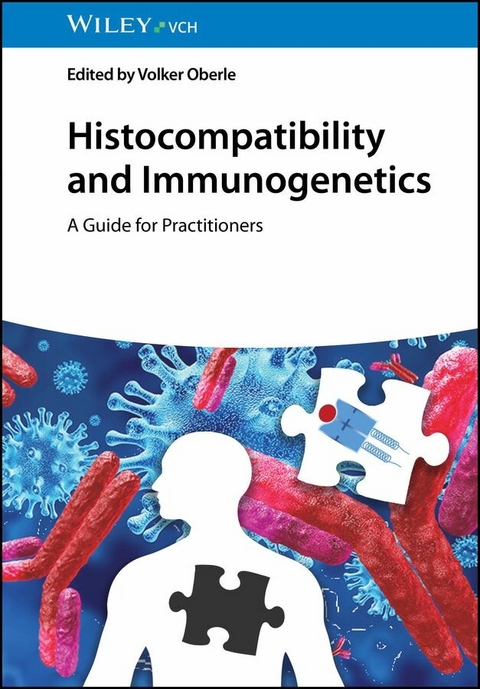
Histocompatibility and Immunogenetics (eBook)
1035 Seiten
Wiley-VCH (Verlag)
978-3-527-84759-4 (ISBN)
The EFI-, ASHI-, and APHIA-endorsed professional guide for laboratory diagnostics in transplantation medicine
In Histocompatibility and Immunogenetics: A Guide for Practitioners, expert authors from across the globe deliver an authoritative introduction to the concepts, methods, and clinical applications of matching donors with acceptors of transplanted cells and organs. Fundamental concepts and limitations of current immunogenetic as well as histocompatibility diagnostic approaches are explained, and best practices to improving the outcomes of transplantation therapies are discussed. Readers will also find:
- A holistic view of transplantation diagnostics, including drug and disease associations with histocompatibility markers
- Options for the medical treatment of organ rejection
- Practical discussions of specific methods in immunogenetics and histocompatibility, such as crossmatching in transplantation and KIR genotyping
- A thorough introduction to the regulatory aspects of histocompatibility and immunogenetics
Perfect for clinical geneticists and immunologists, Histocompatibility and Immunogenetics will also benefit medical and research professionals working in medical laboratories and hospitals.
Volker Oberle, PhD, is the EFI-Director of the Laboratory for Transplantation Immunology at Jena University Hospital. He studied chemistry and biochemistry at the Universities of Freiburg and Halle-Wittenberg, is a DGI-certified Fachimmungenetiker and holds an ESHI diploma.
1
Innate Immune Defence
Margot Lepage and Valérie Dubois
Etablissement Français du Sang (EFS) Auvergne‐Rhône‐Alpes, Department of Biology and Therapies, Histocompatibility Laboratory, 111 Rue Elisée Reclus 69150 Décines‐Charpieu, France
1.1 Introduction
The innate immune system is the highly evolutionarily conserved first line of defense of the body. It is characterized by its prompt and efficient response involving non‐specific mechanisms that may be constitutive, such as physical‐chemical barriers and the complement system, or rapidly inducible, such as the inflammatory reaction.
In this chapter, we will begin by describing the anatomical barriers that protect the host against infection and examine the immediate innate defenses provided by various secreted soluble proteins, known as antimicrobial enzymes and peptides. We will then discuss the complement system, which directly kills some microorganisms and interacts with others to promote their removal by phagocytic cells.
Next, we will explore the induced mechanisms of the innate immune response. We will start by detailing the different strategies of danger recognition used by immune cells, with a particular focus on pattern recognition receptors (PRRs), whose discovery has significantly improved our understanding of immune pathophysiology. We will then discuss the inflammatory reaction, outlining the mechanisms involved in the initiation of inflammation and providing an overview of the different phagocytic cells and the steps involved in the process of phagocytosis. Additionally, we will introduce other cells of the innate immune system, known as innate and innate‐like lymphoid cells, including natural killer cells (NK cells). These lymphoid cells contribute to innate host defenses against viruses and other intracellular pathogens.
Finally, we will discuss the role of innate immunity in the initiation and polarization of the next phase of the immune response: adaptive immunity.
1.2 Anatomical Barriers and Initial Chemical Defenses
The first phase of host defense, called immediate innate defenses, consists of non‐specific mechanisms that are always active and ready to respond to any pathogen. Epithelial surfaces act as a physical barrier against microbial colonization and invasion, but also as a chemical barrier, producing a variety of antimicrobial molecules.
1.2.1 Skin and Mucosal Barriers
Anatomical barriers provide the crucial first line of defense by preventing exposure of internal tissues to microorganisms. These barriers include epithelia of the skin on the outer surfaces of the body along with mucosal surfaces of the respiratory, gastrointestinal, and urogenital tracts. Epithelial cells are held together by tight junctions, which effectively form a seal against the external environment [1]. The internal epithelia secrete a viscous fluid called mucus, which contains glycoproteins called mucins, presenting several protective functions. There are two types of mucins, gel‐forming and transmembrane. All are characterized by large, highly O‐glycosylated mucin domains that are diversely modified by Golgi glycosyltransferases to become extended rodlike structures [2]. The general function of mucus on internal epithelial surfaces is to prevent microorganisms from adhering to the epithelium. In the respiratory tract, microorganisms can be expelled in the outward flow of mucus driven by vigorous mucociliary clearance mechanisms. The latter function is most evident in the large intestine, where the inner mucus layer separates the numerous commensal bacteria from the epithelial cells. Also, in the gut, peristalsis is an important mechanism for keeping both food and infectious agents moving through the body. The extreme susceptibility to infection observed in patients suffering from severe cutaneous burns or primary ciliary dyskinesia demonstrates the great importance of this first barrier and the inability of an intact immune system to compensate for its loss [3].
1.2.2 Antimicrobial Enzymes and Peptides
At anatomic barriers, additional resistance mechanisms participate to further strengthen host defenses. Most epithelia produce a wide variety of chemical substances that are microbicidal or that inhibit microbial growth. For example, the acid pH of the stomach and the digestive enzymes, bile salts, fatty acids, and lysolipids present in the upper gastrointestinal tract create a substantial chemical barrier to infection. One important group of antimicrobial proteins includes lysozyme and secretory phospholipase A2, antibacterial enzymes secreted in tears and saliva that attack the chemical characteristics of bacterial cell walls [3].
The second category of antimicrobial agents secreted by epithelial cells and phagocytes consists of antimicrobial peptides such as defensins, cathelicidins, and histatins. These peptides are secreted by epithelial cells at the mucosal surface and by phagocytes in tissues. Defensins are notably an ancient and evolutionarily conserved class of antimicrobial peptides produced by many eukaryotic organisms, including mammals, insects, and plants. Defensins are short cationic peptides (30–40 amino acids) generated by proteolytic processing from inactive propeptides. They act within minutes to disrupt the cell membranes of bacteria and fungi, as well as the membrane envelopes of some viruses. Three subfamilies of defensins (α, β, and θ) are distinguished by their amino acid sequences. Humans only present α‐ and β‐defensins as the human gene homologous to the θ‐defensin gene described in rhesus macaques contains a premature stop codon. To date, six human α‐defensins have been identified, which are further divided into two major classes according to their expression patterns and gene structures: myeloid defensins or human neutrophil peptides (HNPs) 1–4 and human (enteric) defensins (HDs) 5 and 6. HNPs are stored in the azurophilic granules of human neutrophils, along with several other antimicrobial agents. These peptides are typically directed to fuse with phagolysosomes but can also be released into the extracellular medium through the degranulation of activated neutrophils (see part 1.5). HD5 and HD6 are constitutively expressed and secreted by Paneth cells at the bottom of the small intestinal crypt, contributing to the physiological maintenance of the digestive barrier. Although more than 30 β‐defensin genes exist in the human genome, only a few have been extensively characterized at the genomic and functional levels. Their expression is restricted to keratinocytes of the skin and epithelial cells. Human β‐defensin 1 (HBD1) is constitutively expressed in various epithelial and mucosal tissues. HBD2 and HBD3 are induced by microbial aggressions and pro‐inflammatory cytokines, primarily in epithelia of the respiratory and urogenital tracts, skin, and tongue. β‐Defensins produced by keratinocytes in the epidermis and by type II pneumocytes in the lungs are packaged into lamellar bodies, lipid‐rich secretory organelles that release their contents into the extracellular space to form a watertight lipid sheet in the epidermis and the pulmonary surfactant layer in the lung [4].
Another type of bactericidal protein synthesized by epithelia is carbohydrate‐binding proteins, or lectins. C‐type lectins require calcium for the binding activity of their carbohydrate‐recognition domain, which provides a variable interface for binding carbohydrate structures. C‐type lectins of the RegIII family include several bactericidal proteins expressed by intestinal epithelium in humans and mice. Human RegIIIα (also called HIP/PAP for hepatocarcinoma‐intestine‐pancreas/pancreatitis‐associated protein) preferentially kills Gram‐positive bacteria directly by forming a hexameric pore in the bacterial membrane [5].
Finally, peptides S100A8 and S100A9, which heterodimerize to form calprotectin, are produced in high amounts by neutrophils, T cells, and intestinal epithelia. Calprotectin acts to sequester magnesium and iron required by microorganisms and exerts a local antimicrobial effect [5].
Of note, most healthy epithelial surfaces are also associated with a large population of nonpathogenic bacteria, known as commensal bacteria or microbiota. These bacteria help to reinforce the barrier functions of epithelia and can themselves produce antimicrobial substances such as lactic acid by vaginal lactobacilli or bacteriocins by other bacterial strains. Commensal microorganisms also exert an indirect influence by stimulating the epithelial cells to produce antimicrobial peptides. This illustrates how the elimination of commensal microorganisms by antibiotic treatment can pave the way for pathogens to proliferate and cause other diseases [3].
1.3 The Complement System
The complement system is a highly conserved protein interaction platform of the innate immune system, working in coordination with other effectors of immunity to protect the body against infection and other insults.
The complement system is an enzymatic cascade made up of numerous soluble and membrane proteins involved in immune surveillance both in physiological and pathological conditions. These proteins interact with non‐immune cells (epithelial cells, osteoclasts, etc.), innate immune cells (macrophages, dendritic cells, neutrophils, mast cells,...
| Erscheint lt. Verlag | 26.9.2025 |
|---|---|
| Sprache | englisch |
| Themenwelt | Naturwissenschaften ► Biologie ► Genetik / Molekularbiologie |
| Schlagworte | Bone Marrow Transplantation • bone marrow transplant therapy • european federation for immunogenetics • histocompatibility concepts • Immunogenetics book • immunogenetics concepts • Stem Cell Therapy • stem cell transplantation • transplant technologies |
| ISBN-10 | 3-527-84759-6 / 3527847596 |
| ISBN-13 | 978-3-527-84759-4 / 9783527847594 |
| Informationen gemäß Produktsicherheitsverordnung (GPSR) | |
| Haben Sie eine Frage zum Produkt? |
 EPUB (Adobe DRM)
Kopierschutz: Adobe-DRM
Adobe-DRM ist ein Kopierschutz, der das eBook vor Mißbrauch schützen soll. Dabei wird das eBook bereits beim Download auf Ihre persönliche Adobe-ID autorisiert. Lesen können Sie das eBook dann nur auf den Geräten, welche ebenfalls auf Ihre Adobe-ID registriert sind.
Details zum Adobe-DRM
Dateiformat: EPUB (Electronic Publication)
EPUB ist ein offener Standard für eBooks und eignet sich besonders zur Darstellung von Belletristik und Sachbüchern. Der Fließtext wird dynamisch an die Display- und Schriftgröße angepasst. Auch für mobile Lesegeräte ist EPUB daher gut geeignet.
Systemvoraussetzungen:
PC/Mac: Mit einem PC oder Mac können Sie dieses eBook lesen. Sie benötigen eine
eReader: Dieses eBook kann mit (fast) allen eBook-Readern gelesen werden. Mit dem amazon-Kindle ist es aber nicht kompatibel.
Smartphone/Tablet: Egal ob Apple oder Android, dieses eBook können Sie lesen. Sie benötigen eine
Geräteliste und zusätzliche Hinweise
Buying eBooks from abroad
For tax law reasons we can sell eBooks just within Germany and Switzerland. Regrettably we cannot fulfill eBook-orders from other countries.
aus dem Bereich