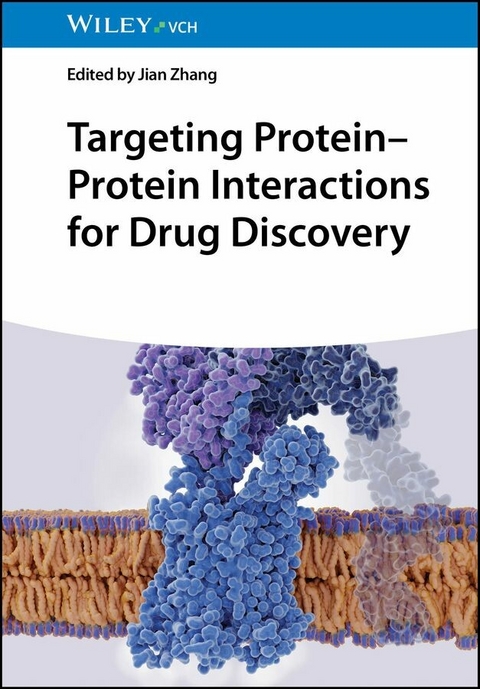
Targeting Protein-Protein Interactions for Drug Discovery (eBook)
767 Seiten
Wiley-VCH (Verlag)
978-3-527-84581-1 (ISBN)
Up-to-date reference surveying the latest advances in the structural understanding of protein-protein interactions and developments in drug discovery and therapeutics
Targeting Protein-Protein Interactions for Drug Discovery provides a systematic and comprehensive overview of protein-protein interactions (PPIs), reviewing foundational concepts, advanced methodologies, and emerging therapeutic strategies, reflecting the multidisciplinary nature of PPI research.
This book discusses computational methods for predicting PPI structures, with a special emphasis on protein docking and deep learning-based approaches, diverse chemical scaffolds for PPI modulation, including foldamers as inhibitors of aberrant PPIs and sulfonyl-?-AApeptides as novel modulators, and the development and application of stapled peptides as modulators of intracellular PPIs, offering enhanced stability, binding affinity, and cellular permeability.
Readers will also find information on cyclic peptides, focusing on their unique conformational stabilization and therapeutic potential across a range of diseases, small molecule inhibitors targeting BCL-family proteins, revealing their potential in cancer therapy, molecular glues as activators for PPIs, categorized into degraders, stabilizers, and inhibitors based on their biological effects, and the targeting of the APC-Asef interaction for drug discovery in colorectal cancer therapy, offering a case study of specificity and clinical relevance.
Targeting Protein-Protein Interactions for Drug Discovery explores sample topics including:
- Challenges and strategies of drug discovery targeting PPIs, including high-throughput screening and structure-based drug design
- Fluorescence resonance energy transfer (FRET) technology, a powerful tool for real-time analysis of molecular interactions in live cells
- Utility of mass spectrometry (MS) for large-scale mapping of PPI networks with high sensitivity and resolution
- Proximity ligation assays (PLA) for detecting PPIs in situ, emphasizing spatial precision and adaptability for multiplexed detection
- Application of surface plasmon resonance (SPR) for characterizing PPI specificity, affinity, and kinetics
Exploring both classical and novel approaches to PPI characterization and modulation, Targeting Protein-Protein Interactions for Drug Discovery offers a comprehensive reference for researchers aiming to unlock the therapeutic potential of PPIs along with educators and students engaged in the study of cellular mechanisms, drug discovery, and biotechnology.
Jian Zhang is a Distinguished Professor and Doctoral Supervisor at School of Medicine, Shanghai Jiao Tong University, China. He is also the Director of the Medicinal Bioinformatics Center. His fields of research include first-in-class drug design and chemical biology, mainly pertaining to protein-protein interactions and allostery and their application in drug discovery. He received a BM degree in Pharmacology from Peking University and a PhD from Shanghai Institute of Materia Medica, Chinese Academy of Sciences.
1
Exploring Protein–Protein Interactions: Concepts, Methods, and Implications
Mi Zhou and Renxiao Wang
Fudan University, School of Pharmacy, Department of Medicinal Chemistry, 826 Zhangheng Road, Shanghai 201203, People's Republic of China
1.1 General Concepts of Protein–Protein Interactions
Proteins are the fundamental machinery that drive the vast majority of cellular processes. These versatile biomolecules rarely perform in isolation; instead, up to 80% of proteins engage in intricate interactions with one another, forming dynamic networks that underpin the functional complexity of living organisms [1]. This chapter aims to provide a comprehensive overview of protein–protein interactions (PPIs). We will begin by elucidating the fundamental concepts of PPIs, covering their definition, structural characteristics, and pivotal roles in both physiological and pathological processes. Building upon this foundation, we delve into the diverse spectrum of current methods employed in PPI studies, showcasing both experimental and computational approaches, along with their varied applications. The chapter culminates in a discussion of the profound implications of PPI research, illuminating its potential in advancing medical understanding, revolutionizing drug discovery, and catalyzing technological innovations across various fields.
1.1.1 Definition of Protein–Protein Interactions
PPIs refer to physical contacts between two or more proteins that occur within a defined biological context. First, these interactions are intentional, not arising from random encounters, but rather precisely orchestrated by specific biomolecular forces and mechanisms. Second, they should be nongeneric, distinct from basic cellular processes like protein synthesis or degradation. Also of note, the formation and regulation of PPIs are highly organized in time and space, governed by a complex interplay of factors such as cell type, cell cycle phase, developmental stage, protein modifications, absence or presence of cofactors and binding partners, and environmental conditions [2, 3].
1.1.2 Structural Properties of Protein–Protein Interactions
The intricate architecture of proteins is critical in determining the specificity, strength, and functional outcomes of their interactions. By unraveling these structural characteristics, researchers can gain deeper insights into the molecular mechanisms underlying PPIs and develop strategies to manipulate them for therapeutic purposes.
Proteins are sophisticated macromolecules comprising an array of structural and functional units that work in concert to perform diverse biological tasks. Among these, domains and short linear motifs (SLiMs) serve as two main classes of functional modules that mediate PPIs. Domains, typically spanning 50–200 residues, are independently folding structural units within proteins that often harbor distinct biological activities. SLiMs, on the other hand, are compact, recurring functional peptides consisting of 3–10 residues, primarily found within intrinsically disordered regions (IDRs) [4]. Indeed, many PPIs can be categorized into domain–domain interactions (DDIs) or domain–motif interactions (DMIs). DDIs usually underpin the formation of stable and long‐lasting complexes, while DMIs are associated with transient and low‐affinity interactions [5].
The surface regions where the direct physical interactions between two or more proteins occur are termed interfaces. They are highly diverse in terms of size, shape, and chemical properties, determining the specific recognition and binding between proteins engaged in different biological processes. According to statistics, one‐sided size of an interface typically ranges from 200 to 2800 Å2, with the majority falling between 200 and 1200 Å2 [6]. Although considered relatively flat, interfaces possess a complex topography characterized by cavities, grooves, and protruding regions. Complementary geometric features ensure that proteins bind to each other in the correct orientation and with high specificity. Moreover, interfaces encompass a variety of chemical interactions, including hydrogen bonds, hydrophobic interactions, electrostatic forces, salt bridges, and disulfide bonds, which collectively account for the specificity and stability of PPIs [7].
Within the interfaces, there exist clusters of residues known as “hot spots,” which make disproportionately large contributions to the binding affinity. Single‐point mutations of these residues to alanine may cause a substantial increase in the binding free energy (ΔΔG ≥ 2 kcal/mol), highlighting their critical roles in stabilizing the PPIs [8]. Hot spots have a distinctive amino acid composition, enriched with tryptophan, arginine, and tyrosine, due to the unique physicochemical properties of these residues like bulky side chains, the propensity to form hydrophobic surfaces, and the capacity to engage in hydrogen bonding [9]. With regard to spatial organization, hot spots cluster within tightly packed regions rather than being randomly distributed, facilitating the removal of water molecules upon binding [10]. Besides, they are surrounded by moderately conserved and energetically less important residues, which form an O‐ring to further occlude bulk solvent from the hot spots [9].
Proteins are not static, rigid structures; rather, they are dynamic entities capable of adopting multiple conformations. This inherent flexibility is critical for their diverse functions, particularly in PPIs. The traditional “lock and key” model, which implies a preexisting perfect fit between interacting proteins, fails to capture the dynamic nature of PPIs [11]. Subsequently, more precise descriptions have been put forward. The “induced fit” model suggests that upon initial contact, proteins undergo conformational changes to achieve an optimal fit with their binding partners [12]. Meanwhile, the “conformational selection” model proposes that proteins exist in an equilibrium of various conformations, with binding events selecting and stabilizing the most favorable conformation [13].
1.1.3 Diverse Types of Protein–Protein Interactions
PPIs manifest in a striking diversity of forms, each tailored to perform a specific biological role. In the following sections, we will explore several prominent types of PPIs, varying in structural properties, molecular recognition mechanisms, and functional outcomes.
1.1.3.1 Enzyme–Substrate Interactions
Enzymes are biological catalysts that bind to specific substrates through their active sites and facilitate the conversion of substrates into product molecules. Key examples that illustrate the diverse roles of enzyme–substrate interactions include: (i) protein phosphorylation and dephosphorylation, where kinases and phosphatases add and remove phosphate groups to substrates, respectively, act as molecular switches in signal transduction [14]; (ii) proteolytic cleavage, an irreversible process mediated by proteases that catalyze the hydrolysis of peptide bonds in target proteins, precisely governs protein maturation, activation, stability, and localization [15]; (iii) histone modifications, such as acetylation and methylation, are carried out by enzymes like histone acetyltransferases (HATs) and histone methyltransferases (HMTs), contributing to epigenetic regulation of gene expression [16].
1.1.3.2 Receptor–Ligand Interactions
Cells possess an intricate communication network to sense and respond to environment cues and stimuli. This network is built upon cell surface receptors that bind external signaling molecules termed ligands, initiating downstream signaling cascades within the cell and manipulating various physiological processes like growth, development, immune response, and metabolism [17]. G protein‐coupled receptors (GPCRs) constitute the largest family of these receptors, characterized by a unique architecture comprising seven transmembrane helices joined by intracellular and extracellular loops [18]. Chemokines, a class of small secreted proteins, exemplify protein ligands that bind to a specific subfamily of GPCRs called chemokine receptors. By sequentially binding to the N‐terminal region and extracellular loops of their receptors, chemokines induce receptor conformational rearrangement and activation that direct immune cell migration and positioning during inflammation [19].
1.1.3.3 Antigen–Antibody Interactions
Antibodies are glycoproteins produced by B lymphocytes to recognize and bind to foreign substances known as antigens, which can be present on the surface of invading pathogens like viruses and bacteria. This interaction launches an immune response to neutralize and eliminate pathogens, thus protecting the body from infection and disease [20]. An antibody is composed of two identical heavy chains and two identical light chains connected by disulfide bonds. Antigen recognition is achieved by the complementarity‐determining regions (CDRs) located at the N‐terminus of both heavy and light chains that precisely match antigen's epitope [21]. Beyond their pivotal role in the immune system, the exquisite specificity of antigen–antibody interactions has also...
| Erscheint lt. Verlag | 24.9.2025 |
|---|---|
| Sprache | englisch |
| Themenwelt | Naturwissenschaften ► Chemie |
| ISBN-10 | 3-527-84581-X / 352784581X |
| ISBN-13 | 978-3-527-84581-1 / 9783527845811 |
| Informationen gemäß Produktsicherheitsverordnung (GPSR) | |
| Haben Sie eine Frage zum Produkt? |
 EPUB (Adobe DRM)
Kopierschutz: Adobe-DRM
Adobe-DRM ist ein Kopierschutz, der das eBook vor Mißbrauch schützen soll. Dabei wird das eBook bereits beim Download auf Ihre persönliche Adobe-ID autorisiert. Lesen können Sie das eBook dann nur auf den Geräten, welche ebenfalls auf Ihre Adobe-ID registriert sind.
Details zum Adobe-DRM
Dateiformat: EPUB (Electronic Publication)
EPUB ist ein offener Standard für eBooks und eignet sich besonders zur Darstellung von Belletristik und Sachbüchern. Der Fließtext wird dynamisch an die Display- und Schriftgröße angepasst. Auch für mobile Lesegeräte ist EPUB daher gut geeignet.
Systemvoraussetzungen:
PC/Mac: Mit einem PC oder Mac können Sie dieses eBook lesen. Sie benötigen eine
eReader: Dieses eBook kann mit (fast) allen eBook-Readern gelesen werden. Mit dem amazon-Kindle ist es aber nicht kompatibel.
Smartphone/Tablet: Egal ob Apple oder Android, dieses eBook können Sie lesen. Sie benötigen eine
Geräteliste und zusätzliche Hinweise
Buying eBooks from abroad
For tax law reasons we can sell eBooks just within Germany and Switzerland. Regrettably we cannot fulfill eBook-orders from other countries.
aus dem Bereich