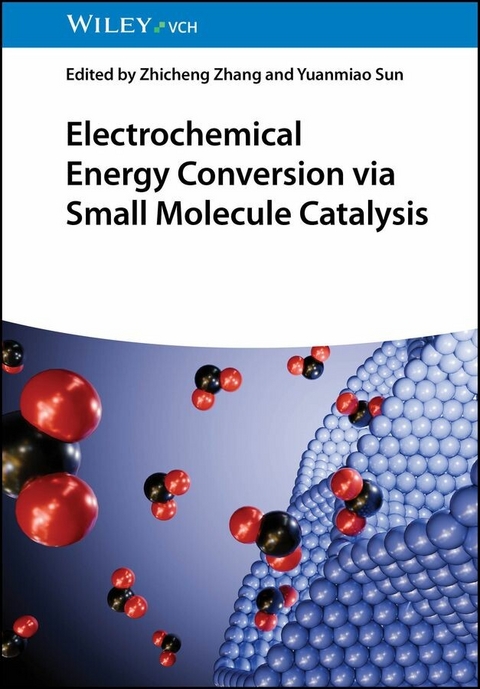
Electrochemical Energy Conversion via Small Molecule Catalysis (eBook)
796 Seiten
Wiley-VCH (Verlag)
978-3-527-84927-7 (ISBN)
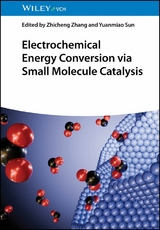
A practical and authoritative examination of the electrochemical energy conversion
In Electrochemical Energy Conversion via Small Molecule Catalysis, a team of distinguished researchers delivers an up-to-date discussion of state-of-the-art techniques of electrochemical energy conversion conducted with small molecule catalysis. The authors cover the foundational concepts and theories relevant to the technique, electrochemical oxygen evolution reaction, electrochemical oxygen reduction reaction, and electrochemical carbon-nitrogen coupling reaction.
Readers will find detailed explorations of the characterization techniques and the computational approaches for catalysis evaluation and prediction. You'll also discover examinations of the mechanisms and development status of many widely employed energy conversion reactions.
The book includes:
- A thorough introduction to constant-potential modeling in CO2 reduction
- Comprehensive explorations of advanced in situ characterization techniques for direct observation of gas-involved electrochemical reactions
- Practical discussions of dynamic structural evolution identification via x-ray absorption fine structure
- Complete treatments of catalysts for electrocatalytic oxygen reduction reaction
Perfect for electrochemists, catalytic chemists, and materials scientists, Electrochemical Energy Conversion via Small Molecule Catalysis will also benefit chemical engineers, environmental chemists, and polymer chemists.
Zhicheng Zhang, PhD, is currently a Professor of Tianjin University in China. He is the Associate Editor of SmartMat and an editorial board member of Nano Research, Chinese Chemical Letters, and Rare Metals.
Yuanmiao Sun, PhD, is a Professor of Shenzhen Institutes of Advanced Technology, Chinese Academy of Sciences. His research is focused on the design of efficient functional materials via multi-dimensional computation modeling and calculation.
Chapter 1
Introduction
Yiran Zhang, Zhicheng Zhang*
Tianjin Key Laboratory of Molecular Optoelectronic Sciences, Department of Chemistry, School of Science, Tianjin University, Tianjin, China
*Corresponding author: zczhang19@tju.edu.cn
1.1 Origins and Evolution of Small-molecule Catalysis for Electrochemical Energy Conversion
The pursuit of sustainable energy sources has led to significant interest in electrochemical energy conversion (EEC) technologies, which offer an efficient pathway for transforming chemical energy into electrical energy and vice versa. One key component in these technologies is catalysts, specifically small-molecule catalysts, which facilitate the electrochemical conversion processes. The roots of small-molecule catalysis trace back to early studies in electrochemistry and surface chemistry, where fundamental reactions like hydrogen evolution, oxygen evolution, and oxygen reduction were identified as critical steps in energy conversion processes [1].
Early discoveries focused on platinum and other noble metals due to their exceptional catalytic activity. However, the high cost and limited availability of these metals raised concerns about their scalability for large-scale applications. This led to a surge of interest in alternative catalysts, particularly small molecules, which could mimic the catalytic properties of noble metals. As the field of EEC expanded, researchers recognized that the key to unlocking sustainable energy solutions lies in developing cost-effective, efficient, and stable catalysts [2].
In recent decades, advancements in materials science, surface chemistry, and catalytic design have brought forth a wide array of small-molecule catalysts, such as molecular catalysts, non-precious metal-based catalysts, and hybrid materials. These catalysts are capable of promoting a variety of electrochemical reactions, including hydrogen oxidation, CO2 reduction, and nitrogen fixation, which are central to the development of green energy technologies. Understanding the principles of small-molecule catalysis and developing efficient, sustainable catalysts remains one of the most active areas of research in EEC.
1.2 Current State of Small-molecule Catalysis in Electrochemical Energy Conversion
Small-molecule catalysis has gained significant traction as a promising approach for advancing EEC technologies. The development of non-precious metal catalysts, molecular catalysts, and atomically dispersed catalysts has revolutionized the field, offering higher efficiency and sustainability compared to traditional platinum-based catalysts. These small-molecule catalysts are crucial for key electrochemical reactions such as hydrogen evolution, oxygen reduction, carbon dioxide reduction, and nitrogen fixation.
1.2.1 Hydrogen Evolution and Oxygen Evolution Reactions
Hydrogen evolution reaction (HER) and oxygen evolution reaction (OER) are the cornerstone reactions in water electrolysis, which splits water into hydrogen and oxygen. The development of efficient HER and OER catalysts has been a major focus of electrochemical energy research. Traditionally, platinum-based catalysts have been the benchmark for HER due to their high activity, but the scarcity and cost of platinum have led to extensive efforts in discovering non-precious metal alternatives. Transition metal-based catalysts, including phosphides, sulfides, and nitrides, have demonstrated remarkable activity for HER [3]. Similarly, non-precious metal-based OER catalysts such as cobalt-based oxides have shown high performance in alkaline media [4].
Furthermore, molecular catalysts that mimic natural enzymes, such as hydrogenases and oxygenases, have been designed for both HER and OER. These molecular catalysts offer significant advantages in terms of structural tunability, enabling researchers to optimize their catalytic properties for energy conversion [5]. This has led to the development of catalysts with improved efficiency and stability, which are essential for practical large-scale applications in green hydrogen production.
1.2.2 Oxygen Reduction Reaction
The oxygen reduction reaction (ORR) is another key process, particularly for fuel cell technologies. ORR involves the reduction of O2 to H2O or H2O2, depending on the reaction pathway, and is considered the rate-determining step in fuel cells [6]. While platinum remains the most efficient catalyst for ORR, research into small-molecule catalysts has made significant strides in developing alternatives. Additionally, other non-precious metal catalysts, such as cobalt-based complexes, are being actively studied for their potential to replace platinum in ORR, offering both cost and performance advantages [7].
1.2.3 CO2 Reduction
Electrochemical CO2 reduction is another exciting area in the field of EEC. It involves the conversion of CO2 into valuable products such as carbon monoxide, methane, and formic acid, using renewable electricity. Small-molecule catalysts, including copper-based catalysts and metal–organic frameworks (MOFs), have shown promising results for CO2 reduction [8]. Copper-based catalysts, in particular, are unique in their ability to selectively reduce CO2 to a wide range of carbon-based products, making them central to the development of carbon-neutral fuels and chemicals. This area of research has gained significant attention due to its potential to mitigate climate change and provide alternative pathways for chemical production [9].
1.2.4 Nitrogen Fixation
Nitrogen fixation, the process of converting atmospheric nitrogen (N2) into ammonia (NH3), is crucial for sustainable agriculture. The traditional Haber–Bosch process for nitrogen fixation is energy-intensive and relies on fossil fuels. Electrochemical nitrogen fixation, on the other hand, offers a cleaner, more energy-efficient method for synthesizing ammonia from atmospheric nitrogen. Small-molecule catalysts, such as molybdenum and tungsten-based catalysts, have shown promise in facilitating nitrogen reduction reactions under milder conditions [10]. This represents a transformative approach to ammonia synthesis, with the potential to revolutionize the agricultural industry while reducing the environmental impact of fertilizer production.
1.3 Challenges in Small-molecule Catalysis for Electrochemical Energy Conversion
Despite the promising advances in small-molecule catalysis for EEC, several challenges remain to be addressed. One of the main challenges is the stability of these catalysts under the harsh operating conditions of electrochemical reactions. Many catalysts, especially non-precious metal and molecular catalysts, degrade over time, losing their activity and leading to reduced performance. The development of more stable catalysts, particularly those that can withstand corrosion and degradation in the long term, is critical for enabling their widespread application [11].
Another challenge is the optimization of catalyst selectivity. The electrochemical environment is complex, with competing reactions that can lead to unwanted side products. Achieving high selectivity for a specific reaction, while minimizing the formation of undesired products, is crucial for improving catalytic efficiency and reaction yields [12]. Researchers are focusing on fine-tuning the electronic structure of small-molecule catalysts to enhance their selectivity, but this remains a challenging task.
Furthermore, scaling up the use of small-molecule catalysts from laboratory studies to industrial applications presents significant hurdles. While many small-molecule catalysts exhibit impressive performance in controlled environments, scaling these processes to larger systems often reveals issues related to cost, catalyst stability, and system integration [13]. To overcome these barriers, a multidisciplinary approach is required, combining advances in catalyst design, reaction mechanism understanding, and process engineering.
1.4 Opportunities and Future Outlook
The future of small-molecule catalysis in EEC holds significant promise, with continued research focusing on overcoming current challenges and unlocking the full potential of these catalysts. Advances in computational chemistry, high-throughput screening, and in-situ characterization techniques are providing new insights into catalyst design, reaction mechanisms, and performance [14]. These tools will play a crucial role in accelerating the development of efficient and stable small-molecule catalysts for key electrochemical reactions.
Additionally, hybrid catalysts that combine the benefits of small-molecule catalysts with solid-state materials, such as MOFs and conductive polymers, are an exciting area of research. These hybrid systems could offer enhanced performance, stability, and scalability, paving the way for more efficient energy conversion systems [15]. The integration of small-molecule catalysis with renewable energy sources, such as solar and wind power, is also a key area of focus, enabling energy storage and conversion solutions that can help address the global energy crisis.
In conclusion, small-molecule catalysis represents a promising approach for advancing EEC technologies. Continued progress in catalyst design, performance optimization, and system integration will be essential for overcoming the current challenges and realizing the full potential of these catalysts in practical applications, including energy storage, green hydrogen production, and sustainable chemical synthesis...
| Erscheint lt. Verlag | 16.9.2025 |
|---|---|
| Sprache | englisch |
| Themenwelt | Naturwissenschaften ► Chemie ► Physikalische Chemie |
| Schlagworte | computational catalysis evaluation • computational catalysis prediction • Electrochemical energy conversion book • electrochemical energy conversion techniques • energy conversion calculations • energy conversion reactions • small molecular catalysis |
| ISBN-10 | 3-527-84927-0 / 3527849270 |
| ISBN-13 | 978-3-527-84927-7 / 9783527849277 |
| Informationen gemäß Produktsicherheitsverordnung (GPSR) | |
| Haben Sie eine Frage zum Produkt? |
 EPUB (Adobe DRM)
Kopierschutz: Adobe-DRM
Adobe-DRM ist ein Kopierschutz, der das eBook vor Mißbrauch schützen soll. Dabei wird das eBook bereits beim Download auf Ihre persönliche Adobe-ID autorisiert. Lesen können Sie das eBook dann nur auf den Geräten, welche ebenfalls auf Ihre Adobe-ID registriert sind.
Details zum Adobe-DRM
Dateiformat: EPUB (Electronic Publication)
EPUB ist ein offener Standard für eBooks und eignet sich besonders zur Darstellung von Belletristik und Sachbüchern. Der Fließtext wird dynamisch an die Display- und Schriftgröße angepasst. Auch für mobile Lesegeräte ist EPUB daher gut geeignet.
Systemvoraussetzungen:
PC/Mac: Mit einem PC oder Mac können Sie dieses eBook lesen. Sie benötigen eine
eReader: Dieses eBook kann mit (fast) allen eBook-Readern gelesen werden. Mit dem amazon-Kindle ist es aber nicht kompatibel.
Smartphone/Tablet: Egal ob Apple oder Android, dieses eBook können Sie lesen. Sie benötigen eine
Geräteliste und zusätzliche Hinweise
Buying eBooks from abroad
For tax law reasons we can sell eBooks just within Germany and Switzerland. Regrettably we cannot fulfill eBook-orders from other countries.
aus dem Bereich