Biopharmaceuticals
John Wiley & Sons Inc (Verlag)
978-1-394-21112-8 (ISBN)
- Noch nicht erschienen (ca. April 2026)
- Versandkostenfrei
- Auch auf Rechnung
- Artikel merken
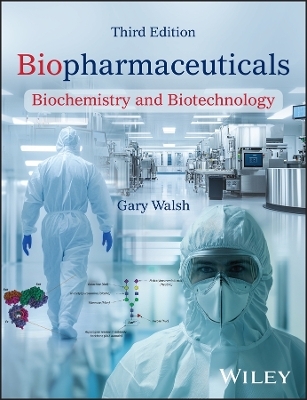
Biopharmaceuticals: Biochemistry and Biotechnology is a unique resource on biopharmaceuticals that serves as a comprehensive introduction to both the biopharmaceutical industry and its role within the global pharmaceutical industry. This new edition incorporates all major advances from the past 20 years, including the development of biosimilars, bispecific and other engineered antibody formats, engineered cell-based therapies, RNA-based vaccines, and genome editing techniques. Case studies and application examples demonstrate the entire value chain, from development to approval and manufacturing of all types of biopharmaceuticals, covering antibodies (mAbs), cytokines, nucleic acid therapeutics as well as cell-based and other biotherapeutics. Written by an accomplished instructor and textbook writer who has been working with small and large biotech companies for more than 25 years, Biopharmaceuticals: Biochemistry and Biotechnology covers:
Protein structure (covering protein folding, stability, engineering and structure prediction, post-translational modifications) and recombinant production
Discovery, development and biopharmaceutical regulation
mAb-based therapeutics and vaccines
Cytokines and growth factors, including interferons, interleukins, haematopoietic growth factors, and colony stimulating factors (CSFs)
Recombinant blood products and therapeutic enzymes, covering clotting disorders, anticoagulants, thrombolytic agents, and enzymes of therapeutic value
Hormones, including insulins, GLP-1 related products, human growth hormone and gonadotropins
Product manufacture (upstream and downstream processing) and analysis, covering API characterization, purity and potency determinations, analytical methodologies, protein content, and contaminant testing
Delivering comprehensive coverage of the field, Biopharmaceuticals: Biochemistry and Biotechnology is an essential reference for students and professionals in biotechnology, medical biochemistry, medicinal chemistry, and pharmaceutical technology.
Gary Walsh is Chair of Industrial Biotechnology at the University of Limerick, Ireland. He has direct industrial experience within the pharmaceutical and diagnostic industries, as well as extensive teaching and research interests in the pharmaceutical and biotechnology arena.
Preface
Chapter 1 Biopharmaceuticals, an introductory overview
1.1 Introduction to pharmaceutical products
1.2 Genetic engineering and the advent of biopharmaceuticals
1.2.1 Manufacture of recombinant therapeutic proteins
1.3 Biopharmaceuticals: current status and future prospects
1.3.1 Monoclonal antibodies
1.3.2 Nucleic acid and engineered cell-based products
1.3.3 Biosimilars
1.3.4 Market value
1.3.5 Future prospects
Sources of additional information
Some journal articles
Chapter 2 Biopharmaceuticals: Discovery, Development and Regulation
2.1 Introduction
2.2 Discovery of biopharmaceuticals
2.3 The impact of ‘omics’ and related technologies upon drug discovery
2.3.1 Genomics
2.3.2 Proteomics
2.3.3. Bioinformatics
2.3.4 Omics influence upon target or drug discovery
2.4 Lead discovery
2.5 Pharmacogenetics
2.6 The influence of artificial intelligence upon drug discovery
2.7 Lead characterization, CMC development and QbD
2.8 Delivery of biopharmaceuticals
2.8.1 Oral delivery systems
2.8.2 Pulmonary delivery
2.8.3 Nasal, transmucosal and transdermal delivery systems
2.9 Preclinical studies
2.10 Pharmacokinetics and pharmacodynamics
2.10.1 Protein pharmacokinetics
2.10.2 Tailoring of pharmacokinetic profile
2.10.3 Protein mode of action and pharmacodynamics
2.11 Toxicity studies
2.11.1 Reproductive toxicity and teratogenicity
2.11.2 Mutagenicity, carcinogenicity and other tests
2.12 Clinical trials
2.12.1 Clinical trial design
2.12.2 Trial size design and study population
2.13 The role and remit of regulatory authorities
2.14 The Food and Drug Administration (FDA)
2.15 European pharmaceutical law
2.15.1 National regulatory authorities and the EMA
2.15.2 Drug approval pathways in the EU
2.16 Pharmacovigilance
2.17 World harmonization of drug regulations and the ICH
2.18 The naming of biopharmaceuticals
2.19 Patenting
2.19.1 What is a patent and what is patentable?
2.19.2 Patenting in biotechnology
2.20 Biosimilar regulation
Sources of additional information
Some journal articles
Chapter 3 Good Manufacturing Practice
3.1 Introduction
3.2 Guides to Good Manufacturing Practice (GMP)
3.3 Pharmacopoeia
3.4 The manufacturing facility
3.4.1. Clean rooms
3.4.2. Product flow through the facility
3.4.3 Cleaning, decontamination and sanitation.
3.4.4 Water for (bio)pharmaceutical processing.
3.4.5 Generation of purified water and WFI
3.4.6 Distribution system for WFI
3.5 Documentation
3.5.1 Standard Operating Procedures
3.5.2 Specifications
3.5.3. Manufacturing formulae, processing and packaging instructions.
3.5.4 Records
3.6 Validation
3.7 Further reading:
Chapter 4 Protein structure
4.1 Introduction
4.2 Primary Structure
4.2.1 The peptide bond
4.2.2 Amino acid sequence determination
4.3 Higher level structure
4.3.1. Secondary structure
4.3.2. Tertiary structure
4.3.3. Experimental determination of a protein’s three-dimensional structure
4.4 Protein folding and stability
4.5 Protein structure prediction
4.6 Protein post translational modification
4.6.1. Glycosylation
4.6.2 Carboxylation and Hydroxylation
4.6.3 Sulfation and amidation
Further reading
Chapter 5 Production of therapeutic proteins by recombinant means
5.1 Introduction
5.2 Nucleic acids; structure and function
5.2.1 Genome and gene organization
5.2.2 Nucleic acid purification and quantification
5.3 The principles of genetic engineering
5.3.1 Identification and isolation of the target DNA sequence
5.3.2 Cloning the target sequence
5.3.3. Expression vectors
5.3.4 Engineering of recombinant host cells
5.4 Cell types in which recombinant therapeutic proteins are produced
5.4.1 E coli as a source of recombinant, therapeutic proteins
5.4.2 Expression of recombinant proteins in animal cell culture systems
5.4.3 Yeast-based expression
5.4.4 Insect cell-based systems
5.4.5 Transgenic animals
5.4.6 Plant-based expression systems
5.5 Engineered therapeutic proteins
5.5.1 Engineering via altering amino acid sequence.
5.5.2 Engineering via chemical modification
5.5.3 Engineering of producer cell lines
Further reading
Chapter 6 Therapeutic protein manufacture: upstream processing
6.1 Introduction
6.2 Cell banking systems
6.3 Bioreactors
6.3.1 Stirred tank bioreactors
6.3.2 Bioreactor operation: batch v feed batch v continuous
6.3.3 Single use (disposable) bioreactors.
6.4 Microbial cell fermentation
6.5 Mammalian cell culture
6.5.1 Cell culture media
6.5.2 Adherent versus non-adherent cells
6.5.3 Bioprocess scale culture of adherent and non-adherent cells.
Additional reading
Chapter 7 Therapeutic protein manufacture: downstream processing
7.1 Initial product recovery
7.1.1 Centrifugation
7.1.2 Filtration
7.1.3 Cell disruption
7.2.4 Removal of nucleic acid
7.2 Initial product concentration
7.2.1 Ultrafiltration
7.2.2 Diafiltration
7.3 Chromatographic purification
7.3.1 Engineering proteins for purification
7.3.3 Size exclusion chromatography (Gel filtration)
7.3.3 Ion exchange chromatography
7.3.4 Hydrophobic interaction chromatography
7.3.5 Affinity chromatography
7.3.6 Chromatography on hydroxyapatite
7.3.7 Chromatofocusing
7.3.8 Multimodal chromatography
7.3.9 Flow through chromatography
7.3.10 HPLC of proteins
7.4 Viral clearance
7.5 Some influences which can alter the biological activity of proteins
7.5.1 Proteolytic degradation and alteration of sugar side chains.
7.5.2 Protein deamidation
7.5.3 Oxidation and disulphide exchange
7.6 Final product formulation
7.6.1 Excipients used in final product formulations
7.7 Sterilization and final product fill
7.7.1 Freeze drying
7.7.2 Labelling and packing
7.8 Trends in downstream processing
Further reading
Chapter 8 Product analysis
8.1 Introduction and regulatory context
8.2 Potency determination
8.3 Protein content
8.4 Purity determination and API characterization
8.5 Key analytical methodologies
8.5.1 High-performance liquid chromatography (HPLC)
8.5.2 Mass spectrometry
8.6 Product purity determination
8.7 API characterization
8.7.1 Compositional analysis
8.7.2. Peptide mapping
8.7.3. Partial sequencing
8.7.4. Detection of aggregates and chemically modified variants
8.7.5. PTM analysis.
8.7.6. Analysis of higher order structure.
8.8 Non-protein impurity characterization: DNA
8.9 Contaminant testing
8.9.1 Microbial contaminants, including mycoplasma
8.9.2 Viral contaminants
8.9.3 Endotoxin and other pyrogenic contaminants.
8.10 Additional tests
Further reading
Chapter 9 Antibodies
9.1.1 Antibody structure and function
9.1.2 Antibody structure
9.1.2 Antigen, epitopes and polyclonal antibodies
9.1.3 Antibody-antigen binding
9.1.4 Antibody function
9.1.3 Polyclonal antibody preparations used therapeutically
9.1.4 Hybridoma technology and first generation monoclonal antibodies
9.1.5 Limitations of hybridoma-derived mAbs
9.4 Chimeric and humanized antibodies
9.5 Fully human mAbs
9.6 Routine manufacture of mAbs
9.7 mAb therapeutic applications in overview
9.8 mAb therapeutics treating inflammation
9.9 mAbs therapeutic treating cancer
9.9.1 Antibodies targeting immune checkpoint inhibitors
9.9.2 Additional antibodies that inactivate molecules or pathways important in fueling cancer cell growth and division
9.9.3 Antibodies triggering cancer cell destruction
9.10 Some additional therapeutic mAbs
9.11 Additional engineered antibody formats
9.11.1 mAb fragments
9.11.2 Bispecific antibodies
9.11.3 Antibody drug conjugates
9.11.4 Glycoengineered mAbs
9.11.5 mAbs generated by multiple engineering
9.11.6 Antibody-based fusion products
9.12 The mAb market and the advent of mAb biosimilars
Further reading
Chapter 10 Vaccines
10.1 Introduction
10.2 Traditional vaccine preparations
10.2.1 Attenuated, dead or inactivated bacteria
10.2.2 Attenuated and inactivated viral vaccines
10.2.3 Toxoids and antigen-based vaccines
10.3 The impact of recombinant DNA technology on vaccines
10.3.1 Recombinant subunit vaccines
10.3.2 Vaccine vectors
10.3.3 mRNA vaccines
10.4 Adjuvant technology
10.4.1 Adjuvant mode of action
10.4.2 Mineral-based adjuvants
10.4.3 Emulsion-based adjuvants
Further information & reading:
Chapter 11 The cytokines - the interferon family
11.1 Introduction to the cytokines
11.1.1 Cytokine receptors
11.1.2 Cytokines as biopharmaceuticals
11.2 The Interferons
11.2.1 The biochemistry of Interferon-*
9.2.2 Interferon-*
11.2.3 Interferon-*
11.2.4 Interferon signal transduction
11.2.5 The interferon receptors
11.2.6 The JAK-STAT pathway
11.2.7 The interferon JAK-STAT pathway
11.2.8 The biological effects of interferons
11.2.9 The eIF - 2* protein kinase system
11.3 Interferon biotechnology
11.3.1 Medical uses of IFN-β
11.3.2 Medical applications of IFN-γ
Further reading
Chapter 12 The cytokines - Interleukins and Tumour Necrosis Factor
12.1 Introduction to the interleukins
12.2 Interleukin-2
12.3 IL-2 biotechnology
12.4 Interleukin 11
12.5 Inhibition of interleukin activity
12.6 Tumour Necrosis Factor
12.6.1 TNF biochemistry
12.6.2 Biological activities of TNF
12.6.3 Tumour necrosis factor receptors
12.6.4 TNF as a therapeutic agent
12.6.5 Inhibition of TNF activity
Further reading
Chapter 13 Growth Factors
13.1 Introduction
13.2 Haematopoietic growth factors
13.2.1 The interleukins as haemopoietic growth factors
13.3 Granulocyte colony stimulating factor (G-CSF)
13.4 Macrophage colony-stimulating factor (M-CSF)
13.5 Granulocyte macrophage colony-stimulating factor (GM-CSF)
13.6 Clinical application of CSFs
13.7 Erythropoietin
13.8 Therapeutic applications of EPO
13.9 Thrombopoietin
13.10 Insulin-like growth factors
13.10.1 IGF biological effects
13.11 Neurotrophic factors
13.12 Fibroblast growth factors
13.13 Platelet-derived growth factor
13.14 Bone morphogenetic proteins
13.15 Inhibition of growth factor activity
13.15.1 Inhibition of VEGF activity
13.15.2 Inhibition of HER2-related signaling
Further reading
Chapter 14 Hormones
14.1 Introduction
14.2 Insulin
14.2.1 Type 1 diabetes
14.2.2 Type 2 diabetes
14.3 The Insulin Molecule
14.4 The Insulin Receptor and signal transduction
14.5 Insulin manufacture by traditional means
14.6 Production of human insulin by recombinant DNA technology
14.7 Formulation of insulin products
14.8 Engineered insulins
14.8.1 Fast-acting insulins
14.8.2 Long-acting insulins
14.9 Glucagon-like peptide-1 (GLP-1) related products
14.10 GLP-1 receptor agonists
14.10.1 GLP-1 receptor agonists; further uses
14.11 Human Growth Hormone
14.11.1 The GH receptor
14.11.2 Biological effects of GH
14.11.3 Therapeutic uses of GH
14.12 The Gonadotrophins
14.12.1 FSH, LH and hCG
14.12.2 The inhibins and activins
14.13 Medical applications of gonadotrophins
14.13.1 Sources and medical uses of FSH, LH and hCG
14.13.2 Recombinant Gonadotrophins
14.14 Additional recombinant hormones now approved
Further reading
Chapter 15 Recombinant blood products and therapeutic enzymes
15.1 Introduction
15.2 Haemostasis
15.3 The coagulation pathway
15.3.1 Terminal steps of coagulation pathway
15.4 Clotting disorders
15.5 Factor VIII and hemophilia A
15.5.1 Production of factor VIII
15.6 Additional recombinant blood factors
15.7 Anticoagulants
15.7.1 Antithrombin
15.8 Thrombolytic agents
15.8.1 Tissue plasminogen activator
15.8.2 Streptokinase
15.8.3 Urokinase
15.9 Enzymes of therapeutic value
15.9.1 Asparaginase
15.9.2 DNase
15.9.3 Enzymes used to treat genetic diseases.
15.9.4 Glucocerebrosidase
15.9.5 -Galactosidase
15.9.6 Debriding agents
15.9.7 Digestive aids
Further reading
Chapter 16 Nucleic acid based products
16.1 Introduction
16.2 Classical Gene Therapy
16.3 Basic approach to gene delivery
16.3.1 Ex vivo versus in vivo targeted gene delivery
16.4 Vectors used in gene therapy
16.4.1 Retroviral vectors
16.4.2 Adenoviral -based vectors
16.4.3 Adeno-associated virus-based vectors
16.4.4 Herpes simplex viral vectors
16.5 Manufacture of viral vectors
16.5.1 Initial production of plasmids
16.5.2 Vector producer cell culture and subsequent plasmid transfection
16.5.3 Vector recovery, purification and formulation
16.5.4 Lentiviral vector downstream processing
16.5.5 AAV vector downstream processing
16.5.6 Variant approaches to viral vector production
16.6 CAR-T based gene therapy
16.6 Non-viral vectors
16.7 The impact of CRISPR technology on gene therapy
16.8 Antisense technology, including siRNA
16.8.1 Antisense oligonucleotides (ASOs) and their mode of action
16.8.2 Uses, advantages and disadvantages of ASOs
16.8.3 Oligonucleotide pharmacokinetics and delivery
16.8.4 ASO manufacture
16.8.5 siRNA-based antisense products
Further reading
Index
| Erscheint lt. Verlag | 9.4.2026 |
|---|---|
| Verlagsort | New York |
| Sprache | englisch |
| Themenwelt | Naturwissenschaften ► Chemie |
| ISBN-10 | 1-394-21112-0 / 1394211120 |
| ISBN-13 | 978-1-394-21112-8 / 9781394211128 |
| Zustand | Neuware |
| Informationen gemäß Produktsicherheitsverordnung (GPSR) | |
| Haben Sie eine Frage zum Produkt? |
aus dem Bereich