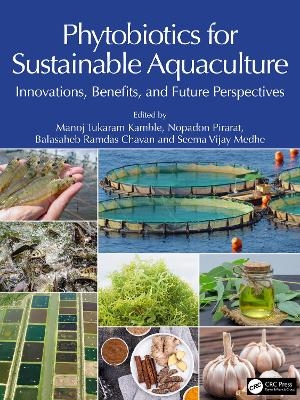
Phytobiotics for Sustainable Aquaculture
CRC Press (Verlag)
978-1-041-08775-5 (ISBN)
- Noch nicht erschienen (ca. Mai 2026)
- Versandkostenfrei
- Auch auf Rechnung
- Artikel merken
Key Features:
Covers molecular mechanisms, bioactive compounds, and pathogen-management application of phytobiotics
Explores the targeted use of phytobiotics for combating bacterial, viral, fungal, and parasitic infections in aquaculture
Discusses the role of phytobiotics in nutrition, stress reduction, and immune enhancement for improved aquaculture health
Presents advanced delivery techniques such as nanoencapsulation, microencapsulation, and precision dosing
Addresses regulatory challenges, environmental impact, and future innovations in sustainable aquaculture practices
This book is useful for Researchers, professionals, veterinarians, nutritionists, hatchery managers, policymakers, and advanced students in aquaculture and nutraceutical sciences.
Dr. Manoj Tukaram Kamble is currently working at the Center of Excellence in Wildlife, Exotic, and Aquatic Animal Pathology, Faculty of Veterinary Science, Chulalongkorn University, Thailand. He holds a Ph.D. and an M.Sc. in Aquaculture and Aquatic Resources Management (AARM) from the Asian Institute of Technology, Thailand, as well as a B.Sc. in Fisheries Science from the College of Fisheries, Maharashtra, India. With over a decade of research experience, Dr. Kamble focuses on advancing sustainable aquaculture practices. His key research areas include phytobiotics, sulfated polysaccharides, herbal anesthetics, and nanovaccine development to enhance disease resistance in species such as Nile tilapia, red tilapia, Pacific white shrimp, freshwater prawn, and mud crab. Dr. Kamble has held postdoctoral positions at both Chulalongkorn and Mahidol Universities, contributing significantly to the field of aquaculture through his innovative research and numerous publications. Prof. Dr. Nopadon Pirarat is a distinguished expert in aquatic animal health, specializing in immunology, pathology, and disease management in aquaculture species. He is a professor at the Faculty of Veterinary Science, Chulalongkorn University, Thailand, where he leads pioneering research on fish immunology, vaccine development, and nanotechnology applications for disease prevention in aquatic animals. His innovative work includes the development of mucoadhesive chitosan nanoemulsion vaccines and the integration of phytobiotics and probiotics into aquaculture systems. Prof. Pirarat has published extensively in high-impact journals and has played a key role in international collaborations, particularly in advancing sustainable aquaculture practices. In addition to his research, he mentors doctoral students and actively contributes to organizing international conferences such as AquaSustain 2024. His contributions have significantly influenced both academic research and practical advancements in aquaculture health management worldwide. Prof. Dr. Balasaheb Ramdas Chavan is a distinguished academic and researcher at the College of Fisheries, Ratnagiri, India. With extensive expertise in aquaculture, fish nutrition, and sustainable fisheries management, he has made significant contributions to advancing fisheries science. Prof. Chavan's research focuses on innovative techniques in fish farming, nutrition optimization, and aquaculture biotechnology. His work has been widely published in peer-reviewed journals and has received recognition at both national and international levels. As an educator, he has played a pivotal role in mentoring the next generation of fisheries professionals, emphasizing hands-on training and research-driven education. He is actively involved in various government and non-government initiatives promoting sustainable fisheries and aquaculture practices in India. Prof. Chavan's dedication to the field has earned him a reputation as a thought leader and a strong advocate for the sustainable management of aquatic resources. Dr. Seema Vijay Medhe is a lecturer at the ASEAN Institute for Health Development, Salaya, Phutthamonthon District, Nakhon Pathom, Thailand. She holds a Ph.D. in Food Engineering and Bioprocess Technology from the Asian Institute of Technology, Thailand, and has extensive expertise in food science, nutrition, and functional food product development. Her research focuses on underutilized legumes and millets, enhancing their nutraceutical properties and health benefits through innovative processing techniques such as sprouting and germination. Dr. Medhe’s work also explores the role of bioactive compounds in managing non-communicable diseases such as diabetes and hypertension. She has contributed to numerous peer-reviewed publications and book chapters, reflecting her dedication to advancing sustainable food systems. In addition to her academic achievements, she has been recognized for her contributions as a postdoctoral researcher at Mahidol and Chulalongkorn Universities, where she continues to drive innovation in the fields of food science and nutrition.
Chapter 1. Phytobiotics in Aquaculture: Evolution, Innovations, and Sustainability Pathways. Chapter 2. Innovative Antibacterial Phytobiotics: Mechanisms and Sustainable Strategies for Aquaculture. Chapter 3. Antiviral Phytobiotics in Aquaculture: Innovations for Disease Control and Resilience. Chapter 4. Antifungal Phytobiotics: Cutting-Edge Solutions for Aquaculture Health. Chapter 5. Antihelminthic Phytobiotics: Novel Approaches to Parasite Management in Aquaculture. Chapter 6. Innovative Phytobiotics Against Aquatic Parasites: Targeting Protozoa and Metazoans. Chapter 7. Phytobiotics for Stress Management: Advancing Aquaculture Welfare. Chapter 8. Growth-Promoting Phytobiotics: Sustainable Approaches in Aquaculture Nutrition. Chapter 9. Phytobiotics for Disease Resistance and Immune Health in Aquaculture: Enhancing Resilience and Sustainability. Chapter 10. Phytobiotics as Natural Anesthetics: Applications in Aquaculture Handling and Welfare. Chapter 11. Phytobiotic Piscicides: Sustainable Solutions for Species Management in Aquaculture. Chapter 12. Phytobiotics in Reproductive Management: Innovations in Sex Reversal and Control. Chapter 13. Phytobiotics in Aquafeeds: Challenges, Opportunities, and Sustainable Practices. Chapter 14. Phytobiotics in Aquaculture: Regulatory Perspectives and Environmental Considerations
| Erscheint lt. Verlag | 20.5.2026 |
|---|---|
| Zusatzinfo | 18 Tables, black and white; 8 Line drawings, color; 1 Line drawings, black and white; 10 Halftones, color; 18 Illustrations, color; 1 Illustrations, black and white |
| Verlagsort | London |
| Sprache | englisch |
| Maße | 210 x 280 mm |
| Themenwelt | Studium ► Querschnittsbereiche ► Infektiologie / Immunologie |
| Naturwissenschaften ► Biologie ► Genetik / Molekularbiologie | |
| Weitere Fachgebiete ► Land- / Forstwirtschaft / Fischerei | |
| ISBN-10 | 1-041-08775-6 / 1041087756 |
| ISBN-13 | 978-1-041-08775-5 / 9781041087755 |
| Zustand | Neuware |
| Informationen gemäß Produktsicherheitsverordnung (GPSR) | |
| Haben Sie eine Frage zum Produkt? |
aus dem Bereich