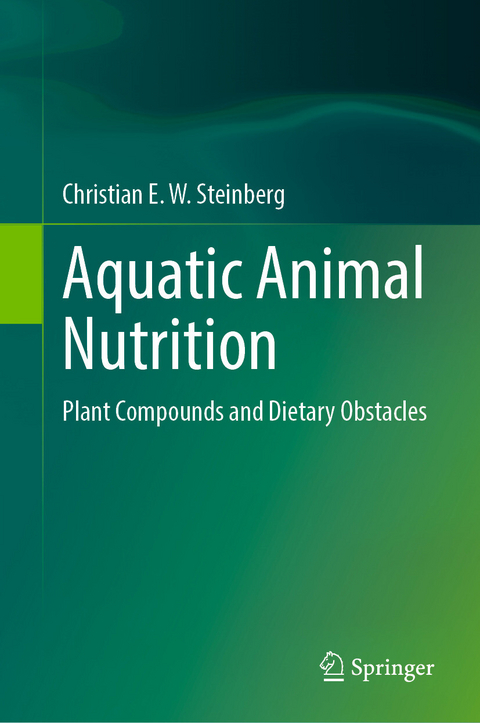
Aquatic Animal Nutrition (eBook)
653 Seiten
Springer (Verlag)
978-3-031-97988-0 (ISBN)
Based on positive experiences in human nutrition and healthy aging, individual and combined plant secondary metabolites are added to aquafeeds. The main compounds used are carotenoids, polyphenols, terpenes, and various alkaloids. The pile of supplementation studies with beneficial results is growing rapidly. These benefits include increased immunity, pathogen resistance, or improved gut microbiome diversity. However, a variety of adverse results cannot be ignored. Overall, in Aquatic Animal Nutrition research, this is another area of that is still in its early stages: as with supplementation of plant preparations (Aquatic Animal Nutrition – Plant Preparations), a robust and guiding hypothesis for supplementation is not apparent, and graded dosing is rarely used, especially in the low-dose range. Often, the high doses used lead to the classification of various compounds as anti-nutritional. However, appropriate low-dose supplementation demonstrates that and how aquatic animals can cope with ‘anti-nutritional’ factors within their adaptive response, indicating that even these compounds may have some nutritional value. In addition, knowledge of the underlying mechanisms of the adaptive response may provide physiological, transcriptomic, and epigenetic means to more sustainably utilize even this ‘worthless’ food source. The importance of the intestinal microflora is becoming increasingly clear and points to the imperative need to include gut microbiota in replacement studies. Based on the few epigenetic studies currently available, the importance of these processes is demonstrated. The need to integrate such approaches into future studies is emphasized. The so-called hologenomics approach is inevitable. Supplementing aquafeed with terrestrial plant material can introduce toxins and endocrine disruptors. The addition of adsorptive compounds (clay minerals) or functional feed ingredients (prebiotics, probiotics) can at least partially mitigate the adverse effects.
| Erscheint lt. Verlag | 11.8.2025 |
|---|---|
| Zusatzinfo | XIV, 653 p. 270 illus., 203 illus. in color. |
| Sprache | englisch |
| Themenwelt | Naturwissenschaften ► Biologie ► Ökologie / Naturschutz |
| Naturwissenschaften ► Chemie | |
| Schlagworte | Fishmeal and Fish Oil Replacement • Insects as Aquafeed • Nutritional Programming • Probiotic and Prebiotic Supplementation • Valorization of Agriculture Waste |
| ISBN-10 | 3-031-97988-5 / 3031979885 |
| ISBN-13 | 978-3-031-97988-0 / 9783031979880 |
| Informationen gemäß Produktsicherheitsverordnung (GPSR) | |
| Haben Sie eine Frage zum Produkt? |
 PDF (Wasserzeichen)
DRM: Digitales Wasserzeichen
Dieses eBook enthält ein digitales Wasserzeichen und ist damit für Sie personalisiert. Bei einer missbräuchlichen Weitergabe des eBooks an Dritte ist eine Rückverfolgung an die Quelle möglich.
Dateiformat: PDF (Portable Document Format)
Mit einem festen Seitenlayout eignet sich die PDF besonders für Fachbücher mit Spalten, Tabellen und Abbildungen. Eine PDF kann auf fast allen Geräten angezeigt werden, ist aber für kleine Displays (Smartphone, eReader) nur eingeschränkt geeignet.
Systemvoraussetzungen:
PC/Mac: Mit einem PC oder Mac können Sie dieses eBook lesen. Sie benötigen dafür einen PDF-Viewer - z.B. den Adobe Reader oder Adobe Digital Editions.
eReader: Dieses eBook kann mit (fast) allen eBook-Readern gelesen werden. Mit dem amazon-Kindle ist es aber nicht kompatibel.
Smartphone/Tablet: Egal ob Apple oder Android, dieses eBook können Sie lesen. Sie benötigen dafür einen PDF-Viewer - z.B. die kostenlose Adobe Digital Editions-App.
Buying eBooks from abroad
For tax law reasons we can sell eBooks just within Germany and Switzerland. Regrettably we cannot fulfill eBook-orders from other countries.
aus dem Bereich