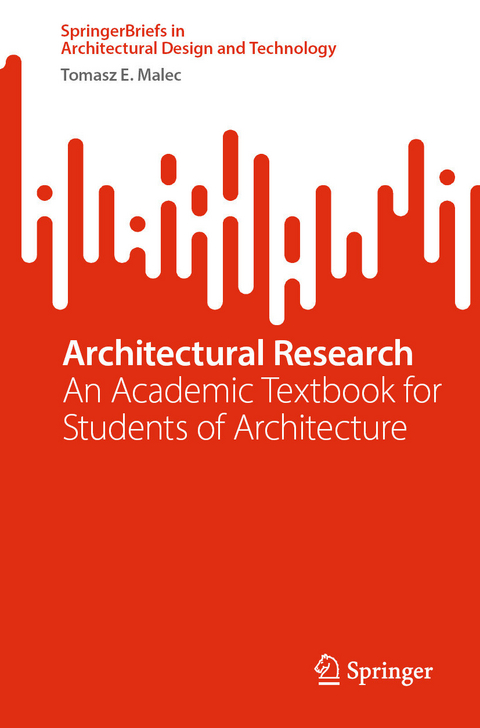
This book introduces the basic principles and methods of scientific research in architecture. Due to the specificity of the creative process and the architectural industry, the presented issues have also been adapted to the needs of architecture teachers, architects active in the design market, and others interested in the topic. The first chapter explains four crucial research skills: focus, reasoning, critical thinking, and creativity, supported by ethics. The second chapter focuses on preparation for research by formulation of the research problem, hypothesis, and correlated research questions. The third chapter is an introductory part presenting the various classifications of architectural research and explaining the roots and significance of reasoning, creativity, and ethics. The fourth chapter presents the main research methods applicable to architecture, starting with the literature review. All of them can be modified and adjusted to ever-changing requirements. In the fifth chapter, visual tools are described for clearly presenting the research related issues. The sixth chapter is the introduction to academic writing. It includes the main rules of article preparation using elements such as abstract, keywords, introduction, materials and methods, results and discussion, conclusions, references, and the application of citation styles. Additionally, this chapter is concerned with general requirements for critical review preparation.
This book introduces the basic principles and methods of scientific research in architecture. Due to the specificity of the creative process and the architectural industry, the presented issues have also been adapted to the needs of architecture teachers, architects active in the design market, and others interested in the topic. The first chapter explains four crucial research skills: focus, reasoning, critical thinking, and creativity, supported by ethics. The second chapter focuses on preparation for research by formulation of the research problem, hypothesis, and correlated research questions. The third chapter is an introductory part presenting the various classifications of architectural research and explaining the roots and significance of reasoning, creativity, and ethics. The fourth chapter presents the main research methods applicable to architecture, starting with the literature review. All of them can be modified and adjusted to ever-changing requirements. In the fifth chapter, visual tools are described for clearly presenting the research related issues. The sixth chapter is the introduction to academic writing. It includes the main rules of article preparation using elements such as abstract, keywords, introduction, materials and methods, results and discussion, conclusions, references, and the application of citation styles. Additionally, this chapter is concerned with general requirements for critical review preparation.
| Erscheint lt. Verlag | 2.8.2025 |
|---|---|
| Sprache | englisch |
| Themenwelt | Kunst / Musik / Theater ► Malerei / Plastik |
| Informatik ► Weitere Themen ► CAD-Programme | |
| Naturwissenschaften | |
| Sozialwissenschaften ► Pädagogik | |
| Technik ► Architektur | |
| Technik ► Bauwesen | |
| ISBN-10 | 981-96-7549-9 / 9819675499 |
| ISBN-13 | 978-981-96-7549-4 / 9789819675494 |
| Informationen gemäß Produktsicherheitsverordnung (GPSR) | |
| Haben Sie eine Frage zum Produkt? |
 PDF (Wasserzeichen)
Größe: 3,1 MB
DRM: Digitales Wasserzeichen
Dieses eBook enthält ein digitales Wasserzeichen und ist damit für Sie personalisiert. Bei einer missbräuchlichen Weitergabe des eBooks an Dritte ist eine Rückverfolgung an die Quelle möglich.
Dateiformat: PDF (Portable Document Format)
Mit einem festen Seitenlayout eignet sich die PDF besonders für Fachbücher mit Spalten, Tabellen und Abbildungen. Eine PDF kann auf fast allen Geräten angezeigt werden, ist aber für kleine Displays (Smartphone, eReader) nur eingeschränkt geeignet.
Systemvoraussetzungen:
PC/Mac: Mit einem PC oder Mac können Sie dieses eBook lesen. Sie benötigen dafür einen PDF-Viewer - z.B. den Adobe Reader oder Adobe Digital Editions.
eReader: Dieses eBook kann mit (fast) allen eBook-Readern gelesen werden. Mit dem amazon-Kindle ist es aber nicht kompatibel.
Smartphone/Tablet: Egal ob Apple oder Android, dieses eBook können Sie lesen. Sie benötigen dafür einen PDF-Viewer - z.B. die kostenlose Adobe Digital Editions-App.
Buying eBooks from abroad
For tax law reasons we can sell eBooks just within Germany and Switzerland. Regrettably we cannot fulfill eBook-orders from other countries.
 EPUB (Adobe DRM)
Kopierschutz: Adobe-DRM
Adobe-DRM ist ein Kopierschutz, der das eBook vor Mißbrauch schützen soll. Dabei wird das eBook bereits beim Download auf Ihre persönliche Adobe-ID autorisiert. Lesen können Sie das eBook dann nur auf den Geräten, welche ebenfalls auf Ihre Adobe-ID registriert sind.
Details zum Adobe-DRM
Dateiformat: EPUB (Electronic Publication)
EPUB ist ein offener Standard für eBooks und eignet sich besonders zur Darstellung von Belletristik und Sachbüchern. Der Fließtext wird dynamisch an die Display- und Schriftgröße angepasst. Auch für mobile Lesegeräte ist EPUB daher gut geeignet.
Systemvoraussetzungen:
PC/Mac: Mit einem PC oder Mac können Sie dieses eBook lesen. Sie benötigen eine
eReader: Dieses eBook kann mit (fast) allen eBook-Readern gelesen werden. Mit dem amazon-Kindle ist es aber nicht kompatibel.
Smartphone/Tablet: Egal ob Apple oder Android, dieses eBook können Sie lesen. Sie benötigen eine
Geräteliste und zusätzliche Hinweise
Buying eBooks from abroad
For tax law reasons we can sell eBooks just within Germany and Switzerland. Regrettably we cannot fulfill eBook-orders from other countries.
aus dem Bereich