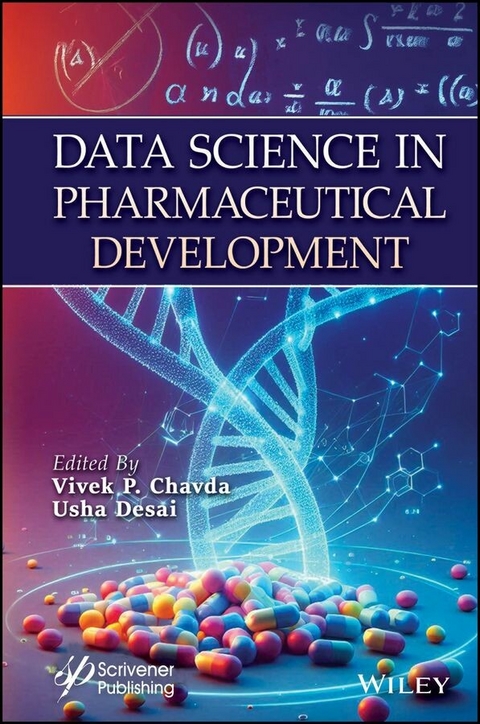
Data Science in Pharmaceutical Development (eBook)
591 Seiten
Wiley-Scrivener (Verlag)
978-1-394-28736-9 (ISBN)
This book is an indispensable guide for anyone looking to understand how AI, machine learning, and data science are revolutionizing drug discovery, development, and delivery, offering practical insights and addressing crucial real-world applications and considerations.
Data Science in Pharmaceutical Development offers a comprehensive and forward-looking exploration of how artificial intelligence, machine learning, and data science are reshaping the pharmaceutical landscape. From the earliest stages of drug discovery to advanced delivery systems and post-market surveillance, this volume bridges the gap between innovation and real-world application. Practical examples and case studies bring to life the transformative potential of AI-powered tools in accelerating research, enhancing patient outcomes, and improving efficiency throughout the pharmaceutical product lifecycle.
Designed for researchers, industry professionals, and students alike, this book not only showcases cutting-edge technologies but also addresses the ethical, legal, and regulatory considerations critical to their implementation. Whether you're navigating the complexities of clinical trials, optimizing supply chains, or seeking to understand the implications of smart drug delivery systems, this book is an indispensable guide to the future of medicine and healthcare innovation.
Readers will find the book:
- Explores the role of AI, machine learning, and data science across the entire pharmaceutical pipeline-from drug discovery and clinical trials to smart drug delivery systems;
- Rich with real-world case studies and practical examples, connecting theory to implementation in modern pharmaceutical research and development;
- Introduces advanced topics like predictive modeling, personalized medicine, IoT, pharmacovigilance, and nanotechnology-enabled drug delivery;
- Highlights emerging trends, ethical considerations, and the regulatory framework surrounding AI in healthcare.
Audience
Research scholars, pharmacy students, pharmaceutical process engineers, and pharmacy professionals in the pharmaceutical and biopharmaceutical industry who are working in drug discovery, chemical biology, computational chemistry, medicinal chemistry, and bioinformatics.
Vivek P. Chavda, PhD is an assistant professor in the Department of Pharmaceutics and Pharmaceutical Technology, Lallubhai Motilal College of Pharmacy, Ahmedabad, India. He has over 100 national and international publications, 30 book chapters, ten books, and two patents to his credit. His research interests include the development of biologics processes and formulations, medical device development, nanodiagnostics and non-carrier formulations, long-acting parenteral formulations, and nano-vaccines.
Usha Desai, PhD is a professor and the Dean of Research and Development at the South East Asia College of Engineering and Technology, Bangalore, India. She authored over 50 research articles, five books, and six patents, and has presented technical research papers in numerous international conferences. Her research interests include biomedical signal processing, machine learning, and brain-computer interface.
This book is an indispensable guide for anyone looking to understand how AI, machine learning, and data science are revolutionizing drug discovery, development, and delivery, offering practical insights and addressing crucial real-world applications and considerations. Data Science in Pharmaceutical Development offers a comprehensive and forward-looking exploration of how artificial intelligence, machine learning, and data science are reshaping the pharmaceutical landscape. From the earliest stages of drug discovery to advanced delivery systems and post-market surveillance, this volume bridges the gap between innovation and real-world application. Practical examples and case studies bring to life the transformative potential of AI-powered tools in accelerating research, enhancing patient outcomes, and improving efficiency throughout the pharmaceutical product lifecycle. Designed for researchers, industry professionals, and students alike, this book not only showcases cutting-edge technologies but also addresses the ethical, legal, and regulatory considerations critical to their implementation. Whether you re navigating the complexities of clinical trials, optimizing supply chains, or seeking to understand the implications of smart drug delivery systems, this book is an indispensable guide to the future of medicine and healthcare innovation. Readers will find the book: Explores the role of AI, machine learning, and data science across the entire pharmaceutical pipeline from drug discovery and clinical trials to smart drug delivery systems; Rich with real-world case studies and practical examples, connecting theory to implementation in modern pharmaceutical research and development; Introduces advanced topics like predictive modeling, personalized medicine, IoT, pharmacovigilance, and nanotechnology-enabled drug delivery; Highlights emerging trends, ethical considerations, and the regulatory framework surrounding AI in healthcare. Audience Research scholars, pharmacy students, pharmaceutical process engineers, and pharmacy professionals in the pharmaceutical and biopharmaceutical industry who are working in drug discovery, chemical biology, computational chemistry, medicinal chemistry, and bioinformatics.
1
Introduction to AI in Medicine and Drug Delivery
Dixa A. Vaghela, Pankti C. Balar and Vivek P. Chavda*
Department of Pharmaceutics and Pharmaceutical Technology, L.M. College of Pharmacy, Navrangpura, Ahmedabad, Gujarat, India
Abstract
Artificial intelligence (AI) is rapidly transforming the landscape of medicine and drug delivery. The applications of AI are increasing in all the fields, including healthcare and medicine. This chapter pro vides a comp rehensive overview of the integration of AI in various aspects of healthcare, from di,agnosis and treatment to drug development and personalized medicine. We delve into the potential of AI to revolutionize drug discovery by accelerating the identification of novel drug candidates and optimizing their design. We also look at the application of AI in drug delivery systems, enabling targeted drug release and enhancing therapeutic efficacy. By harnessing the power of AI, we can unlock new frontiers in healthcare, improving patient outcomes and advancing medical science.
Keywords: Artificial intelligence, drug delivery, healthcare, pharmaceutical research
1.1 Introduction
AI is a branch of computer science that aims to create intelligent machines that can mimic human intelligence. This includes tasks like learning, problem solving, perception, language understanding, and decision making. AI systems can be trained on massive amounts of data to recognize patterns and make predictions or decisions [1]. AI is quickly becoming a part of healthcare, and it helps doctors and pharmacists to make better decisions, in diagnostic, research, development of medicine, and curing diseases more accurately [2]. It helps to reduce time gaps by doing automation in every task. AI can use different types of data like patient symptoms, health measurements, medical images, and biological markers to identify potential illnesses early on. This early detection can help prevent serious health problems [3]. Recent studies show how AI is being used in healthcare and other fields. In healthcare, AI technologies like machine learning (ML), natural language processing (NLP), and robotics are being used. ML, especially neural networks and deep learning, is being used to analyze medical images to detect early signs of diseases, particularly cancer [4].
The pharmaceutical industry drives innovation through extensive research and development in areas like manufacturing, packaging, and marketing. New drugs, from small molecules to biologics, are developed to address unmet medical needs. These innovations prioritize stability and potency to ensure effective treatments [5]. In drug discovery, AI technology can be used for drug screening and drug design. In the drug manufacturing process, AI technologies such as meta classifier and tablet classifier are used to get the desired quality in the final product [6]. The application of AI in delivering of medications by optimizing the rate and method of delivery can help reduce the workload on healthcare professionals [7]. AI will change how the pharmaceutical industry manages its supply chain. It combines past AI research to solve current supply chain problems. This study also suggests new areas of research to improve decision-making tools for future supply chain management.
While AI holds immense promise in revolutionizing medicine and drug delivery, it also presents significant challenges and ethical considerations [8]. Ensuring data privacy and security, mitigating algorithmic bias, addressing potential job displacement, and establishing ethical frameworks for decision making are crucial to harnessing the full potential of AI in healthcare. Transparent and accountable AI systems are essential to build trust and ensure the ethical use of this powerful technology [9].
1.2 Applications of AI in Medicine
Artificial Intelligence (AI) is reshaping medicine, streamlining data analysis, personalizing treatments, and speeding up the drug discovery process. This article delves into the transformative applications of AI in healthcare, examining how AI optimizes drug discovery, enhances predictive modeling, and tailors personalized medicine.
1.2.1 AI in Drug Discovery
The traditional drug discovery process is both lengthy and costly, often taking more than a decade and requiring substantial financial investment. AI can significantly reduce the time, cost, and uncertainty associated with drug discovery by analyzing large datasets, enhancing early-stage processes, and increasing success rates [6].
1.2.1.1 Target Identification
Identifying a biological target, such as a specific protein or gene associated with a disease, is a critical first step in drug development. Target identification directs subsequent research to the most promising molecular interactions that could effectively modify the disease mechanism. AI algorithms, especially machine learning (ML) models, can process vast amounts of genomic data more effectively than traditional methods. By analyzing genetic sequences and patterns, AI helps pinpoint disease-related genes or pathways, providing potential drug targets with increased precision. AI models, such as neural networks and graph-based learning techniques, help reveal complex relationships between proteins and disease pathways. This aids researchers in identifying otherwise elusive targets, broadening the scope for effective treatments [10].
1.2.1.2 Compound Selection
Once a target is identified, the next step is selecting compounds that can interact effectively with it. This traditionally involves screening thousands of compounds, a process that AI can streamline by predicting molecular interactions and highlighting promising candidates. AI-driven virtual screening allows for the computational evaluation of millions of compounds, estimating their likelihood of binding successfully with the target. This reduces the need for costly physical testing and accelerates the discovery process. Ensuring safety is critical in drug development. AI models for predictive toxicology assess a compound’s potential toxicity in early stages, helping researchers avoid advancing unsafe candidates and reducing risks in clinical trials [11].
1.2.1.3 Predictive Modeling in Drug Discovery
Predictive modeling enables researchers to forecast the efficacy of treatments before extensive testing. Leveraging historical data and ML algorithms, predictive models inform decisions about which compounds to advance in development. AI models predict how a compound will be absorbed, distributed, metabolized, and excreted in the body, offering insights into a drug’s behavior and helping prioritize candidates with promising pharmacokinetic profiles. Predictive modeling aids drug repurposing efforts, where existing drugs are evaluated for new applications. AI analyzes previous clinical data to identify drugs that could be effective for other diseases, bypassing early-stage trials and saving time [12].
1.2.2 Personalized Medicine
AI is instrumental in personalized medicine, which adapts treatments to the individual, factoring in genetic, environmental, and lifestyle elements. By analyzing complex datasets, AI enables the customization of therapies, leading to higher success rates and fewer side effects.
1.2.2.1 Tailoring Treatments
Personalized medicine emphasizes customized treatment approaches. AI contributes by interpreting data such as genetic profiles and clinical histories to create precise treatment strategies. AI analyzes genomic data to pinpoint mutations associated with diseases. For instance, in oncology, AI can help identify mutations that drive tumor growth, guiding the selection of targeted therapies. Through ML models, AI can forecast a patient’s likely response to a treatment based on genetic and demographic information. This minimizes the likelihood of adverse effects and improves therapeutic efficacy [13].
1.2.2.2 Genetic and Lifestyle Consideration
Personalized medicine extends beyond genetics, incorporating lifestyle data to optimize treatment outcomes. AI provides valuable insights by analyzing both genetic and behavioral factors. AI processes pharmacogenomic data to determine how genetic variations impact drug responses. This helps healthcare providers select medications and dosages that are safer and more effective for individual patients. Lifestyle factors such as diet, exercise, and environmental exposures also play a role in health. AI models analyze these aspects to predict disease risk and recommend preventive measures or lifestyle modifications [14].
1.2.3 Advanced AI Techniques in Medicine
Beyond drug discovery and personalized treatment, AI also supports advanced applications in medical imaging, diagnostics, patient monitoring, and surgical assistance, each contributing to improved patient care and clinical outcomes.
1.2.3.1 Medical Imaging and Diagnostic
AI has brought notable advancements in medical imaging, allowing for highly accurate diagnostics from CT scans, MRIs, and X-rays. Deep learning algorithms enable precise image segmentation, identifying abnormalities like tumors or lesions that may be overlooked by human analysis. This enhances diagnostic accuracy, lowers error rates, and enables early disease detection. AI models use historical imaging data to assess the likelihood of disease progression, allowing clinicians to devise timely and personalized interventions [15].
1.2.3.2 Patient Monitoring and Remote...
| Erscheint lt. Verlag | 3.9.2025 |
|---|---|
| Sprache | englisch |
| Themenwelt | Naturwissenschaften ► Chemie |
| Schlagworte | Accelerate Clinical Studies • Artificial Intelligence (AI) in Drug Development • Bioinformatics • Data Integrity • Data Science • Data Science in Quality Assurance • drug discovery • Electronic healthcare records • machine learning • Personalized medicine • Pharmaceutical development • Pharmacovigilance and Data Science • Predictive Analysis • Quality Target Product Profile (QTPP) • statistical modeling |
| ISBN-10 | 1-394-28736-4 / 1394287364 |
| ISBN-13 | 978-1-394-28736-9 / 9781394287369 |
| Informationen gemäß Produktsicherheitsverordnung (GPSR) | |
| Haben Sie eine Frage zum Produkt? |
 EPUB (Adobe DRM)
Kopierschutz: Adobe-DRM
Adobe-DRM ist ein Kopierschutz, der das eBook vor Mißbrauch schützen soll. Dabei wird das eBook bereits beim Download auf Ihre persönliche Adobe-ID autorisiert. Lesen können Sie das eBook dann nur auf den Geräten, welche ebenfalls auf Ihre Adobe-ID registriert sind.
Details zum Adobe-DRM
Dateiformat: EPUB (Electronic Publication)
EPUB ist ein offener Standard für eBooks und eignet sich besonders zur Darstellung von Belletristik und Sachbüchern. Der Fließtext wird dynamisch an die Display- und Schriftgröße angepasst. Auch für mobile Lesegeräte ist EPUB daher gut geeignet.
Systemvoraussetzungen:
PC/Mac: Mit einem PC oder Mac können Sie dieses eBook lesen. Sie benötigen eine
eReader: Dieses eBook kann mit (fast) allen eBook-Readern gelesen werden. Mit dem amazon-Kindle ist es aber nicht kompatibel.
Smartphone/Tablet: Egal ob Apple oder Android, dieses eBook können Sie lesen. Sie benötigen eine
Geräteliste und zusätzliche Hinweise
Buying eBooks from abroad
For tax law reasons we can sell eBooks just within Germany and Switzerland. Regrettably we cannot fulfill eBook-orders from other countries.
aus dem Bereich