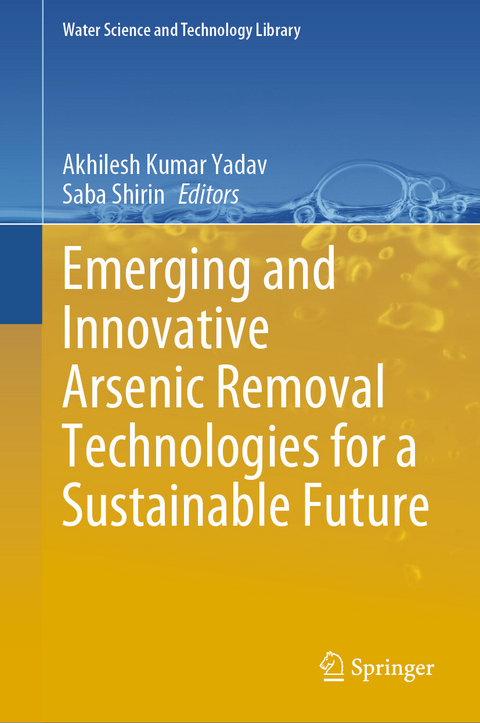
Emerging and Innovative Arsenic Removal Technologies for a Sustainable Future (eBook)
300 Seiten
Springer (Verlag)
978-3-032-01176-3 (ISBN)
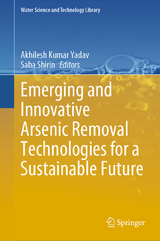
This book presents an overview of the techniques available today to remove arsenic contamination, pollutants, and species from water. Traditionally applied techniques for removal of arsenic pollutants/species, including oxidation, coagulation-flocculation, and membrane techniques. Furthermore, recent progress has been made on the utility of various nanoparticles for the extraction of contaminated water. Arsenic contamination affects the quality of water resources worldwide as a result of human activities (pesticides and other uses). Due to the insufficiency of water treatment facilities in developing countries, oral exposure to chemical toxicants through drinking water is a health threat. Arsenic is a mobile element with a crustal abundance of 1.8 mg kg-1 and can travel in different components of the environment, including air, soil, and water before entering into its ultimate sink, that is, bottom sediments and sea. Arsenic may enter groundwater from both geogenic and anthropogenic sources and primarily exists in inorganic form as oxy-anions. Groundwater is relatively more vulnerable to arsenic contamination from geothermal inputs, including the weathering and dissolution of arsenic-bearing rocks and minerals. Arsenic mobility is enhanced in subsurface anoxic conditions, making groundwater more vulnerable to arsenic contamination. Ingestion of groundwater-laden arsenic may cause carcinogenic and non-carcinogenic health ailments. Chronic oral exposure ≤ 50 µg L-1 of arsenic can cause skin lesions, skin cancer, melanosis, hyperkeratosis, hypertension, gangrene, cardiovascular problems, black foot disease, neuropathy, peripheral vascular disease, restrictive lung disease, bladder cancer, lung cancer etc.
Hence, specific water treatment processes are required to meet anticipated more severe water quality standards. A better understanding of currently available processes is necessary to develop economical, efficient and effective methods for arsenic removal. Arsenic can be coated, adsorbed using a wide range of mineral and organic or can be directly rejected by membrane processes such as reverse osmosis and nanofiltration. The recent development of submerged hybrid membrane systems, such as membrane bioreactors in wastewater treatment, provides alternative technologies for arsenic treatment.
| Erscheint lt. Verlag | 29.8.2025 |
|---|---|
| Reihe/Serie | Water Science and Technology Library |
| Zusatzinfo | XIV, 300 p. 58 illus., 53 illus. in color. |
| Sprache | englisch |
| Themenwelt | Naturwissenschaften ► Chemie |
| Naturwissenschaften ► Geowissenschaften | |
| Schlagworte | Adsorptive media filters • arsenic removal • Biosorption • cost-effectiveness • Eco-friendly technologies • Electrocoagulation • environmental protection • nanomaterials • Phytoremediation • Public Health • Sustainable Water Treatment |
| ISBN-10 | 3-032-01176-0 / 3032011760 |
| ISBN-13 | 978-3-032-01176-3 / 9783032011763 |
| Informationen gemäß Produktsicherheitsverordnung (GPSR) | |
| Haben Sie eine Frage zum Produkt? |
 PDF (Wasserzeichen)
DRM: Digitales Wasserzeichen
Dieses eBook enthält ein digitales Wasserzeichen und ist damit für Sie personalisiert. Bei einer missbräuchlichen Weitergabe des eBooks an Dritte ist eine Rückverfolgung an die Quelle möglich.
Dateiformat: PDF (Portable Document Format)
Mit einem festen Seitenlayout eignet sich die PDF besonders für Fachbücher mit Spalten, Tabellen und Abbildungen. Eine PDF kann auf fast allen Geräten angezeigt werden, ist aber für kleine Displays (Smartphone, eReader) nur eingeschränkt geeignet.
Systemvoraussetzungen:
PC/Mac: Mit einem PC oder Mac können Sie dieses eBook lesen. Sie benötigen dafür einen PDF-Viewer - z.B. den Adobe Reader oder Adobe Digital Editions.
eReader: Dieses eBook kann mit (fast) allen eBook-Readern gelesen werden. Mit dem amazon-Kindle ist es aber nicht kompatibel.
Smartphone/Tablet: Egal ob Apple oder Android, dieses eBook können Sie lesen. Sie benötigen dafür einen PDF-Viewer - z.B. die kostenlose Adobe Digital Editions-App.
Buying eBooks from abroad
For tax law reasons we can sell eBooks just within Germany and Switzerland. Regrettably we cannot fulfill eBook-orders from other countries.
aus dem Bereich