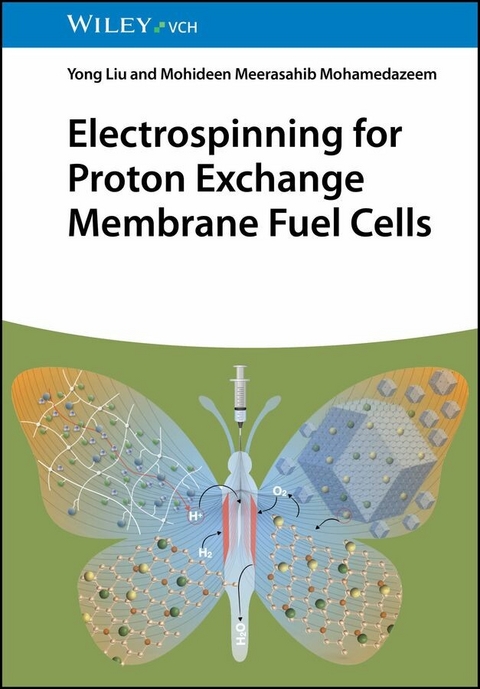
Electrospinning for Proton Exchange Membrane Fuel Cells (eBook)
275 Seiten
Wiley-VCH (Verlag)
978-3-527-85020-4 (ISBN)
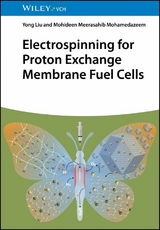
Comprehensive reference on the design, characteristics, performance, and development potential of key components of PEMFC through electrospinning technologies
Electrospinning for Proton Exchange Membrane Fuel Cells discusses the use of electrospun materials in preparing next-generation fuel cell proton-conducting membranes, comprehensively reviewing the essential parts of proton exchange membrane fuel cell (PEMFC) components including the catalyst layer, gas diffusion layer, and proton exchange membrane. The book covers both electrochemical methods and hands-on experimental processes and provides a perspective of hydrogen fuel and PEMFC vehicles in the transformation of low-carbon energy.
Electrospinning for Proton Exchange Membrane Fuel Cells includes information on:
- Working principles, current state of research, and existing obstacles of PEMFC components, as well as the role of electrospinning and nanofibers in PEMFC
- Physical properties and electrochemical polarization of the nanofiber catalyst layer prepared by electrospinning
- Water management ability of fuel cells under high inlet humidity
- Cold starting ability and performance aging of PEMFC through the electrospun microporous layer under high current density
- Experimental devices for the study of the electrospun proton exchange membrane and composite proton exchange membrane
Electrospinning for Proton Exchange Membrane Fuel Cells is an excellent reference on the subject for materials scientists, catalytic chemists, polymer chemists, electrochemists, and electronics engineers.
Yong Liu is a professor at the College of Materials Science and Engineering, Beijing University of Chemical Technology, China. His research focuses on the preparation and application of polymer and nanocomposite materials.
Dr. Mohideen Meerasahib Mohamedazeem is a Materials Science expert with a deep focus on sustainable energy solutions. He received an International Scientist funding award from the Beijing Natural Science Foundation, where he will lead a project from 2024 to 2026.
| Erscheint lt. Verlag | 29.8.2025 |
|---|---|
| Sprache | englisch |
| Themenwelt | Naturwissenschaften ► Chemie |
| Schlagworte | catalyst layer • electrospun materials • fuel cell proton-conducting membranes • gas diffusion layer • Hydrogen fuel • Low-carbon Energy Transformation • PEMFC components • PEMFC vehicles • proton exchange • Proton Exchange Membrane |
| ISBN-10 | 3-527-85020-1 / 3527850201 |
| ISBN-13 | 978-3-527-85020-4 / 9783527850204 |
| Informationen gemäß Produktsicherheitsverordnung (GPSR) | |
| Haben Sie eine Frage zum Produkt? |
 PDF (Adobe DRM)
Kopierschutz: Adobe-DRM
Adobe-DRM ist ein Kopierschutz, der das eBook vor Mißbrauch schützen soll. Dabei wird das eBook bereits beim Download auf Ihre persönliche Adobe-ID autorisiert. Lesen können Sie das eBook dann nur auf den Geräten, welche ebenfalls auf Ihre Adobe-ID registriert sind.
Details zum Adobe-DRM
Dateiformat: PDF (Portable Document Format)
Mit einem festen Seitenlayout eignet sich die PDF besonders für Fachbücher mit Spalten, Tabellen und Abbildungen. Eine PDF kann auf fast allen Geräten angezeigt werden, ist aber für kleine Displays (Smartphone, eReader) nur eingeschränkt geeignet.
Systemvoraussetzungen:
PC/Mac: Mit einem PC oder Mac können Sie dieses eBook lesen. Sie benötigen eine
eReader: Dieses eBook kann mit (fast) allen eBook-Readern gelesen werden. Mit dem amazon-Kindle ist es aber nicht kompatibel.
Smartphone/Tablet: Egal ob Apple oder Android, dieses eBook können Sie lesen. Sie benötigen eine
Geräteliste und zusätzliche Hinweise
Buying eBooks from abroad
For tax law reasons we can sell eBooks just within Germany and Switzerland. Regrettably we cannot fulfill eBook-orders from other countries.
aus dem Bereich