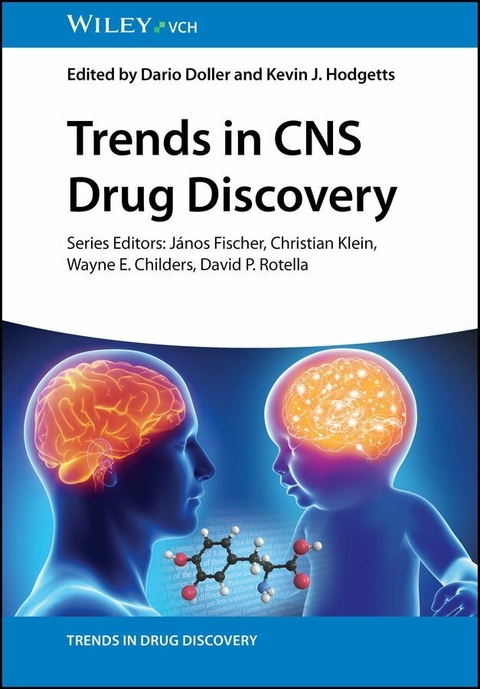
Trends in CNS Drug Discovery (eBook)
851 Seiten
Wiley-VCH (Verlag)
978-3-527-84468-5 (ISBN)
Provides insights into the drug discovery innovations that are shaping future CNS therapies
In the vast field of neuroscience, drug discovery targeting the central nervous system (CNS) presents both extraordinary opportunities and complex challenges. Disorders such as Alzheimer's disease, schizophrenia, and epilepsy affect millions worldwide, demanding innovative therapeutic strategies. Yet understanding brain processes and overcoming the blood-brain barrier continue to pose significant hurdles for researchers and developers alike.
Trends in CNS Drug Discovery offers a comprehensive overview of the methodologies, successes, and challenges shaping this critical area of pharmaceutical research. Covering a wide range of key areas, from current therapeutic paradigms to emerging technologies, this state-of-the-art volume brings together expertise from leading scientists and drug developers who address the role of cannabinoids and psychedelics in advancing CNS therapeutics, discuss emerging modalities such as protein degraders and allosteric modulators, examine funding strategies and academic-industrial collaborations, highlight advancements in brain-penetrating cancer treatments and other high-impact areas, and more.
- Explores cutting-edge methodologies, including biomarkers, animal models, and brain imaging for CNS drug discovery
- Reviews innovative therapies such as combination drugs and prodrugs for improved treatment outcomes
- Analyzes challenges in targeting diseases including Alzheimer's and schizophrenia with novel therapeutic strategies
- Includes real-world case studies demonstrating achievements and lessons in CNS drug development
A critical reference for academic researchers and industry professionals in medicinal chemistry, pharmaceutical research, and neurobiology, Trends in CNS Drug Discovery is also an ideal resource for graduate-level courses in neuroscience or pharmaceutical sciences.
Dario Doller, PhD, has over 25 years of experience in pharmaceutical research, contributing to numerous clinical compounds and marketed drugs. He has authored over 100 articles and patents and is Director of Medicinal Chemistry at iNeuro Therapeutics.
Kevin J. Hodgetts, PhD, is Associate Professor of Neurology at Harvard Medical School and Head of Medicinal Chemistry and Director of the Lab for Drug Discovery in Neuroscience (LDDN) at Brigham and Women's Hospital.
1
CNS Drug Discovery in “The Century of Biology”
Dario Doller
Modulate Bio, Inc. Pagliuca Harvard Life Lab, 127 Western Avenue, Allston, MA 02134, USA
Acronyms
- AD
- Alzheimer's disease
- AI
- Artificial intelligence
- CDD
- CDKL5‐deficiency disorder
- CDKL5
- Cyclin‐dependent kinase‐like 5
- CGRP
- Calcitonin gene‐related peptide
- Cryo‐EM
- Cryo‐electron microscopy
- CNS
- Central nervous system
- CSF
- Cerebrospinal fluid
- DALY
- Disability‐adjusted life‐years
- FDA
- Food and Drug Administration
- MCI
- Mild cognitive impairment
- MDMA
- 3,4‐Methylenedioxymethamphetamine
- MoA
- Mechanism of action
- PD
- Parkinson's disease
- POS
- Probability of success
- PPD
- Postpartum depression
- PTSD
- Post‐traumatic stress disorder
- VC
- Venture capital
1.1 Welcome to “The Century of Biology”!
The twenty‐first century has been aptly dubbed “The Century of Biology" [1], an era where the boundaries of life sciences are continuously pushed, bringing unprecedented advancements to the forefront of drug discovery. The rapid growth in our understanding of the molecular and cellular foundations of life and groundbreaking discoveries in genomics, proteomics, and bioinformatics have collectively expanded our knowledge of biological systems. These advancements have laid the groundwork for novel approaches in drug discovery, particularly for brain diseases, where traditional methods have often fallen short.
Brain diseases, including Alzheimer's, Parkinson's, and various neuropsychiatric disorders, present a unique set of challenges due to the intricacy and experimentally challenging accessibility of the human brain, including the protective role of the blood–brain barrier. Newly developed insights have led to the identification of novel molecular targets and pathways involved in these diseases. This has opened up opportunities for designing innovative chemical modalities that can effectively modulate these targets and potentially alter the course of brain diseases [2–4]. While small molecules are the preferred type of modality when brain penetration is part of the target drug profile, increased mastery in drug design is provided by allosteric mechanisms, especially when target activation is required [5, 6].
In this chapter, we critically evaluate the progress made in the first quarter of this century toward delivering novel therapeutics for brain diseases by examining both the notable successes and the persistent challenges. Through this lens, we seek to understand how far we have come and what remains to be done in the ongoing quest to develop effective treatments for debilitating brain diseases. The impact of increasingly more powerful computational technologies (e.g. artificial intelligence (AI) or machine learning) in the context of brain diseases is discussed in the Epilog chapter of this work.
1.2 Understanding Brain Health Around the World
The importance and prevalence of mental health cannot be understated. Our brain is at the core of every action we take and every experience we have. It governs our thoughts, emotions, speech, movements, and even essential functions such as breathing, heart activity, and immune responses. When the brain suffers from disease or injury, it can profoundly impact our own lives as well as the lives of those around us. Brain health covers a wide spectrum of issues, including mental health conditions, neurological disorders, and cerebrovascular diseases. Conditions such as dementia, stroke, and depression are particularly significant, as they rank among the leading causes of death and disability worldwide.
According to a report from the Brain Health Initiative, derived from the Global Burden of Disease (GBD) study, the largest and most comprehensive effort to measure health loss from hundreds of conditions around the world over time, the numbers are staggering [7]:
- Over 18% of global health loss is linked to brain conditions.
- In 2021, brain conditions were responsible for more disability‐adjusted life‐years (522 million DALYs) than cancer (260 million DALYs) and cardiovascular disease (402 million DALYs).
- These numbers are expected to rise as populations grow and age, posing challenges for families, employers, and healthcare systems.
Dedicated scientists across all stages of drug discovery and development have been working very hard to develop new therapeutics to treat these diseases. Assessing the probability of success (POS) of a clinical trial is vital for clinical researchers and biopharma investors when making informed scientific and economic decisions. Effective resource allocation depends on accurate and timely risk assessment. A major hurdle in estimating the success rate of clinical trials is the lack of reliable information on trial characteristics and outcomes. Collecting such data is often costly, time consuming, and prone to errors. A number of such studies of success rates in clinical studies have been published [8–11]. A new estimate of drug development success rates and durations was developed using a very large sample of 406,038 entries of clinical trial data for over 21,143 compounds from 1 January 2000 to 31 October 2015. According to this study, the overall success rate for central nervous system (CNS) clinical trials is 15.0%, with Phase 1 to Phase 2, Phase 2 to Phase 3, and Phase 3 to approval rates of 73.2%, 51.9%, and 51.1%, respectively. Generally speaking, these rates are clearly low, and they do not include the preclinical research efforts. However, the overall POS for CNS trials is superior to oncology (3.4%) and comparable to autoimmune/inflammation (15.1%) and metabolic disease/endocrinology (19.6%) [12].
Even with significant progress in biomedical science and efforts to streamline the clinical and regulatory stages of drug development, the efficiency of clinical development has not improved and may even be declining. Concurrently, the cost of drug development continues to escalate, with recent estimates placing the average out‐of‐pocket expense for each new compound at $1.4 billion, and fully capitalized costs reaching $2.6 billion [13]. Translational insights play a major role in the clinical POS of drugs working through novel mechanisms of action. The timelines for 138 novel drugs and biologics approved by the Food and Drug Administration (FDA) from 2010 to 2014 were analyzed using an analytical model of technology maturation. The median initiation year was 1974, with a median of 25 years to reach the established point, 28 years to begin the first clinical trials, and 36 years to achieve FDA approval [14]. Another paper found similar conclusions [15], suggesting that investment in fundamental research in life sciences is a key step to improving mental health treatment options.
1.3 Where Are New CNS Drugs Coming from?
The chemistry and pharmacology of many recently approved drugs were reviewed in good detail, and they would not be discussed here [16]. Broadly speaking, a novel drug may come from projects of two types:
- Targeting unprecedented biological targets.
- New strategies for known targets that have not realized their therapeutic potential despite showing clinical efficacy.
When embarking on a new CNS drug discovery effort, both such strategies are feasible when the right conditions are present: a persistent unmet medical need, clinical testing feasibility, appropriate financial support, and the potential financial reward for the scientific innovators and investors. Naturally, the risk profiles of these two types of projects are highly different. Disease mechanisms are significantly de‐risked using the concepts of “validity” [17]. In drug discovery, several types of validity concepts are crucial for ensuring the accuracy and reliability of research findings, and their translation to the clinical setting. Construct validity assesses whether a test accurately measures the concept it is intended to measure. Content validity evaluates if the test comprehensively represents the domain it aims to cover. Face validity determines if the test appears to measure what it claims to measure. Criterion validity examines whether the test results correspond to a concrete outcome. Additionally, predictive validity is vital in drug discovery as it measures how well a test or model predicts future outcomes, such as the clinical efficacy of a new drug. These validity types help researchers develop robust and reliable methods for identifying and validating new drug targets and therapeutic compounds. It may reasonably be argued that for many brain diseases and at the current stage of predictive neuroscience knowledge, this strategy provides a safer risk management profile than starting anew with an unproven new target [18].
Despite the intellectual appeal of pursuing novel scientific discoveries (strategy “a”) in CNS drug discovery strategy “b” is the one yielding the most current new drugs, and several billion‐dollar biotechnology companies are...
| Erscheint lt. Verlag | 30.7.2025 |
|---|---|
| Reihe/Serie | Trends in Drug Discovery |
| Mitarbeit |
Herausgeber (Serie): János Fischer, Christian Klein, Wayne E. Childers, David P. Rotella |
| Sprache | englisch |
| Themenwelt | Naturwissenschaften ► Chemie |
| Schlagworte | CNS Drug Discovery • CNS drug discovery biologics • CNS drug discovery biomarkers • CNS drug discovery biomarkers, CNS drug discovery biologics • CNS drug discovery financials • CNS pharmaceutical research • CNS therapeutic innovation • drug discovery blood-brain barrier • drug discovery neurodegenerative disorders |
| ISBN-10 | 3-527-84468-6 / 3527844686 |
| ISBN-13 | 978-3-527-84468-5 / 9783527844685 |
| Informationen gemäß Produktsicherheitsverordnung (GPSR) | |
| Haben Sie eine Frage zum Produkt? |
 EPUB (Adobe DRM)
Kopierschutz: Adobe-DRM
Adobe-DRM ist ein Kopierschutz, der das eBook vor Mißbrauch schützen soll. Dabei wird das eBook bereits beim Download auf Ihre persönliche Adobe-ID autorisiert. Lesen können Sie das eBook dann nur auf den Geräten, welche ebenfalls auf Ihre Adobe-ID registriert sind.
Details zum Adobe-DRM
Dateiformat: EPUB (Electronic Publication)
EPUB ist ein offener Standard für eBooks und eignet sich besonders zur Darstellung von Belletristik und Sachbüchern. Der Fließtext wird dynamisch an die Display- und Schriftgröße angepasst. Auch für mobile Lesegeräte ist EPUB daher gut geeignet.
Systemvoraussetzungen:
PC/Mac: Mit einem PC oder Mac können Sie dieses eBook lesen. Sie benötigen eine
eReader: Dieses eBook kann mit (fast) allen eBook-Readern gelesen werden. Mit dem amazon-Kindle ist es aber nicht kompatibel.
Smartphone/Tablet: Egal ob Apple oder Android, dieses eBook können Sie lesen. Sie benötigen eine
Geräteliste und zusätzliche Hinweise
Buying eBooks from abroad
For tax law reasons we can sell eBooks just within Germany and Switzerland. Regrettably we cannot fulfill eBook-orders from other countries.
aus dem Bereich