Marrow Memory (eBook)
186 Seiten
James Street North Books (Verlag)
978-1-998408-12-2 (ISBN)
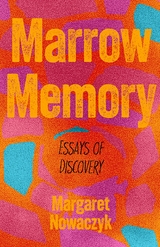
In Marrow Memory Margaret Nowaczyk explores different facets of her life, from listening to the radio dramas of her childhood in Communist Poland to her work as a pediatric clinical geneticist. These are beautifully crafted essays, full of hard-won truths and insights, generously shared with the reader. Whether struggling with English as a teenaged refugee or documenting the process of permanent hair dye, Nowaczyk moves seamlessly between scientific and personal writing, bridging the gap between these two areas with elegance and humour. Marrow Memory is an invitation to the reader to marvel in the unexpected beauties of human experience and the ability of language to capture that.
Marrow Memory
Jack and Luke wade through the tangled shrubs, careful not to tread on the sunken graves of the Old Brusno cemetery. Sandstone crosses appear within the underbrush, weather-beaten. Pale angels and ashen, sad-faced Madonnas peek between the tree trunks, haloed with blossoms of reddish-orange moss. Footed in the greenery of the underbrush, they seem to float. A world secreted in the deep shadows of an old-growth beech forest in the southeastern corner of Poland.
From the time our plane took off from Toronto Pearson International Airport five days earlier, my sons had complained incessantly: about the bigos they would not touch (they gag at the smell of sauerkraut, the fragrance of my childhood); about my speaking Polish to them (“Excuse me, but I know what language I’m speaking.”; “Not here, you don’t.”); about the lousy cellphone coverage. Whenever I try to shoot a photo of either of them, they pull faces or swat me away. On the first leg of a month-long tour of my homeland, we are visiting Horyniec, a town on the Polish-Ukrainian border where my grandmother was born in 1917.
“Not another cemetery,” ten-year-old Luke moaned when I told them where we were going this morning.
Jack scowled as only a teenager can: “You’re crazy, Mama.”
Perhaps I am. I was bitten by a genealogy bug when, on a microfilm at the Hamilton Family History Library, I located my grandfather’s name in the 1908 baptism book from the now extinct Polish parish in Toporów. At that moment, I saw my grandfather – a tall, sinewy carpenter who had given me rides on his broad shoulders during Sunday walks – as a helpless, two-day-old newborn held over the baptismal font by his godparents. The distances and borders between me and that moment – the ninety-four years, the thousands of kilometres over two continents and one ocean, the three official languages: Polish, Latin and English – disappeared. An unbroken chain led from that newborn to the newborn Luke I had recently brought home. From then on, I dug deeper, further into the past. It was not only the thrill of adding new names to the family tree that drove the search. Something more powerful, something unnameable tugged at me across the chasms of time.
I had wanted to visit this cemetery from the second its photograph appeared on my computer screen nine years earlier, white crosses glowing among the misty green beeches. At the time, I had hit a brick wall in my genealogical research: my mother had no idea where her mother, my maternal grandmother, was born. My grandmother had died when my mother was eight and the fragile chain of memories had broken. As far as I knew, all my ancestors were peasants, and, unlike nobility, their family trees have very shallow roots: serfs were too busy struggling to survive to pay attention to their family history. My mother’s ancestors had lived in the southeastern Polish borderlands for centuries. Indentured to the local nobles, the land serfs were passed like cattle from one landowner to another as the estates were sold. Until the early 1700s, they had no surnames. I had no idea how to look for them.
Then, on a dreary, rainy afternoon in March 2002, a flimsy airmail envelope delivered my grandmother’s death certificate. On it, in bright blue ballpoint ink, “Horyniec” was scrawled as her birthplace. From that scribble by an unknown priest, I traced eleven generations of my mother’s family back to 1775. For three years on Saturday mornings, I pored over grainy microfilms of baptism, marriage and death registers in Hamilton’s Family History Library. I cheered out loud, fist pumping the air, whenever I bridged another generation. That drive did not disappear when I reached the end of the written records, in fact, it became stronger. I had to see the place my ancestors had called home. I had to walk this land. But something else lurked in my limbic system, in memories and in conjectures.
As a five-year-old, I had overheard a story about my great-aunt’s father having been sawn in half by a band of marauding Ukrainians after the Second World War in a barn not far from Horyniec. In primary school, I had learned about the slaughter of Jews that had taken place among these trees – stripped naked, forced to dig their own graves, they were shot as they stood next to the holes in the ground – and about the cattle cars that had carried them to the Bełżec gas chambers, thirty kilometres north of this cemetery. For centuries before that, Polish manor lords mercilessly crushed the frequent Ukrainian peasant uprisings of these lands. Blood has bathed the roots of these trees; the ashes of the dead nourished their budding leaves. Is that why I had always been afraid of forests?
This morning we hike across the meadows, the thorny blackberry vines grabbing at my ankles. I wear sandals and soon my skin is shredded, bleeding, and I cannot but think how my blood might mingle with the blood spilled in these lands. But when I finally walk on the soft soil beneath the cemetery trees, I no longer feel fear. The smooth-barked beeches stand tall and straight like sentinels. Spirits gather around me. They are my blood and bone, too; they are my roots. I inhale the green scent of foliage and the musk of leaf litter under my feet. My pulse slows down, tension seeps from my body and drains into the soil.
A shadow of a stone foundation in the ground, overgrown with thick moss – remains of the little wooden Orthodox church that once stood here. I crouch down beside the nearest obelisk and crumble the black soil, the czarnoziem, so thick and rich it feels oily between my fingers. I bring it to my face – it smells of life, not death.
“Hey, Jack!” Luke calls out. “Look, a skull!”
Gods! Bones must have surfaced and of course those two imps would stumble onto them. I fear they will be traumatized for life. But Luke is pointing to a crudely chiselled skull grinning its teeth from the junction of a sandstone cross. My fingertips trace its Cyrillic letters: Here lies the body that is the corpse of Ivan Pavlycho. I chuckle at the morbid specificity of the inscription. Ivan died on January 12, 1898.
On the way back, we lose our path in the meadows: the spring has been unseasonably rainy and the grasses all but obliterate the narrow trail. Jack and Luke throw themselves into the cattails and fescue, shouting with glee when I cannot see them. Two puppies off the leash, high on fresh air and freedom. No trauma in sight.
In Polish, mała ojczyzna – “little homeland” – refers to where you are from, not necessarily in the physical sense, but where you feel most at home. I am shocked to realize that Horyniec is mine when two red-stockinged storks lope through the flooded meadows as if in a scene from my childhood fairy tales. I have coloured those long beaks and legs with crimson crayon, traced those enormous black-tipped wings spread in flight; only the squirming green frogs are missing from their beaks. The fragrance of the hay drying in heaps as tall as a house wafts by and a sensation arises somewhere between my gut and my heart – I know this meadow, this brook, these storks. But how can I? I never knew this village existed. I am a skeptic, a scientist; there has to be a logical explanation. Have I inherited awareness of this place from my ancestors?
Research has shown that DNA, the stuff genes are made of, can be modified as a result of lived experiences. Memories can be written not in the genes themselves, but onto them, as epigenetic changes. Tiny one-carbon methyl molecules attach to the DNA chain and influence the three-dimensional coiling of the double helix. Like barnacles that cover the rungs of a ship’s ladder and prevent you from getting purchase – the ladder is still there, its basic structure unchanged, but you cannot use it without scraping the shells off first. In this way, acquired elements may affect inheritance and nurture may affect nature. Such epigenetic transmission across two generations has been documented in cases of obesity and heart disease. And trauma. Even responses to smell, at least in laboratory mice. The hormone cortisol released during periods of physiologic stress effects epigenetic modification: the methyl barnacles attach to the DNA and alter how genes can be accessed during a person’s life. Is that why the whistle of a freight train filled me with dread as I lay in my safe bed late at night, hundreds of kilometres from where my ancestors’ Jewish neighbours had been transferred to death camps? The English have a term for it: “what’s bred in the bone.” I call it marrow memory.
What about the memories of the sun slanting in mid-afternoon on a winter day in a Gliwice apartment or of ripe wheat fields around Horyniec, curling like waves in the sudden gust of an approaching storm? The mushroomy smell of the forest floor that I adore? Maybe the endorphins and oxytocin of happiness affect epigenetic processes the way cortisol of stress does. Bathed in happy hormones, my genes have been marked with the spirit of this place. The scientist in me likes that theory.
“It’s kismet,” the Prince says. He shakes his head slowly and wonders out loud why our paths haven’t crossed before. “We are children of this land,” he adds. But he was born in the same communal hospital in Gliwice as I was, four hundred kilometres west of here. He is a year my senior.
I’d met him earlier in the evening. I was excited to hear that the scion of the local aristocracy would be attending the monthly meeting of the local history club where I was giving a talk, and crushed when he was running late...
| Erscheint lt. Verlag | 29.7.2025 |
|---|---|
| Sprache | englisch |
| Themenwelt | Naturwissenschaften ► Biologie ► Genetik / Molekularbiologie |
| Technik | |
| Schlagworte | Ancestry • Emotions • Family • Genetics • Immigration • medical practice • relationship with parents |
| ISBN-10 | 1-998408-12-4 / 1998408124 |
| ISBN-13 | 978-1-998408-12-2 / 9781998408122 |
| Informationen gemäß Produktsicherheitsverordnung (GPSR) | |
| Haben Sie eine Frage zum Produkt? |
 EPUB (Ohne DRM)
Digital Rights Management: ohne DRM
Dieses eBook enthält kein DRM oder Kopierschutz. Eine Weitergabe an Dritte ist jedoch rechtlich nicht zulässig, weil Sie beim Kauf nur die Rechte an der persönlichen Nutzung erwerben.
Dateiformat: EPUB (Electronic Publication)
EPUB ist ein offener Standard für eBooks und eignet sich besonders zur Darstellung von Belletristik und Sachbüchern. Der Fließtext wird dynamisch an die Display- und Schriftgröße angepasst. Auch für mobile Lesegeräte ist EPUB daher gut geeignet.
Systemvoraussetzungen:
PC/Mac: Mit einem PC oder Mac können Sie dieses eBook lesen. Sie benötigen dafür die kostenlose Software Adobe Digital Editions.
eReader: Dieses eBook kann mit (fast) allen eBook-Readern gelesen werden. Mit dem amazon-Kindle ist es aber nicht kompatibel.
Smartphone/Tablet: Egal ob Apple oder Android, dieses eBook können Sie lesen. Sie benötigen dafür eine kostenlose App.
Geräteliste und zusätzliche Hinweise
Buying eBooks from abroad
For tax law reasons we can sell eBooks just within Germany and Switzerland. Regrettably we cannot fulfill eBook-orders from other countries.
aus dem Bereich