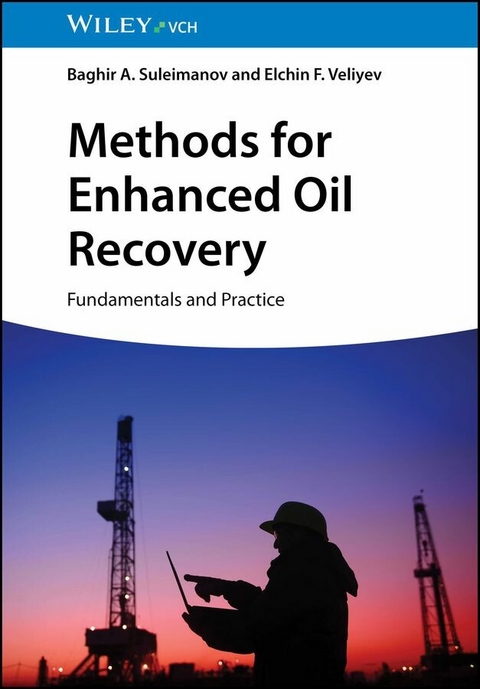
Methods for Enhanced Oil Recovery (eBook)
790 Seiten
Wiley-VCH (Verlag)
978-3-527-84829-4 (ISBN)
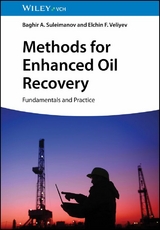
An authoritative theoretical explanation of enhanced oil recovery combined with practical, 'how-to' instructions on the real-world implementation of EOR
In Methods for Enhanced Oil Recovery: Fundamentals and Practice, a team of distinguished researchers delivers a comprehensive and in-depth exploration of the rapidly evolving field of enhanced oil recovery (EOR). The authors dive deep into the granular details of petroleum geology, hydrocarbon classification, and oil reserve assessment, while also explaining a variety of EOR techniques, like thermal, chemical, gas injection, and microbial approaches.
The book is heavily focused on advanced methods of EOR with accompanying analyses of contemporary techniques. It includes innovative new approaches to the discipline, presenting each method with a theoretical background and practical guidelines for implementation in the field. Readers will also find specific coverage of the criteria they should use to select appropriate EOR methods for specific reservoirs and the technological processes necessary to implement these methods in operational settings.
Inside the book:
- A thorough introduction to the laboratory evaluation of oil-bearing rock properties
- Contemporary case studies from oil fields in a variety of regions that illustrate the benefits and challenges of implementing EOR technologies
- Practical discussions of the economic implications of EOR methods
- Complete treatments of fundamental reservoir engineering concepts
Perfect for students of petroleum engineering, Methods for Enhanced Oil Recovery: Fundamentals and Practice will also benefit practicing petroleum engineers seeking a solid theoretical foundation into EOR combined with real-world, practical insights they can apply immediately.
Baghir A. Suleimanov, PhD, Deputy Director of the Oil-Gas Scientific Research and Project Institute of SOCAR, Doctor of Technical Sciences, Professor, and Corresponding Member of the Azerbaijan National Academy of Sciences. He delivers lectures and supervises postgraduate and PhD students in the field of petroleum engineering. Prof. Suleimanov is the author of over 200 scientific publications, 2 monographs, 4 textbooks, and holds 118 patents. He has successfully supervised 26 PhD students and 9 Doctors of Sciences. He has been recognized in the list of the world's top 2% most influential scientists, compiled by Stanford University.
Elchin F. Veliyev, PhD, Manager of the Laboratory of Analytical Researches at the Oil-Gas Scientific Research and Project Institute of SOCAR. Dr. Veliyev lectures and supervises postgraduate and PhD students in petroleum engineering. He is the author of 85 scientific papers, 3 monographs, and 4 textbooks, and holds 6 patents. He has been included in the list of the world's top 2% most influential scientists, compiled by Stanford University.
Chapter 1
Basic Concepts in Reservoir Engineering
1.1 Rocks and Their Types
A rock is a consolidated mixture of minerals. By “consolidated,” we mean hard and strong; real rocks don’t fall apart in your hands! A mixture of minerals implies the presence of more than one mineral grain, but not necessarily more than one type of mineral. For example, a rock can be composed of only one type of mineral, such as limestone, which is commonly made up of only calcite. However, most rocks are composed of several different minerals. Rocks can also include nonminerals, such as fossils or organic matter within a coal bed or in some types of mudstone.
A critical point to remember is the difference between a mineral and a rock. A mineral is a naturally occurring, inorganic solid with a specific chemical composition and a crystalline structure. Minerals are the building blocks of rocks and are defined by their unique physical and chemical properties. Examples of minerals include feldspar, quartz, mica, halite, calcite, and amphibole. These minerals vary in hardness, color, luster, and crystal form, and they are often used to identify and classify different types of rocks.
On the other hand, a rock is typically a mixture of several different minerals. For instance, granite is a common rock composed of quartz, feldspar, and mica. The proportions and types of minerals present in a rock determine its characteristics and classification. Rocks are categorized into three main types based on their formation processes: igneous, sedimentary, and metamorphic.
- Igneous rocks: These rocks form from the cooling and crystallization of magma, which is molten rock beneath the Earth’s surface. When magma cools slowly beneath the Earth’s crust, it forms intrusive igneous rocks such as granite, which have large, visible crystals. Conversely, when magma erupts onto the surface and cools quickly, it forms extrusive igneous rocks such as basalt, which have smaller crystals.
- Sedimentary rocks: These rocks are formed from the accumulation and lithification of sediment. The sediments produced by weathering and erosion are eventually deposited in various environments, such as rivers, lakes, deserts, and oceans. Over time, these sediments accumulate in layers and undergo lithification—a process of compaction and cementation—to form sedimentary rocks. Sediments can be fragments of other rocks, mineral grains, or biological materials. Sedimentary rocks are often layered and can contain fossils. Common types include sandstone, formed from compacted sand grains, and limestone, formed primarily from the remains of marine organisms. Sedimentary rocks provide valuable information about Earth’s history and past environments.
More than 70% of the area of all continents is covered with sedimentary rocks, and most of the mineral deposits are directly associated with them.
Depending on the forming processes, sedimentary rocks are divided into the following three groups:
- clastic (crushed stone, sand, pebbles, gravel, clay);
- chemical (various salts, silica); and
- organogenic (limestones, fossil fuels).
Common sedimentary rocks include:
- Sandstone: Formed from compacted sand grains.
- Shale: Formed from compacted clay particles.
- Limestone: Formed primarily from the remains of marine organisms.
- Metamorphic Rocks: These rocks form when preexisting igneous or sedimentary rocks are subjected to high temperatures, pressures, or chemically active fluids, causing them to undergo physical and chemical changes, leading to metamorphism. Metamorphic processes can result in the formation of new minerals and the reorganization of mineral grains into a more compact, crystalline structure. Examples of metamorphic rocks include schist, which has a foliated texture, and marble, which forms from limestone.
1.1.1 The Rock Cycle
The rock cycle is a fundamental concept in geology that describes the dynamic transformations of rocks within the Earth’s crust. The rock cycle is a continuous process, and rocks can be recycled through the cycle many times from one type to another through various geological processes (Figure 1.1). For example:
- Igneous to Sedimentary: Igneous rocks exposed at the surface are weathered and eroded into sediments, which are then compacted and cemented to form sedimentary rocks.
- Sedimentary to Metamorphic: Sedimentary rocks buried deep within the crust are subjected to heat and pressure, transforming them into metamorphic rocks.
- Metamorphic to Magma: Metamorphic rocks can melt under extreme conditions to become magma, restarting the cycle.
Figure 1.1 Schematics of the rock cycle.
The rock cycle is a vital part of the Earth’s system. It helps to recycle the Earth’s materials, and it also plays a role in the formation of mineral deposits. The rock cycle is a complex process, but it is essential for understanding the Earth’s geology.
This cycle is driven by two primary forces:
- Earth’s internal heat engine: The immense heat from the Earth’s interior causes convection currents in the mantle, leading to the movement of tectonic plates. This movement drives processes, such as volcanic activity, mountain building, and the formation of igneous and metamorphic rocks. For example, when tectonic plates collide, they can push rocks deep into the Earth’s crust, where they are subjected to high temperatures and pressures, forming metamorphic rocks (Figure 1.2).
Figure 1.2 Internal structure of Earth (a) and main source of internal heat/energy (b).
- The hydrological cycle: Powered by solar energy, the hydrological cycle involves the continuous movement of water on, above, and below the surface of the Earth. This cycle includes processes, such as weathering, erosion, transportation, deposition, and precipitation (Figure 1.3). For instance, rainwater can cause the weathering of rocks, breaking them down into smaller particles that are transported by rivers and deposited as sediment in lakes or oceans, eventually forming sedimentary rocks.
Figure 1.3 Schematics of the hydrological cycle.
To understand the rock cycle, it’s convenient to start with magma, which is molten rock beneath the Earth’s surface. Magma has temperatures ranging from about 800 to 1,300°C, depending on its composition and the pressure. When magma cools and solidifies, it forms igneous rocks. The location where this cooling occurs determines the type of igneous rock formed:
- Intrusive igneous rocks: These form when magma cools slowly beneath the Earth’s surface, allowing large crystals to develop. Granite is a common example of intrusive igneous rock.
- Extrusive igneous rocks: These form when magma erupts onto the surface (as lava) and cools quickly, resulting in smaller crystals. Basalt is an example of extrusive igneous rock.
Weathering and erosion are critical processes in the rock cycle that break down rocks into smaller particles, which can then be transported and deposited to form sedimentary rocks. Types of weathering:
- Physical (mechanical) weathering: This type of weathering breaks rocks into smaller pieces without changing their chemical composition. It includes:
- Frost wedging: Water seeps into cracks in rocks, freezes, and expands, causing the rock to break apart.
- Thermal expansion: Repeated heating and cooling cause rocks to expand and contract, leading to fragmentation.
- Biological activity: Plant roots grow into cracks in rocks, and animals burrow into the ground, contributing to the mechanical breakdown of rocks.
- Chemical weathering: This involves the chemical alteration of minerals within the rocks, leading to their breakdown. Key processes include:
- Hydrolysis: Water reacts with minerals to form new minerals and soluble ions. For example, feldspar transforms into clay minerals.
- Oxidation: Oxygen reacts with minerals, especially those containing iron, to form oxides. This process is responsible for the rusting of iron-rich rocks.
- Dissolution: Soluble minerals, such as halite and calcite, dissolve in water, especially in acidic conditions.
- Biological weathering: This type of weathering involves the contribution of living organisms. For instance, lichen and moss can produce acids that chemically weather rocks, while tree roots and burrowing animals physically break down rock.
1.1.2 Erosion
Erosion involves the transportation of weathered materials by natural agents. The primary agents of erosion include:
- Water: Rivers and streams carry sediments downstream, where they are deposited in floodplains, deltas, and oceans.
- Wind: In arid regions, wind can transport fine particles over long distances, creating features like sand dunes.
- Glaciers: Moving glaciers pick up and transport large quantities of rock debris, depositing them as glacial till when the ice melts.
- Gravity: Gravity causes rocks and sediments to move downhill through processes like landslides and rockfalls.
Understanding the rock cycle is essential for geologists as it provides insights into Earth’s geological history, the formation and distribution of natural resources, and the processes that shape the planet’s surface. For example:
- Natural...
| Erscheint lt. Verlag | 29.7.2025 |
|---|---|
| Sprache | englisch |
| Themenwelt | Naturwissenschaften ► Chemie |
| Schlagworte | economics of enhanced oil recovery • enhanced oil recovery applications • enhanced oil recovery case studies • enhanced oil recovery economics • enhanced oil recovery theory • EOR • eor implementation • eor methods • feasibility of enhanced oil recovery |
| ISBN-10 | 3-527-84829-0 / 3527848290 |
| ISBN-13 | 978-3-527-84829-4 / 9783527848294 |
| Informationen gemäß Produktsicherheitsverordnung (GPSR) | |
| Haben Sie eine Frage zum Produkt? |
 EPUB (Adobe DRM)
Kopierschutz: Adobe-DRM
Adobe-DRM ist ein Kopierschutz, der das eBook vor Mißbrauch schützen soll. Dabei wird das eBook bereits beim Download auf Ihre persönliche Adobe-ID autorisiert. Lesen können Sie das eBook dann nur auf den Geräten, welche ebenfalls auf Ihre Adobe-ID registriert sind.
Details zum Adobe-DRM
Dateiformat: EPUB (Electronic Publication)
EPUB ist ein offener Standard für eBooks und eignet sich besonders zur Darstellung von Belletristik und Sachbüchern. Der Fließtext wird dynamisch an die Display- und Schriftgröße angepasst. Auch für mobile Lesegeräte ist EPUB daher gut geeignet.
Systemvoraussetzungen:
PC/Mac: Mit einem PC oder Mac können Sie dieses eBook lesen. Sie benötigen eine
eReader: Dieses eBook kann mit (fast) allen eBook-Readern gelesen werden. Mit dem amazon-Kindle ist es aber nicht kompatibel.
Smartphone/Tablet: Egal ob Apple oder Android, dieses eBook können Sie lesen. Sie benötigen eine
Geräteliste und zusätzliche Hinweise
Buying eBooks from abroad
For tax law reasons we can sell eBooks just within Germany and Switzerland. Regrettably we cannot fulfill eBook-orders from other countries.
aus dem Bereich