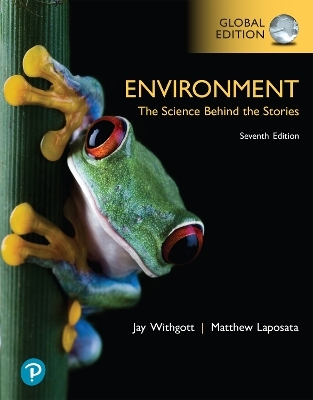
Environment: The Science Behind the Stories, Global Edition
Pearson Education Limited (Verlag)
978-1-292-73951-9 (ISBN)
Environment: The Science behind the Stories is known for its student-friendly narrative style, its integration of real stories and case studies, and its presentation of the latest science and research. With the 7th Edition, engaging new features open students' eyes to environmental issues, making it easy for them to see the data with new infographic-style illustrations, see the connections between the case studies and their own lives with new local connections activities, and see potential solutions with new success stories features. The new edition provides new levels of integration between the text, Mastering, and Pearson eText with digital components built into every hallmark feature, giving students seamless access to the tools and resources they need to succeed.
Reach every student with Mastering Environmental Science
Mastering™ is the teaching and learning platform that empowers you to reach every student. By combining trusted author content with digital tools developed to engage students and emulate the office-hour experience, Mastering personalizes learning and improves results for each student. Mastering Environmental Science extends learning and provides students with a platform to practice, learn, and apply knowledge outside of the classroom.
Jay Withgott has authored Environment: The Science Behind the Stories as well as its brief version, Essential Environment, since their inception. In dedicating himself to these books, he works to keep abreast of a diverse and rapidly changing field and continually seeks to develop new and better ways to help today's students learn environmental science. As a researcher, Jay has published scientific papers in ecology, evolution, animal behavior, and conservation biology in journals ranging from Evolution to Proceedings of the National Academy of Sciences. As an instructor, he has taught university lab courses in ecology and other disciplines. As a science writer, he has authored articles for numerous journals and magazines including Science, New Scientist, BioScience, Smithsonian, and Natural History. By combining his scientific training with prior experience as a newspaper reporter and editor, he strives to make science accessible and engaging for general audiences. Jay holds degrees from Yale University, the University of Arkansas, and the University of Arizona. Matthew Laposata is a professor of environmental science at Kennesaw State University (KSU). He holds a bachelor's degree in biology education from Indiana University of Pennsylvania, a master's degree in biology from Bowling Green State University, and a doctorate in ecology from The Pennsylvania State University. Matt is the coordinator of KSU's two-semester general education science sequence titled Science, Society, and the Environment, which enrolls roughly 6000 students per year. He focuses exclusively on introductory environmental science courses and has enjoyed teaching and interacting with thousands of students during his nearly two decades in higher education. He is an active scholar in environmental science education and has received grants from state, federal, and private sources to develop innovative curricular materials. His scholarly work has received numerous awards, including the Georgia Board of Regents' highest award for the Scholarship of Teaching and Learning.
1. Science and Sustainability
Our Island, Earth
Environmental Science
The Nature of Science
Seeking a Sustainable Future
2. Earth's Physical Systems
Matter, Chemistry, and the Environment
Energy: An Introduction
Geology: The Physical Basis for Environmental Science
Geologic and Natural Hazards
3. Evolution and Population Ecology
Evolution: The Source of Earth's Biodiversity
Ecology and the Organism
Population Ecology
Conserving Biodiversity
4. Species Interactions and Community Ecology
Species Interactions
Ecological Communities
Earth's Biomes
5. Environmental Systems and Ecosystem Ecology
Earth's Environmental Systems
Ecosystems
Biogeochemical Cycles
6. Ethics, Economics, and Sustainable Development
Environmental Ethics
Economics and the Environment
Sustainable Development
7. Environmental Policy
Environmental Policy: An Overview
U.S. Environmental Law and Policy
International Environmental Policy
Approaches to Environmental Policy
8. Human Population
Our World at Nearly 8 Billion
Demography
Population and Society
9. The Underpinnings of Agriculture
Resources and Services for Agriculture
Soil: A Foundation of Agriculture
Water for Agriculture
Nutrients for Plants
Pollination for Farming
Preserving Genetic Diversity
Conserving Soil and Land Resources
10. Making Agriculture Sustainable
The Race to Feed the World
Raising Animals for Food
Controlling Pests and Weeds
Genetically Modified Food
Organic Agriculture
Sustainable Food Production
11. Biodiversity and Its Conservation
Life's Diversity on Earth
Benefits of Biodiversity
Biodiversity Loss and Extinction
Conservation Biology: The Search for Solutions
12. Forests, Forest Management, and Protected Areas
Forest Ecosystems and Forest Resources
Forest Loss
Forest Management
Parks and Protected Areas
13. The Urban Environment
Our Urbanizing World
Sprawl
Creating Livable Cities
Urban Sustainability
14. Environmental Health and Toxicology
Environmental Health
Toxic Substances and Their Effects on Organisms
Toxic Substances and Their Effects on Ecosystems
Studying Effects of Hazards
Risk Assessment and Risk Management
Philosophical and Policy Approaches
15. Freshwater Systems and Resources
Freshwater Systems
Human Activities Affect Waterways
Solutions to Depletion of Fresh Water
Freshwater Pollution and Its Control
16. Marine and Coastal Systems and Resources
The Oceans
Marine and Coastal Ecosystems
Marine Pollution
Emptying the Oceans
Marine Conservation
17. The Atmosphere, Air Quality, and Air Pollution Control
The Atmosphere
Outdoor Air Quality
Ozone Depletion and Recovery
Addressing Acid Deposition
Indoor Air Quality
18. Global Climate Change
Our Dynamic Climate
Studying Climate Change
Impacts of Climate Change
Responding to Climate Change
19. Fossil Fuels and Energy Efficiency
Sources of Energy
Fossil Fuels: Their Formation, Extraction, and Use
Reaching Further for Fossil Fuels
Addressing Impacts of Fossil Fuel Use
Energy Efficiency and Conservation
20. Conventional Energy Alternatives
Alternatives to Fossil Fuels
Nuclear Power
Bioenergy
Hydroelectric Power
21. New Renewable Energy Sources
Shifting to Renewable Energy
Solar Energy
Wind Power
Geothermal Energy
Ocean Energy Sources
Energy Storage
22. Managing Our Waste
Approaches to Waste Management
Municipal Solid Waste
Industrial Solid Waste
Hazardous Waste
23. Minerals and Mining
Earth's Mineral Resources
Mining Methods and Their Impacts
Toward Sustainable Mineral Use
| Erscheinungsdatum | 08.07.2025 |
|---|---|
| Verlagsort | Harlow |
| Sprache | englisch |
| Themenwelt | Naturwissenschaften ► Biologie ► Ökologie / Naturschutz |
| Naturwissenschaften ► Chemie ► Allgemeines / Lexika | |
| ISBN-10 | 1-292-73951-7 / 1292739517 |
| ISBN-13 | 978-1-292-73951-9 / 9781292739519 |
| Zustand | Neuware |
| Informationen gemäß Produktsicherheitsverordnung (GPSR) | |
| Haben Sie eine Frage zum Produkt? |
aus dem Bereich