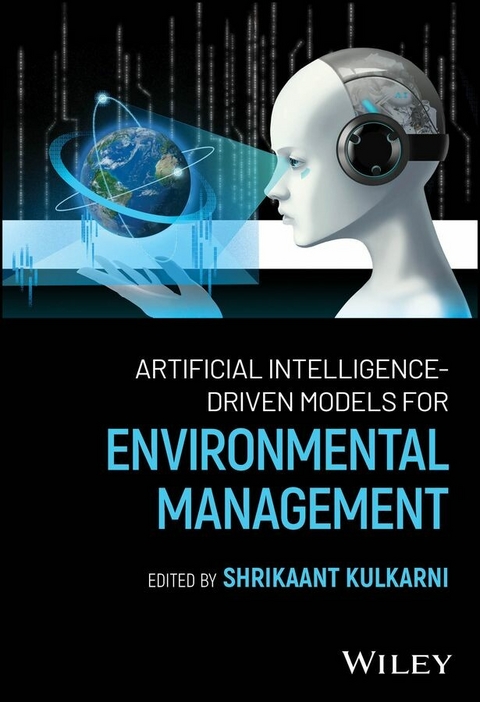
Artificial Intelligence-Driven Models for Environmental Management (eBook)
641 Seiten
Wiley (Verlag)
978-1-394-28253-1 (ISBN)
Step-by-step guidelines for the development of artificial neural network-based environmental pollution models
Artificial Intelligence-Driven Models for Environmental Management delves into the application of AI across a plethora of areas in environmental management, including climate forecasting, natural resource optimization, waste management, and biodiversity conservation. This book shows how AI can help in monitoring, predicting, and mitigating environmental impacts with tremendous accuracy and speed by leveraging machine learning, deep learning, and other data-driven models. The methodologies explored in this volume reflect a synthesis of computational intelligence, data science, and ecological expertise, underscoring how AI-driven systems have been making strides in managing and preserving our planet's natural resources.
The text is structured to guide readers through numerous AI models and their practical environmental management applications, showcasing theoretical foundations as well as case studies. This book also addresses the challenges and ethical considerations related to deploying AI in ecological contexts, underscoring the importance of transparency, inclusivity, and alignment with sustainability goals.
Sample topics discussed in Artificial Intelligence-Driven Models for Environmental Management include:
- Tools and methods for monitoring and predicting environmental pollutants faster and more accurately
- AI technology for the protection of water supplies from contamination to produce healthier foods
- Use of AI for the evaluation of the impacts of environmental pollution on human health
- AI and waste management technologies for sustainable agriculture and soil management
- The role of AI in environmental research and sustainability and key social and economic aspects of natural resource management through AI
Artificial Intelligence-Driven Models for Environmental Management is a timely, forward-thinking resource for a diverse readership, including researchers, policymakers, environmental scientists, and AI practitioners.
Shrikaant Kulkarni, Ph.D., is a Research Professor at Sanjivani University, Kopargaon, India, and an Adjunct Professor at Faculty of Business, Victorian Institute of Technology, Melbourne, Australia. Dr. Kulkarni has been a senior academic and researcher for more than four decades. He has published over 100 research papers, 100+ book chapters, and edited 50+ reference books.
1
Application of AI in Environmental Sustainability
Pawan Whig1, Shashi Kant Gupta2, Rahul Reddy Nadikattu3, and Pavika Sharma4
1 Department of Information Technology, Vivekananda Institute of Professional Studies‐Technical Campus (VIPS‐TC), New Delhi, India,
2 Department of Computer Science and Engineering, Eudoxia Research University, New Castle, DE, USA,
3 Department of Information Technology, University of the Cumberland, Cumberland, MD, USA,
4 Department of Electronics and Communication Engineering, Bhagwan Parshuram Institute of Technology, Affiliated to Guru Gobind Singh Indraprastha University, New Delhi, India,
1.1 Introduction
Artificial intelligence (AI) is a transformative technology that has the potential to revolutionize a wide range of industries, including environmental sustainability. AI refers to the simulation of human intelligence in machines that are designed to think, learn, and adapt autonomously. By leveraging complex algorithms, machine learning, and data analytics, AI systems can process vast amounts of information, recognize patterns, and make decisions with minimal human intervention [1].
Environmental sustainability, on the other hand, refers to practices and strategies that ensure the responsible use of natural resources to meet present needs without compromising the ability of future generations to meet their own. This concept encompasses a broad spectrum of issues, including climate change mitigation, resource conservation, pollution control, biodiversity protection, and the promotion of renewable energy [2].
In recent years, the convergence of AI and environmental sustainability has garnered significant attention due to the urgent need to address global environmental challenges. AI‐driven technologies offer innovative solutions that can enhance our ability to monitor, analyze, and manage ecosystems, resources, and environmental risks [3]. From optimizing energy consumption to predicting climate patterns and improving waste management, AI plays an increasingly crucial role in supporting sustainable development [4].
The integration of AI in environmental management can be categorized into three primary areas:
- Data Collection and Monitoring: AI enables advanced environmental monitoring systems, such as remote sensing and Internet of Things (IoT)‐based networks, that can collect real‐time data on ecosystems, weather patterns, and human activities.
- Predictive Modeling and Analytics: By applying machine learning and big data analytics, AI can model environmental scenarios, forecast changes, and recommend actionable strategies to mitigate adverse impacts.
- Automation and Optimization: AI‐driven automation helps in optimizing processes such as energy consumption, transportation, agriculture, and resource management to reduce waste and environmental harm.
The potential of AI to contribute to environmental sustainability is vast, but its implementation must be done in a way that balances technological advancement with ecological protection, ethical considerations, and social responsibility.
1.1.1 Importance of AI in Addressing Environmental Challenges
AI's role in addressing environmental challenges is multifaceted and vital. As the world faces escalating issues such as climate change, deforestation, resource depletion, pollution, and biodiversity loss, traditional methods of environmental management often fall short in providing timely and scalable solutions [5–7]. AI, however, offers unique capabilities to overcome these limitations by processing complex datasets, delivering accurate predictions, and enabling rapid decision‐making.
- Climate Change Mitigation and Adaptation: Climate change is one of the most pressing environmental challenges of our time. AI can contribute to mitigating its effects by improving the efficiency of renewable energy systems, such as wind and solar power. By analyzing vast amounts of data from weather stations and energy grids, AI can optimize the operation of these systems, reducing reliance on fossil fuels. AI is also being used to predict climate changes, identify vulnerable regions, and provide insights into potential strategies for adaptation, such as enhanced disaster preparedness and resilient infrastructure development [8].
- Resource Conservation and Management: Natural resources, such as water, forests, and minerals, are increasingly under pressure due to population growth and industrialization. AI can assist in managing these resources more sustainably. For example, AI‐powered precision agriculture can help farmers optimize water usage, reduce fertilizer application, and improve crop yields, leading to more sustainable food production. Similarly, AI is used in water resource management to monitor and predict water levels, ensuring that this critical resource is used efficiently [9].
- Pollution Control and Waste Management: AI is instrumental in tackling pollution, which adversely affects air, water, and soil quality. Through advanced monitoring systems, AI can detect pollution sources in real time, allowing for immediate intervention to prevent further damage. In waste management, AI‐driven robots and sorting systems can separate recyclable materials more effectively, reducing the amount of waste that ends up in landfills and improving recycling rates [10].
- Biodiversity and Ecosystem Protection: The loss of biodiversity due to human activities, such as habitat destruction and poaching, poses a significant threat to ecosystems worldwide. AI tools are being developed to monitor endangered species, track their movements, and prevent illegal activities like poaching. AI can also support habitat restoration efforts by analyzing environmental conditions and predicting the most suitable areas for conservation [11].
- Urban Sustainability and Smart Cities: As urban areas expand, they contribute to environmental degradation through increased energy consumption, waste generation, and transportation emissions. AI can make cities more sustainable by optimizing traffic flow to reduce congestion and emissions, improving the efficiency of public transportation, and managing urban energy grids for reduced consumption. Smart city initiatives that integrate AI technology have the potential to significantly reduce the carbon footprint of urban environments while enhancing the quality of life for residents [12].
- Disaster Risk Reduction: AI plays a critical role in disaster risk management by predicting natural disasters such as floods, hurricanes, and wildfires. Through advanced algorithms and machine learning models, AI can analyze meteorological and environmental data to forecast events, giving governments and communities valuable time to prepare and mitigate the impact of such disasters [13].
The importance of AI in addressing environmental challenges extends beyond technical applications. It also fosters a shift toward more sustainable economic models, such as the circular economy, where AI aids in reducing resource extraction, extending product life cycles, and promoting recycling and reuse. By optimizing industrial processes and supply chains, AI contributes to a reduction in carbon emissions and environmental degradation, helping industries align with global sustainability targets [14–17].
However, while AI offers enormous potential, it is essential to recognize that its deployment in environmental contexts must be guided by ethical considerations. AI systems must be designed to minimize potential unintended consequences, such as the exacerbation of inequality or the reinforcement of unsustainable practices. Furthermore, the energy consumption of AI itself—especially in training large models—must be managed to avoid contributing to the very environmental problems AI seeks to solve [18–20]. The intersection of AI and environmental sustainability presents a powerful opportunity to address some of the most significant challenges of our time. By leveraging AI's ability to analyze, predict, and optimize, we can move closer to achieving global sustainability goals and ensuring a healthier planet for future generations [21].
1.2 AI Applications in Environmental Monitoring
Environmental monitoring plays a pivotal role in understanding and addressing the planet's growing ecological challenges. Traditionally, monitoring relied on manual data collection and localized observations, which limited the scope and effectiveness of interventions. However, with the advent of AI, environmental monitoring has evolved, becoming more comprehensive, precise, and scalable [22–24]. AI applications enable the collection, analysis, and interpretation of large volumes of data in real time, providing actionable insights to guide environmental protection efforts. Below are some of the key AI‐driven technologies used in environmental monitoring [25].
1.2.1 Remote Sensing and Satellite Imaging
Remote sensing and satellite imaging technologies have revolutionized environmental monitoring, providing a global perspective on natural phenomena, land use, and human activities. AI plays a crucial role in interpreting the data collected through these systems, enabling real‐time monitoring and predictive analysis on a large scale...
| Erscheint lt. Verlag | 1.7.2025 |
|---|---|
| Sprache | englisch |
| Themenwelt | Naturwissenschaften ► Biologie ► Ökologie / Naturschutz |
| Schlagworte | AI-Driven Decision-Making • AI for Energy Efficiency • AI for Water Management • AI in Environmental Policy • AI in Forest Management • AI in Sustainability • AI in Waste Management • AI Models • Air Quality Prediction • Artificial Intelligence • Big Data Analytics • Biodiversity conservation • carbon footprint reduction • circular economy • Climate Change Mitigation • Climate modeling • Deep learning • disaster management • Ecosystem Preservation • Environmental Data • Environmental Impact Assessment • Environmental Management • Environmental monitoring • Environmental Risk Analysis • GIS and AI Integration • Greenhouse Gas Monitoring • Green Technology • IoT in Environment • machine learning • natural resource management • Precision Farming • predictive analytics • Remote Sensing • Renewable Energy Forecasting • Renewable Energy Optimization • smart cities • Smart Systems • sustainable agriculture • sustainable development |
| ISBN-10 | 1-394-28253-2 / 1394282532 |
| ISBN-13 | 978-1-394-28253-1 / 9781394282531 |
| Informationen gemäß Produktsicherheitsverordnung (GPSR) | |
| Haben Sie eine Frage zum Produkt? |
 EPUB (Adobe DRM)
Kopierschutz: Adobe-DRM
Adobe-DRM ist ein Kopierschutz, der das eBook vor Mißbrauch schützen soll. Dabei wird das eBook bereits beim Download auf Ihre persönliche Adobe-ID autorisiert. Lesen können Sie das eBook dann nur auf den Geräten, welche ebenfalls auf Ihre Adobe-ID registriert sind.
Details zum Adobe-DRM
Dateiformat: EPUB (Electronic Publication)
EPUB ist ein offener Standard für eBooks und eignet sich besonders zur Darstellung von Belletristik und Sachbüchern. Der Fließtext wird dynamisch an die Display- und Schriftgröße angepasst. Auch für mobile Lesegeräte ist EPUB daher gut geeignet.
Systemvoraussetzungen:
PC/Mac: Mit einem PC oder Mac können Sie dieses eBook lesen. Sie benötigen eine
eReader: Dieses eBook kann mit (fast) allen eBook-Readern gelesen werden. Mit dem amazon-Kindle ist es aber nicht kompatibel.
Smartphone/Tablet: Egal ob Apple oder Android, dieses eBook können Sie lesen. Sie benötigen eine
Geräteliste und zusätzliche Hinweise
Buying eBooks from abroad
For tax law reasons we can sell eBooks just within Germany and Switzerland. Regrettably we cannot fulfill eBook-orders from other countries.
aus dem Bereich