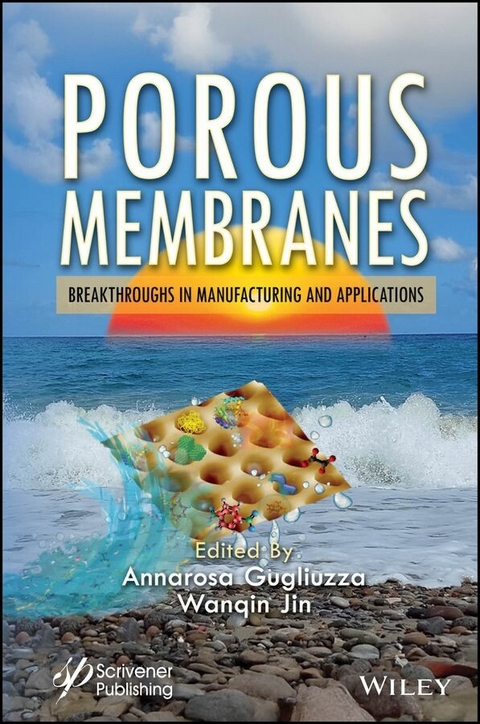
Porous Membranes (eBook)
539 Seiten
Wiley-Scrivener (Verlag)
978-1-394-30346-5 (ISBN)
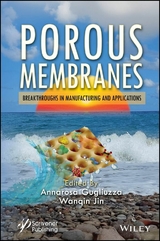
The book is essential for anyone seeking a deep understanding of porous membranes, as it offers valuable insights into manufacturing methods, innovative applications, and strategies for optimizing membrane design to meet critical project demands across various fields.
Porous Membranes: Breakthroughs in Manufacturing and Applications is a comprehensive guide to discovering the world of porous membranes and their applications. This volume gives a global perspective of basic concepts, featuring manufacturing approaches and potential applications where control of pore size and shape, and distribution can be decisive for the success of a membrane process. In-depth explanations elaborate on the key role assigned to a membrane's pores in directing events that are crucial for the mandatory targets imposed by a project's requirements. Further, discussions on how to manage and characterize materials from a molecular to macro scale to achieve highly defined architecture to enable high-performing separations are explored. Advances and innovation are central themes, providing useful solutions to current critical aspects and existing bottlenecks in the control of structural and chemical features of targeted membranes. This cross-disciplinary discussion opens new routes for membrane science in expanding fields, including water management, environmental remediation, recovery of targeted compounds, food, and health.
Readers will find this book:
- Introduces the strict relationship between extensively ordered porous membranes and enhanced productivity;
- Explores new approaches based on new membrane pore concepts;
- Emphasizes the feasibility and reliability of the proposed techniques within the context of a potential scale-up, analyzing critical issues and traits;
- Focuses on the role of porous membranes in some strategic membrane operations, providing clear evidence about the fundamental role of structure-separation properties for the success of membrane processes dedicated to natural resource management.
Audience
Researchers in chemistry, biology, biomedicine, materials science, textiles, and electronics who are involved with membranes and materials; technologists and product managers from industry, including those responsible for research and development, building prototypes and commercial devices, will find this book to be especially valuable.
Annarosa Gugliuzza, PhD is a senior researcher at the National Research Council of Italy. She has edited three books and authored and coauthored over 215 scientific publications, including articles, editorials, book chapters, technical reports, and one patent. She is also active in supervision and mentoring activities and serves as an editor and guest editor for several journals and special issues. Her research interests include membranes, nanofilms, coatings, and smart textiles.
Wanqin Jin, PhD is a Professor of Chemical Engineering at Nanjing Tech University, a Fellow of the Royal Society of Chemistry, Deputy Director of the State Key Laboratory of Materials-Oriented Chemical Engineering, and the Chief Scientist of the National Basic Research Program of China and a major program of the National Natural Science Foundation of China. He has published over 300 refereed journal publications and two monographs, contributed six book chapters, and has 40 authorized patents. His current research focuses on the development of membrane materials and processes.
The book is essential for anyone seeking a deep understanding of porous membranes, as it offers valuable insights into manufacturing methods, innovative applications, and strategies for optimizing membrane design to meet critical project demands across various fields. Porous Membranes: Breakthroughs in Manufacturing and Applications is a comprehensive guide to discovering the world of porous membranes and their applications. This volume gives a global perspective of basic concepts, featuring manufacturing approaches and potential applications where control of pore size and shape, and distribution can be decisive for the success of a membrane process. In-depth explanations elaborate on the key role assigned to a membrane s pores in directing events that are crucial for the mandatory targets imposed by a project s requirements. Further, discussions on how to manage and characterize materials from a molecular to macro scale to achieve highly defined architecture to enable high-performing separations are explored. Advances and innovation are central themes, providing useful solutions to current critical aspects and existing bottlenecks in the control of structural and chemical features of targeted membranes. This cross-disciplinary discussion opens new routes for membrane science in expanding fields, including water management, environmental remediation, recovery of targeted compounds, food, and health. Readers will find this book: Introduces the strict relationship between extensively ordered porous membranes and enhanced productivity; Explores new approaches based on new membrane pore concepts; Emphasizes the feasibility and reliability of the proposed techniques within the context of a potential scale-up, analyzing critical issues and traits; Focuses on the role of porous membranes in some strategic membrane operations, providing clear evidence about the fundamental role of structure-separation properties for the success of membrane processes dedicated to natural resource management. Audience Researchers in chemistry, biology, biomedicine, materials science, textiles, and electronics who are involved with membranes and materials; technologists and product managers from industry, including those responsible for research and development, building prototypes and commercial devices, will find this book to be especially valuable.
1
Porous Membranes: A Brief Introduction to Basics Concepts and Fields of Applications
Annarosa Gugliuzza
Research Institute on Membrane Technology-National Research Council (CNR-ITM), Rende, Italy
Abstract
Pores can be regarded as channels and sub-nanometer free pathways, in which transport can take place through. Porous membranes can be classified by pore size and subsequent capability to discriminate among molecular species according to various mechanisms. Transport mechanisms through porous media can be described according to mathematical equations, while structural elements can be regarded as critical issue for membrane productivity and efficiency. A classification is herein proposed for membranes used in pressure-driven membrane processes, including microfiltration, ultrafiltration, nanofiltration, and reverse osmosis, with a brief outline of dialysis and electrodialysis. Structure-property relationships are critically discussed for other advanced membrane operations, including membrane distillation, membrane crystallization, membrane condensation, and membrane emulsification. Finally, a consideration on free volume compared to free paths on an Å length scale is also provided for membranes worked in gas separation and pervaporation.
Keywords: Porous membranes, transport mechanism, microfiltration, ultrafiltration, nanofiltration, reverse osmosis, membrane contactors, gas separation and pervaporation
1.1 Introduction
Traditionally, a membrane is regarded as a perm-selective interface enabling mass, energy, charge, and signals transport under predefined driving forces [1]. More recently, the membrane has been regarded as an interactive and/or a dynamic and adaptable film; its permeability and selectivity can be controlled and readdressed under external triggers, if necessary [2]. Undoubtedly, morphological features decide transport and discriminating property of membranes. Pores, defined as free gaps through which molecular diffusion takes place, represent a decisive structural element for the occurrence of specific transport mechanisms. Of course, pore size, shape, and tortuosity generate the morphological environment wherein particles and various molecular species can be separated according to their size, geometry, molecular weight, as well as affinity and condensability [3]. The size and geometry of pores are the result of thermodynamic and kinetic events that control the formation of a membrane during i) phase separation or ii) imprinting action of pore formers (Figures 1.1a, b). During phase separation, regions poorer in polymer form pores in membranes in a more random way, leading to porous structures with low control of pore geometry and density distribution. When geometrically regular templates are assembled in predefined volumetric spaces, well-shaped and sized pore can be obtained throughout the membrane surface once removed. Sometimes, pores can be simply free gaps generated by the rearrangement of segment polymer chains, or they can consist of the intrinsic porosity of nanofillers, or more simply, tracks and voids shaped at organic/inorganic interfaces (Figure 1.1c). Further, the switching on/off of pores can be generated by self-assembly or stimulated arrangements of materials, enabling changes in size and shape (Figure 1.1d) [4].
A significant morphological aspect is the propagation of the pore length through membranes. Frequently, the length of the diffusion path is higher than the length of a straight capillary. In this case, a tortuosity factor is generated, which can compromise or affect molecular diffusion due to local restrictions in the pathways [5]. The active pore could be not placed on the membrane surface but rather confined within the bulk of the membranes. This stresses how the membrane morphology, as a whole, can affect its efficiency in regions that are part of the skin or sublayer of the film. Different morphological situations can usually occur in a membrane: a) pores connected to the surface and working as free channels; c) pores open on the surface but closed at the other end (dead-end); d) pores closed at both ends; and e) pores with restrictions in the middle path. So, a careful evaluation of the pore size, tortuosity, and free access throughout the membrane is always needed [6]. The number and density of pores in a membrane determine its overall porosity, expressed as the ratio of the volume of air embedded in the matrix to the volume of the solid film. This other morphological parameter is fundamental because it controls the degree of resistance to molecular transport. High porosity is strongly desired to increase the productivity of a membrane process. Highly porous films are, in fact, used as sublayers for tiny selective layers to provide good mechanical resistance without adding resistance to transport. On the other hand, too large a pore size can affect seriously the selectivity of the process.
Figure 1.1 Representation of mechanisms for pore generation in membrane: (a) regions poorer in polymer during phase separation; (b) imprinting action of organic/inorganic template; (c) free gaps formed at the organic/organic and organic/inorganic interfaces; and (d) self-assembly of materials with responsive properties.
Another important issue is that pore size, shape, and distribution can affect the final surface properties of membranes, producing singular textures able to amplify rugosity factors and subsequently enhance the repellence properties of the film [7]. Also, pores could be preferable sites for the adhesion of molecular compounds as a first step towards undesired clogging, polarization concentration, and fouling, which are responsible for flux decline and loss of performance.
Pore size resolves which kind of membrane operation can be implemented for each membrane-type. Usually, porous films are indicated for pressure-driven separation processes [8], including microfiltration (MF, 100 nm to 2 μm), ultrafiltration (UF, 2–100 nm), dialysis (2–5 nm), nanofiltration (NF 2–1 nm), and reverse osmosis (RO, < 1 nm). Advanced membrane contactor technologies such as membrane distillation (MD), membrane crystallization (MCr), membrane condensers (MCe), and membrane emulsifiers (ME) also require the use of porous membranes whose topography can decide the operation’s success.
Lastly, free volume may also be regarded as an extreme concept of pores; it represents the average free pathways distributed on the Ångström (Å) length scale in dense membranes, usually used for gas separation and pervaporation. It could be frozen or fluctuant as a function of the glassy or rubbery properties of the membrane. Hereafter, an outline of transport mechanisms and membranes for specific membrane operations is provided.
1.2 Overview on Pore Size Concept and Transport Mechanisms
Pore size is the key structural element that determines the type of transport across a membrane through mechanisms that discriminate among molecular size, affinity, and condensability. Passive, active, and assisted transport can be distinguished depending on morphology, chemistry of membranes, and nature of penetrants as well as working conditions. The most common transport mechanisms through porous media include Poiseuille flow, Knudsen diffusion, surface diffusion, capillary condensation, molecular sieving, and solution-diffusion (Figure 1.2).
Based on the discriminant ability of porous media, the mechanisms could be classified into the following categories: a) bulk flow; b) restricted diffusion; c) selective absorption; and d) solution-diffusion. A short mathematical description of each single transport mechanism is herein given.
1.2.1 Poiseuille Flow
Poiseuille flow is a viscous, unselective flux that takes place in macropores with sizes wider than 50 nm. The pore diameter is usually larger than the mean free path of the molecular penetrant. This kind of transport is well described by eq. 1.1:
where ε is the porosity; μ is the viscosity of the penetrant; η is the shape factor (assumed to be equal to the reciprocal tortuosity of the medium), r is the pore radius; pav is the mean pressure.
Figure 1.2 Schematic representation of classic transport mechanisms through porous membranes.
When the membrane has a densified skin, the occurrence of Poiseuille flow yields a clear indication of the presence of defects, cracks, or pinholes through the active layer of the film.
1.2.2 Knudsen Diffusion
Microporous membranes with pore sizes in the range of 2–50 nm make Knudsen diffusion predominant due to the collision of the molecules with the pore wall [9]. In this case, the mean free path of the molecules is greater than the pore size, while the selectivity is proportional to the ratio of the inverse square root of the molecular weights as hereafter described:
where Dk is diffusion coefficient and Jk is the Knudsen-type flux.
where αij is the selectivity between the species i and j, and Mj and Mi are the molecular masses of the components j and i, respectively.
1.2.3 Selective Surface...
| Erscheint lt. Verlag | 25.6.2025 |
|---|---|
| Sprache | englisch |
| Themenwelt | Naturwissenschaften ► Chemie |
| Schlagworte | 2D Materials • biodegradation • bioreactors • Click Chemistry • Environmental remediation • Fuel cells • Gas Separation • Layered Membranes • Membrane Architectures • Membrane separation • Membrane Smart Gates • porous membranes • Sub-Nanochannels • Waste treatment • Water Desalination |
| ISBN-10 | 1-394-30346-7 / 1394303467 |
| ISBN-13 | 978-1-394-30346-5 / 9781394303465 |
| Informationen gemäß Produktsicherheitsverordnung (GPSR) | |
| Haben Sie eine Frage zum Produkt? |
 EPUB (Adobe DRM)
Kopierschutz: Adobe-DRM
Adobe-DRM ist ein Kopierschutz, der das eBook vor Mißbrauch schützen soll. Dabei wird das eBook bereits beim Download auf Ihre persönliche Adobe-ID autorisiert. Lesen können Sie das eBook dann nur auf den Geräten, welche ebenfalls auf Ihre Adobe-ID registriert sind.
Details zum Adobe-DRM
Dateiformat: EPUB (Electronic Publication)
EPUB ist ein offener Standard für eBooks und eignet sich besonders zur Darstellung von Belletristik und Sachbüchern. Der Fließtext wird dynamisch an die Display- und Schriftgröße angepasst. Auch für mobile Lesegeräte ist EPUB daher gut geeignet.
Systemvoraussetzungen:
PC/Mac: Mit einem PC oder Mac können Sie dieses eBook lesen. Sie benötigen eine
eReader: Dieses eBook kann mit (fast) allen eBook-Readern gelesen werden. Mit dem amazon-Kindle ist es aber nicht kompatibel.
Smartphone/Tablet: Egal ob Apple oder Android, dieses eBook können Sie lesen. Sie benötigen eine
Geräteliste und zusätzliche Hinweise
Buying eBooks from abroad
For tax law reasons we can sell eBooks just within Germany and Switzerland. Regrettably we cannot fulfill eBook-orders from other countries.
aus dem Bereich