


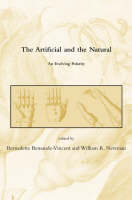
The Artificial and the Natural
An Evolving Polarity
Seiten
2007
MIT Press (Verlag)
978-0-262-02620-8 (ISBN)
MIT Press (Verlag)
978-0-262-02620-8 (ISBN)
- Titel ist leider vergriffen;
keine Neuauflage - Artikel merken
Notions of nature and art as they have been defined and redefined in Western culture, from the Hippocratic writers and Aristotle of Ancient Greece to nineteenth-century chemistry and twenty-first century biomimetics.
Genetically modified food, art in the form of a phosphorescent rabbit implanted with jellyfish DNA, and robots that simulate human emotion would seem to be evidence for the blurring boundary between the natural and the artificial. Yet because the deeply rooted concept of nature functions as a cultural value, a social norm, and a moral authority, we cannot simply dismiss the distinction between art and nature as a nostalgic relic. Disentangling the cultural roots of many current debates about new technologies, the essays in this volume examine notions of nature and art as they have been defined and redefined in Western culture, from the Hippocratic writers' ideas of physis and techne and Aristotle's designation of mimetic arts to nineteenth-century chemistry and twenty-first century biomimetics. These essays -- by specialists of different periods and various disciplines -- reveal that the division between nature and art has been continually challenged and reassessed in Western thought. In antiquity, for example, mechanical devices were seen as working "against nature"; centuries later, Descartes not only claimed the opposite but argued that nature itself was mechanical. Nature and art, the essays show, are mutually constructed, defining and redefining themselves, partners in a continuous dance over the centuries.
Contributors
Bernadette Bensaude-Vincent, Horst Bredekamp, John Hedley Brooke, Dennis Des Chene, Alan Gabbey, Anthony Grafton, Roald Hoffmann, Thomas DaCosta Kaufmann, William R. Newman, Jessica Riskin, Heinrich Von Staden, Francis Wolff, Mark J. Schiefsky
Genetically modified food, art in the form of a phosphorescent rabbit implanted with jellyfish DNA, and robots that simulate human emotion would seem to be evidence for the blurring boundary between the natural and the artificial. Yet because the deeply rooted concept of nature functions as a cultural value, a social norm, and a moral authority, we cannot simply dismiss the distinction between art and nature as a nostalgic relic. Disentangling the cultural roots of many current debates about new technologies, the essays in this volume examine notions of nature and art as they have been defined and redefined in Western culture, from the Hippocratic writers' ideas of physis and techne and Aristotle's designation of mimetic arts to nineteenth-century chemistry and twenty-first century biomimetics. These essays -- by specialists of different periods and various disciplines -- reveal that the division between nature and art has been continually challenged and reassessed in Western thought. In antiquity, for example, mechanical devices were seen as working "against nature"; centuries later, Descartes not only claimed the opposite but argued that nature itself was mechanical. Nature and art, the essays show, are mutually constructed, defining and redefining themselves, partners in a continuous dance over the centuries.
Contributors
Bernadette Bensaude-Vincent, Horst Bredekamp, John Hedley Brooke, Dennis Des Chene, Alan Gabbey, Anthony Grafton, Roald Hoffmann, Thomas DaCosta Kaufmann, William R. Newman, Jessica Riskin, Heinrich Von Staden, Francis Wolff, Mark J. Schiefsky
Bernadette Bensaude-Vincent is Professor of History at the University of Paris X. She is the author of A History of Chemistry and other books. William R. Newman is Ruth Halls Professor of History and Philosophy of Science at Indiana University, Bloomington. He is the coeditor of Secrets of Nature (MIT Press, 1999) and author or editor of several other books.
| Reihe/Serie | Dibner Institute Studies in the History of Science and Technology |
|---|---|
| Zusatzinfo | 29 figs. illus. |
| Verlagsort | Cambridge, Mass. |
| Sprache | englisch |
| Maße | 152 x 229 mm |
| Gewicht | 590 g |
| Themenwelt | Naturwissenschaften |
| ISBN-10 | 0-262-02620-1 / 0262026201 |
| ISBN-13 | 978-0-262-02620-8 / 9780262026208 |
| Zustand | Neuware |
| Informationen gemäß Produktsicherheitsverordnung (GPSR) | |
| Haben Sie eine Frage zum Produkt? |
Mehr entdecken
aus dem Bereich

aus dem Bereich
Wie die Mathematik unsere Welt verändert hat
Buch | Hardcover (2024)
Librero b.v. (Verlag)
CHF 27,90


