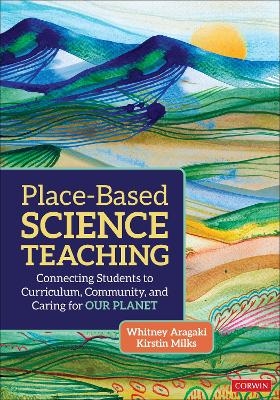
Place-Based Science Teaching
Corwin Press Inc (Verlag)
978-1-0719-7368-4 (ISBN)
Identity, community, and place are tightly connected and can be leveraged to deepen science learning for students. Place-Based Science Teaching offers K-12 science educators an innovative approach to building learning experiences that embrace the rich and varied knowledge held by people, both past and present, about the places we call home. This book helps teachers to foster greater personal investment of students in their learning, as well as develop NGSS-informed authentic problem-solving and critical reasoning skills. The book will also help teachers create and find joy in their classrooms by connecting lessons to local environments, cultural heritage, and global issues.
Written by nationally recognized STEM educators Whitney Aragaki and Kirstin Milks, the book blends inspiring storytelling with practical frameworks and resources. Chapters will take you behind the scenes into innovative classrooms, detailing high-impact, standards-aligned activities and sharing educator stories from diverse settings.
Grounded in cutting-edge research and real-world examples, Place-Based Science Teaching
Introduces the Place Based Science Teaching Framework that asks "where are you," "when are you," "who are you," and "who are we together" as a way to connect learning to local and global contexts
Provides classroom-ready lessons and case studies from many educational settings, aligned with NGSS and centered on belonging, access, and engagement
Offers strategies for virtual spaces and digital perspectives to enhance teaching in an increasingly online world
Includes actionable reflection prompts designed to help teachers explore their own positionality and better connect with their students and communities
This book will encourage educators and administrators alike to transform science learning into an opportunity for building empathy, connection, and hope. Place-Based Science Teaching is designed to help teachers foster a sense of place and stewardship among their students, and address peace- and justice-focused solutions that encourage students to care for their communities, think critically about global challenges, and develop the agency to lead for generations to come.
Whitney Aragaki is an educator, parent, and learner from Hilo, Hawai?i. She supports students to learn through a lens of abundance that honors place, people and cultures. Her teaching focuses around conversations, practices and systems that sustain the intimate inter-relationship of public education, community and environment. Whitney is a fifth-generation Hawai?i Island resident of Japanese ancestry. She is the daughter of two educators, and was a student in her mother’s biology class. She currently serves as a high school science teacher at her alma mater, Waiakea High School and as a Professor of Practice and Faculty Lead at Reach University. Her two children also thrive in this supportive public-school ecosystem. Whitney has a Bachelor of Arts in biology from Swarthmore College, a Master of Science in Tropical Conservation Biology and Environmental Science from the University of Hawai‘i at Hilo, and a Doctor of Philosophy in Education from the University of Hawai‘i at Manoa College of Education. Whitney, a National Board Certified Teacher, is the 2022 Hawai?i State Teacher of the Year and National Teacher of the Year Finalist. She is a 2021 Presidential Awardee for Excellence in Math and Science Teaching and a 2023 Obama Foundation USA Leader. Kirstin J. Milks teaches AP Biology and introductory science at Bloomington High School South in Bloomington, Indiana, where she also serves as a STEM team coach and mentor. Kirstin loves collaborating with students and community members to learn together in inclusive and responsive environments, as well as supporting and making public the work of teaching and learning—all with the goal of helping youth build a just and sustainable world. A graduate of Stanford University’s Schools of Medicine (PhD) and Education (MA), she is a National Board Certified Teacher, a Presidential Awardee for Excellence in Math and Science Teaching, a Lilly Teacher Creativity Fellow, the 2025 president of the National Association of Biology Teachers, her Girl Scout council′s Leader of the Year, and a Senior Fellow at the Knowles Teacher Initiative. She’s worked with organizations including the MacArthur Foundation, the Carnegie Foundation, the National Science Foundation, the College Board, SXSW EDU, Educating for Environmental Change, and schools across the country to envision, engineer, and enact the future of education, with a focus on humane and socially-responsive science teaching. When she’s not teaching or volunteering with Girl Scouts, Kirstin enjoys visiting the local library with her family, practicing all-ages taekwondo, and singing along at top volume to local radio.
Contributors
Preface
Why Place-Based Teaching?
Our Goals for This Book
How to Use This Book
Features of the Book
Self-Awareness, Personally and Professionally
Author Positionality
Uncovering Your Positionality
A Few Notes on Language
Land Acknowledgment
Acknowledgments
About the Authors
Chapter 1: A First Look at Place-Based Teaching Practices
Introduction to the Work
What Is Place-Based Teaching?
Why Is Place-Based Science Teaching Effective and Important?
Four Questions of Place-Based Science Teaching
What Inspired the Place-Based Science Teaching Framework?
Wait, Is Place-Based Learning Another Way to Say Project-Based Learning?
(K)new Invitations
Knowledge
Innovation
Belonging for Students
Learning and Community for All
Building Belonging in Science Class
Acknowledging Land
How Are Land Acknowledgments a Good Opportunity for Exercising Place-Based Science Concepts and Learning?
Sociocultural Features of Helpful Land Acknowledgments
Land Acknowledgments Are Best as a Process of Learning
E lu‘u hou i ka wai
Reflection Questions
Chapter 2: Where Are You?
Noticing Place, Wherever You Are
Getting Started: Uncovering Specifics of Place
BioBlitzes and Square of Life: Documenting Place in Class
More Examples of Where in Place
Sit Spots: Individualized Invitations to Place
Field Experiences in Kirstin’s Small Midwestern City
Kilo
Exploring Connection to Place
Stories Across Our Places: How Teachers and Students Ask, “Where Are We?”
Reflection Questions
Chapter 3: When Are You?
Crosscutting Concepts: Investigating “When Through Authentic Features of Science and Engineering”
Exploring Scales of Time
Intertwined Histories, Intertwined Science
What’s “The Trouble With Wilderness?”
Exploring Ecosystem Services
Caretakers of Our Land, Past and Future
Stories Across Our Places: How Teachers and Students Ask, “When Are We?
Reflection Questions
Chapter 4: Who Are You?
How Are Place and Identity Linked? Strengthening Self-Awareness
Strategies for Supporting Student Identity Exploration Through Place
Leveraging Informal Conversations With Students
Connecting With Family as a Means of Connecting With Self and Place
Learning From Elders About Their Experiences of Place
Celebrating Local Diversity of Place and of People
Stories Across Our Places: How Teachers and Students Ask, “Who Am I?”
Reflection Questions
Chapter 5: Who Are We Together?
Developing Science Curriculum to Reflect Student Experiences and Relationships
Combating Place-Based Injustice With Action
Growing Justice Education: Starting With the Teacher
Belonging as Action
Classroom as Place
Student and Family Relationships
Student and Place Relationships: Safe, Brave, and Accountable Spaces
Teaching Beyond the Classroom
Participatory Science
Place- and Project-Based Learning: Connecting Global Challenges to Local Action
Connecting Big Problems to Local Solutions
It’s OK to Start Small
Stories Across Our Places: How Teachers and Students Ask, “Who Are We Together?”
Reflection Questions
Chapter 6: Virtual Spaces and Our Places
(Re)defining Place
Place in Virtual Space
Science in Virtual Terms
Science in Virtual Place
Access and Equity in Virtual Places
Inquiry and Privilege
Artifacts and Access
Identity, Safety, and Belonging
Framing a Digital Environment With Four Questions
Where Are You in the Digital Environment?
When Are You in the Digital Environment?
Who Are You in the Digital Environment?
Who Are We Together in the Digital Environment?
Digital Equity and Belonging
Reflection Questions
Chapter 7: Place-Based Teaching for Sustainable Futures
Justice-Ready Futures
A VUCA Forecast
Joy and Justice
AI-Ready Futures
What Does AI Say About This?
Where Does AI Fall Short?
Refuge-Ready Futures
Teaching Place Away From Home
(K)new Beginnings
Climate-Ready Futures
The Climate Gap
Place-Based and Future-Forward
(Be)coming Home
Final Words From Whitney
References
Index
| Erscheinungsdatum | 11.12.2025 |
|---|---|
| Verlagsort | Thousand Oaks |
| Sprache | englisch |
| Maße | 177 x 254 mm |
| Gewicht | 560 g |
| Themenwelt | Schulbuch / Wörterbuch |
| Naturwissenschaften | |
| Sozialwissenschaften ► Pädagogik ► Schulpädagogik / Grundschule | |
| Sozialwissenschaften ► Pädagogik ► Schulpädagogik / Sekundarstufe I+II | |
| ISBN-10 | 1-0719-7368-1 / 1071973681 |
| ISBN-13 | 978-1-0719-7368-4 / 9781071973684 |
| Zustand | Neuware |
| Informationen gemäß Produktsicherheitsverordnung (GPSR) | |
| Haben Sie eine Frage zum Produkt? |
aus dem Bereich