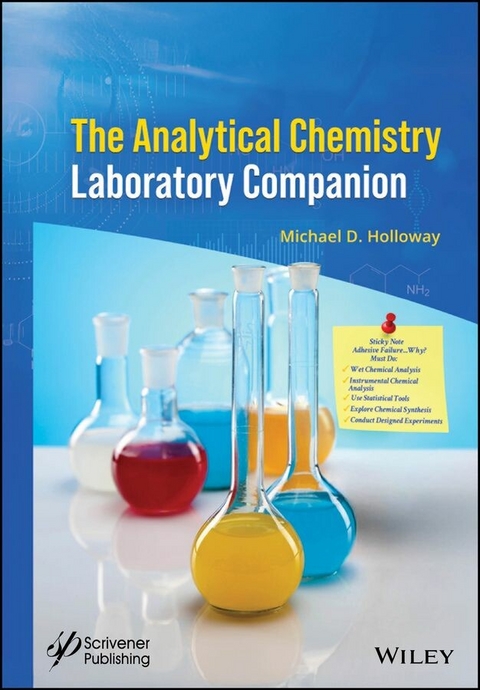
The Analytical Chemistry Laboratory Companion (eBook)
1303 Seiten
Wiley-Scrivener (Verlag)
978-1-394-35509-9 (ISBN)
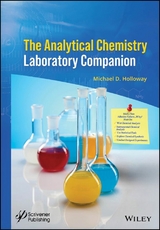
The Analytical Chemistry Laboratory Companion is essential for both students and professionals, as it provides quick, clear explanations on critical topics in analytical chemistry, equipping you with the statistical tools necessary to ensure accurate and reliable data interpretation.
The Analytical Chemistry Laboratory Companion serves as a reference guide for students and professionals alike who need quick explanations on specific topics, laboratory operations, the structure of designing experiments, and the use of statistics to gain increased accuracy, precision, repeatability, and reproducibility of data. This volume will also provide in-depth and advanced studies and build the necessary background knowledge for success in the field.
This companion provides a concise examination of the various analytical tools used for chemistry, and defines basic analytical instrument principles, techniques, and applications in addition to exploring statistical tools useful in data interpretation, test result reporting, and common root causes for faulty data with suggested remedies. The introduction provides a concise guide on foundational topics such as developing standard operating procedures, laboratory safety, instrumental analytical methods, and common statistical tools useful for data interpretation. This companion covers both wet chemical and instrumental analysis, including their principles, applications, and pitfalls. The Analytical Chemistry Laboratory Companion is a must-have, comprehensive guide in the field of analytical chemistry.
Michael D. Holloway is President of 5th Order Industry, which provides competency development and training. He has over 38 years of industry and holds 16 professional certifications. His publications include eight authored books, numerous contributions to other books, and a patent. He is an expert in failure analysis, reliability engineering, and designed experiments for science and engineering.
The Analytical Chemistry Laboratory Companion is essential for both students and professionals, as it provides quick, clear explanations on critical topics in analytical chemistry, equipping you with the statistical tools necessary to ensure accurate and reliable data interpretation. The Analytical Chemistry Laboratory Companion serves as a reference guide for students and professionals alike who need quick explanations on specific topics, laboratory operations, the structure of designing experiments, and the use of statistics to gain increased accuracy, precision, repeatability, and reproducibility of data. This volume will also provide in-depth and advanced studies and build the necessary background knowledge for success in the field. This companion provides a concise examination of the various analytical tools used for chemistry, and defines basic analytical instrument principles, techniques, and applications in addition to exploring statistical tools useful in data interpretation, test result reporting, and common root causes for faulty data with suggested remedies. The introduction provides a concise guide on foundational topics such as developing standard operating procedures, laboratory safety, instrumental analytical methods, and common statistical tools useful for data interpretation. This companion covers both wet chemical and instrumental analysis, including their principles, applications, and pitfalls. The Analytical Chemistry Laboratory Companion is a must-have, comprehensive guide in the field of analytical chemistry.
Introduction
Chemical analysis techniques play a fundamental role in the field of chemistry and various scientific disciplines by providing valuable insights into the composition, structure, and properties of substances. These techniques encompass a wide range of methods that help scientists identify, quantify, and characterize chemical compounds. Analyzing the molecular structure of a molecule typically involves a combination of several analytical techniques to provide a comprehensive understanding. The choice of analytical techniques will depend on the specific goals of your analysis and the nature of the sample (liquid, solid, mixture, etc.). Typically, a combination of several techniques is employed to obtain a comprehensive understanding of the molecular structure of molecules.
Wet Chemical Analysis
Wet chemical analysis techniques, also known as classical or wet chemistry methods, are a set of laboratory techniques used to determine the composition of substances or solutions by performing chemical reactions in a liquid medium. These techniques rely on the principles of chemical reactions, stoichiometry, and titration to analyze substances quantitatively and qualitatively. Here are the key principles underlying wet chemical analysis techniques:
Chemical Reactions: Wet chemical analysis methods are based on the concept of chemical reactions. By adding reagents (chemical substances) to a sample, specific reactions are initiated. These reactions may involve the formation of precipitates, color changes, gas evolution, or changes in the concentration of ions.
Stoichiometry: Stoichiometry is the study of the quantitative relationships between reactants and products in a chemical reaction. Wet chemical analyses follow stoichiometric principles to determine the amount or concentration of a substance in a sample based on the balanced chemical equation of the reaction.
Titration: Titration is a common wet chemical technique that involves adding a solution of known concentration (titrant) to a solution of the analyte (substance being analyzed) until the reaction is complete. The volume or amount of titrant required to reach the endpoint is used to calculate the concentration of the analyte.
Precipitation Reactions: In precipitation reactions, a reagent is added to the sample to form an insoluble solid, called a precipitate. The quantity of the precipitate is related to the concentration of the analyte and can be measured to determine the analyte’s concentration.
Colorimetry and Spectrophotometry: Some wet chemical methods rely on color changes in the reaction. The intensity of the color change is proportional to the concentration of the analyte and can be measured using colorimeters or spectrophotometers.
Gravimetry: Gravimetric analysis involves the determination of the quantity of a substance by measuring its mass. Precipitation reactions are often used in gravimetric methods, where the mass of the precipitate is used to calculate the analyte’s concentration.
Wet chemical analysis methods require standard solutions of known concentration for calibration and titration. The accuracy of the analysis depends on the accurate preparation and standardization of these solutions.
It’s essential to consider potential interferences from other substances that may affect the accuracy of the analysis. Selective reagents or separation techniques are often employed to minimize interference.
Proper sample preparation is crucial to ensure the sample is representative and suitable for analysis. Sample digestion, dilution, or filtration may be required to prepare the sample for analysis.
Safety precautions are essential in wet chemical analysis due to the use of chemicals and potentially hazardous reagents. Proper lab practices, protective equipment, and handling procedures are necessary to minimize risks.
Wet chemical analysis techniques have been widely used in analytical chemistry for decades and continue to be valuable tools for qualitative and quantitative analysis of a wide range of substances. They provide accurate and reliable results when performed with precision and adherence to established principles and procedures.
Wet Chemical Methods
Titration Methods
Titration methods involve the controlled addition of a reagent of known concentration (the titrant) to a sample until a chemical reaction reaches a specific endpoint. Some common types of titration methods include:
Acid-Base Titration: Used to determine the concentration of an acid or base in a solution by neutralizing it with a standard solution of the opposite type.
Redox Titration: Involves the transfer of electrons between reactants and is used to determine the concentration of a reducing or oxidizing agent.
Complexometric Titration: Uses a complexing agent to form a complex with the analyte, allowing for its quantification.
Gravimetric Methods
Gravimetric methods involve the measurement of mass changes to determine the concentration or content of an analyte. Common gravimetric techniques include:
Precipitation Gravimetry: Involves the precipitation of an insoluble compound from a solution followed by filtration and weighing to determine the analyte’s mass.
Volatilization Gravimetry: Determines the analyte’s mass by measuring the weight loss due to the volatilization of a compound.
Colorimetric Methods
Colorimetric methods rely on the measurement of absorbance or transmittance of light by a colored solution to determine the concentration of an analyte. These methods often use reagents that produce a color change when reacting with the analyte.
UV-Visible Spectrophotometry: Measures the absorbance of ultraviolet and visible light by a sample. Beer-Lambert law relates absorbance to concentration.
Precipitation Methods
Precipitation methods involve the formation of a solid precipitate from the reaction between the analyte and a suitable reagent. Common precipitation methods include:
Selective Precipitation: Precipitates a specific ion or group of ions while leaving others in solution, allowing for separation and quantification.
Extraction Methods
Extraction methods involve the separation of an analyte from a sample matrix using a solvent. Common extraction methods include:
Liquid-Liquid Extraction: Involves the transfer of analyte from an aqueous phase into an organic solvent for subsequent analysis.
Solid-Phase Extraction (SPE): Utilizes a solid sorbent to selectively retain analytes from a solution for later elution and quantification.
Digestion Methods: Digestion methods involve the decomposition of a sample, typically by heating with a suitable reagent, to convert analytes into a form suitable for analysis. Examples include acid digestion for metals analysis and combustion analysis for organic materials.
Wet chemical methods in analytical chemistry encompass a wide range of techniques that have been instrumental in qualitative and quantitative analysis for centuries. These methods are versatile and find applications in various industries, including environmental monitoring, pharmaceuticals, food analysis, and materials characterization. While modern instrumentation and techniques have advanced the field of analytical chemistry, wet chemical methods remain indispensable for their accuracy, reliability, and ability to provide essential information for a wide range of applications.
Instrumental Chemical Analysis
Chemical analysis techniques using instruments are based on the fundamental principles of chemistry and physics, including:
Spectroscopy: Spectroscopic techniques rely on the interaction between matter and electromagnetic radiation (such as light or X-rays). They measure the absorption, emission, or scattering of radiation to provide information about a substance’s composition and structure.
Chromatography: Chromatographic techniques separate chemical compounds based on their different affinities for a stationary phase and a mobile phase. The time it takes for compounds to travel through the chromatographic column provides information about their identity and quantity.
Electrochemistry: Electrochemical techniques involve the study of chemical processes that involve the transfer of electrons between substances. These methods are used to determine the concentration of ions, analyze redox reactions, and measure electrochemical properties.
Mass Spectrometry: Mass spectrometry techniques measure the mass-to-charge ratio of ions generated from a sample. By analyzing these ratios, scientists can identify compounds and determine their molecular weight.
Thermal Analysis: Thermal analysis is a valuable technique in chemical analysis with several advantages and applications. It involves the measurement of physical and chemical properties of materials as a function of temperature.
Common Chemical Analysis Techniques
Spectroscopy:
Nuclear Magnetic Resonance (NMR): Utilizes the magnetic properties of nuclei to elucidate the structure of organic compounds.
Infrared Spectroscopy (IR): Analyzes the vibrational modes of molecules to identify functional groups and chemical bonds.
Ultraviolet-Visible Spectroscopy (UV-Vis): Measures the absorption of UV and visible light, providing information about electronic transitions.
X-ray Spectroscopy: Includes X-ray photoelectron spectroscopy (XPS) and X-ray...
| Erscheint lt. Verlag | 2.6.2025 |
|---|---|
| Sprache | englisch |
| Themenwelt | Naturwissenschaften ► Chemie ► Analytische Chemie |
| Schlagworte | Analytical chemistry guide • Analytical chemistry reference • Analytical Chemistry Textbook • Chemical Analysis • chemistry textbook • Data Interpretation for Chemistry • Experimental Design • Instrumental Chemical Analysis • Laboratory Management • Laboratory Safety • Laboratory Techniques • Standard Operating Procedures for Chemistry Labs • Statistical Analysis for Chemistry • Wet Chemical Analysis |
| ISBN-10 | 1-394-35509-2 / 1394355092 |
| ISBN-13 | 978-1-394-35509-9 / 9781394355099 |
| Informationen gemäß Produktsicherheitsverordnung (GPSR) | |
| Haben Sie eine Frage zum Produkt? |
 EPUB (Adobe DRM)
Kopierschutz: Adobe-DRM
Adobe-DRM ist ein Kopierschutz, der das eBook vor Mißbrauch schützen soll. Dabei wird das eBook bereits beim Download auf Ihre persönliche Adobe-ID autorisiert. Lesen können Sie das eBook dann nur auf den Geräten, welche ebenfalls auf Ihre Adobe-ID registriert sind.
Details zum Adobe-DRM
Dateiformat: EPUB (Electronic Publication)
EPUB ist ein offener Standard für eBooks und eignet sich besonders zur Darstellung von Belletristik und Sachbüchern. Der Fließtext wird dynamisch an die Display- und Schriftgröße angepasst. Auch für mobile Lesegeräte ist EPUB daher gut geeignet.
Systemvoraussetzungen:
PC/Mac: Mit einem PC oder Mac können Sie dieses eBook lesen. Sie benötigen eine
eReader: Dieses eBook kann mit (fast) allen eBook-Readern gelesen werden. Mit dem amazon-Kindle ist es aber nicht kompatibel.
Smartphone/Tablet: Egal ob Apple oder Android, dieses eBook können Sie lesen. Sie benötigen eine
Geräteliste und zusätzliche Hinweise
Buying eBooks from abroad
For tax law reasons we can sell eBooks just within Germany and Switzerland. Regrettably we cannot fulfill eBook-orders from other countries.
aus dem Bereich