


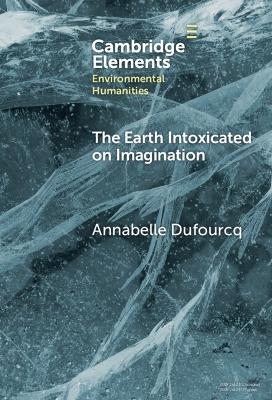
The Earth Intoxicated on Imagination
Seiten
2025
Cambridge University Press (Verlag)
978-1-009-64442-6 (ISBN)
Cambridge University Press (Verlag)
978-1-009-64442-6 (ISBN)
The aim of this Element is to forge new conceptual tools to give more ecological power to the human imagination. It contrasts the harmful modern concepts of reality and imagination with a more grounded “earthly” and “animal” imagination and offers an alternative approach to environmental imagination and activism.
The aim of this Element is to forge new conceptual tools to give more ecological power to the human imagination. Imagination, both an innovative force and one that distances and blinds, is central to the ecological crisis as well as its potential resolution. Human imagination creates a bubble of denial, fostering the illusion of a smooth, reassuring, controlled, and neatly compartmentalized world. This Element critically contrasts the harmful modern concepts of reality and imagination with a more grounded “earthly” and “animal” imagination. It proposes to overcome the tension between two currents in environmental thought: those advocating imagination for utopian transformation, and proponents of realism, urging confrontation with the material world beyond anthropocentrism. Through analysis of key contemporary environmental work alongside insights from ethology and biosemiotics, the Element underpins the concept of “animal imagination,” offering an alternative approach to environmental imagination and activism that fosters deeper engagement with the living world.
The aim of this Element is to forge new conceptual tools to give more ecological power to the human imagination. Imagination, both an innovative force and one that distances and blinds, is central to the ecological crisis as well as its potential resolution. Human imagination creates a bubble of denial, fostering the illusion of a smooth, reassuring, controlled, and neatly compartmentalized world. This Element critically contrasts the harmful modern concepts of reality and imagination with a more grounded “earthly” and “animal” imagination. It proposes to overcome the tension between two currents in environmental thought: those advocating imagination for utopian transformation, and proponents of realism, urging confrontation with the material world beyond anthropocentrism. Through analysis of key contemporary environmental work alongside insights from ethology and biosemiotics, the Element underpins the concept of “animal imagination,” offering an alternative approach to environmental imagination and activism that fosters deeper engagement with the living world.
1. Introduction; 2. Calling for more imagination; 3. Calling for more realism; 4. A destructive debate; 5. What went wrong with human imagination: Lessons from Shakespeare's Tempest; 6. Ecological imagination: Animal imagination; 7. Animal imagination and activism: Magic now; 8. Conclusion; References.
| Erscheinungsdatum | 19.08.2025 |
|---|---|
| Reihe/Serie | Elements in Environmental Humanities |
| Zusatzinfo | Worked examples or Exercises |
| Verlagsort | Cambridge |
| Sprache | englisch |
| Maße | 152 x 229 mm |
| Gewicht | 500 g |
| Themenwelt | Geisteswissenschaften ► Sprach- / Literaturwissenschaft ► Anglistik / Amerikanistik |
| Geisteswissenschaften ► Sprach- / Literaturwissenschaft ► Literaturwissenschaft | |
| Naturwissenschaften ► Biologie ► Ökologie / Naturschutz | |
| Sozialwissenschaften ► Politik / Verwaltung ► Politische Systeme | |
| Sozialwissenschaften ► Politik / Verwaltung ► Politische Theorie | |
| ISBN-10 | 1-009-64442-4 / 1009644424 |
| ISBN-13 | 978-1-009-64442-6 / 9781009644426 |
| Zustand | Neuware |
| Informationen gemäß Produktsicherheitsverordnung (GPSR) | |
| Haben Sie eine Frage zum Produkt? |
Mehr entdecken
aus dem Bereich

aus dem Bereich
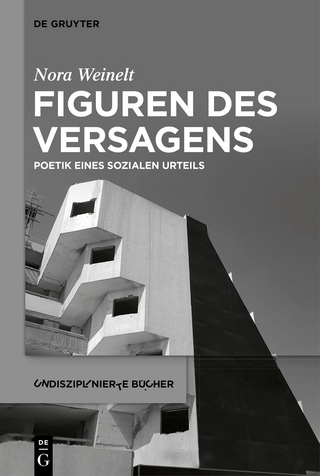
Poetik eines sozialen Urteils
Buch | Hardcover (2023)
De Gruyter (Verlag)
CHF 83,90


