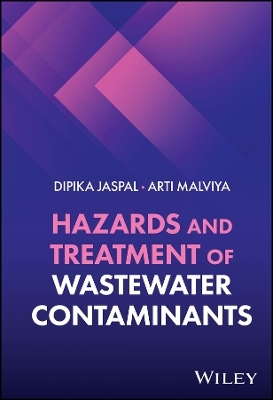
Hazards and Treatment of Wastewater Contaminants
John Wiley & Sons Inc (Verlag)
978-1-394-21734-2 (ISBN)
- Titel z.Zt. nicht lieferbar (ca. April 2026)
- Versandkostenfrei
- Auch auf Rechnung
- Artikel merken
Hazards and Treatment of Wastewater Contaminants presents the gist of extensive research that is being carried out on several contaminants, which pose a threat to the environment and living organisms.
In Hazards and Treatment of Wastewater Contaminants, readers will find:
Insights on the connection between water quality and water body deterioration
Chapter-by-chapter discussion on different categories of possible contaminants in wastewater and different treatment methods used
Information on specific contaminants such as dyes, pesticides, oil, pharmaceuticals, heavy metals, etc. that can render wastewater unsuitable for reuse
Studies giving due emphasis to incorporating novel methods and integrating different techniques and materials for wastewater treatment
Hazards and Treatment of Wastewater Contaminants serves as an excellent reference for professionals, researchers, and students in the fields of environmental science, chemical and civil engineering.
DIPIKA JASPAL, PHD, served as a Professor and Researcher in the Department of Applied Science, Symbiosis Institute of Technology, Symbiosis International (Deemed University), Pune, Maharashtra, India. Dr. Jaspal has more than 19 years of teaching and research experience. ARTI MALVIYA, PHD, has over 14 years of professional experience in research and teaching. Currently, Dr. Malviya is working as a Professor in one of the most reputed colleges of India, Lakshmi Narain College of Technology, Bhopal, Madhya Pradesh.
TABLE OF CONTENTS
Preface
1 Introduction
1.1 Water pollution a global concern- facts and figures
1.2Wastewater characteristics
1.3 Hazards of wastewater and the need for treatment
1.4 Need to treat wastewater
1.5 Scope and objectives of the book
References
2 Overview of Contaminants
2.1 Contaminants
2.2. Harm posed by contaminants
2.3 Sewage wastewater
2.4Nonsewage wastewater
2.5 Detecting contaminants
2.6 Removal of wastewater contaminants
2.7 Incidents of contamination: Case studies
2.8Successful elimination of contaminants
2.9 Important considerations
2.10 Challenges
References
3 Sewage Wastewater: Sources, Characteristics and Treatment
3.1 Characteristics of sewage wastewater
3.2 Treatment of sewage wastewater
3.3 Case studies
References
4 Industrial Contaminants
4.1 Industrial wastewater
4.2 Wastewater contaminants from different industries
4.3 Categories of industrial contaminants
4.4 Monitoring and detection of industrial contaminants
4.5 Transport and fate of contaminants in the environment
4.6 Toxicity of industrial wastewater
4.7 Treatment technologies
4.8 Case studies of industrial contamination of water bodies
4.9 Industry best practices
4.10Challenges and research directions
References
5 Heavy Metals in Wastewater- Toxicity Assessment and Remediation
5.1 Sources of heavy metal pollution
5.2 Toxicity assessment
5.3Treatment methods
5.4Novel methods for aqueous heavy metal remediation
5.5 Permissible limits of heavy metals in water bodies
5.6 Case studies
References
6 Dye Wastewater Characteristics and Treatment
6.1 Classification of dyes
6.2 Toxicity assessment of dyes
6.3 Treatment of dye wastewater
6.4 Legislative guidelines for dye-loaded wastewater
6.5 Case Studies
References
7 Contamination by Oil Spills
7.1 Characteristics of oils
7.2 Important oil properties
7.3 Oil behavior in the aquatic environment
7.4 Impacts of oil spills
7.5. Detection of oil spills and monitoring
7.6 Technologies and materials for oil spill cleanup
7.7 Prevention
7.8 Important factors in cleanup activity
7.9 Treatment of oil spills
7.10 Some major oil spill incidents
7.11 Disposal and treatment of wastes generated
7.12 Strategies for prevention and mitigation
7.13 Legislation and role of authorities in the cleanup of oil spills
References
8 Pesticide Elimination from Hydro Environment
8.1 Classification of pesticides
8.2 Scenario of global pesticide consumption
8.3 Toxicity assessment of pesticides
8.4 Treatment of pesticide wastewater
8.5 Legislative framework of pesticides
8.6 Case studies
References
9 Radioactive Contaminants
9.1 Detection of radioactive contaminants
9.2 Methods of treatment
9.3 Case studies on radioactive contaminants
9.4 Technologies and materials studied for radioactive contaminants
9.5 Role of regulatory authorities
9.6 Challenges and future needs
References
10 Microbes as Contaminants
10.1Treatment methods
References
11 Pharmaceutics as Emerging Contaminants in Wastewater: Hazards and Removal Technologies
11.1 Sources of pharmaceutical waste
11.2 Types of pharmaceutical waste
11.3 Toxicity assessment
11.4 Treatment methods
11.5 Legislative framework of pharmaceuticals
11.6 Case studies
References
12 Surfactants: Behavior and Remediation Process
12.1 Sources of surfactants
12.2 Types of surfactants
12.3 Toxicity assessment of surfactants
12.4 Analytical techniques for surfactants
12.5 Treatment techniques
12.6 Legislative framework for surfactant discharge
12.7 Case studies
References
13 Fertilizers and Nutrients
13.1 Fertilizers in agriculture
13.2 Hazards of fertilizers in water/wastewater
13.3 Consequences of eutrophication and nutrients in water
13.4 Control of eutrophication and nutrients in water
13.5 The United States Environmental Protection Agency (EPA) for nutrient pollution
13.6 Food and Agriculture Organization of the United Nations (FAO)
13.7 Policies and schemes for the use of fertilizers
13.8 Case studies on fertilizer contamination
13.9 Efforts on successful remediation
13.10 Management of fertilizer use
13.11 Technologies and methods for nutrient removal
13.12 Recent studies on nutrient removal
References
14 Microplastics
14.1 Challenges in the recycling of plastics
14.2Plastics to microplastics
14.3 Toxicity assessment of MPs
14.4 Legislation for MP management
14.5 Treatment of microplastic-containing wastewater
14.6 Case studies
15 Wastewater Treatment Technologies: Performance and Mechanism
15.1 Mechanisms of different processes
References
Conclusions and Recommendations
Index
| Erscheint lt. Verlag | 27.4.2026 |
|---|---|
| Verlagsort | New York |
| Sprache | englisch |
| Themenwelt | Naturwissenschaften ► Chemie ► Organische Chemie |
| ISBN-10 | 1-394-21734-X / 139421734X |
| ISBN-13 | 978-1-394-21734-2 / 9781394217342 |
| Zustand | Neuware |
| Informationen gemäß Produktsicherheitsverordnung (GPSR) | |
| Haben Sie eine Frage zum Produkt? |
aus dem Bereich