


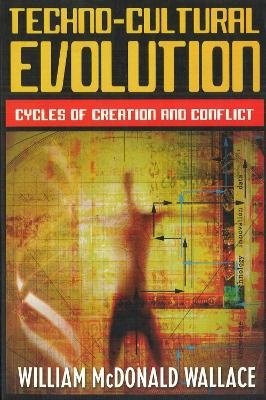
Techno-Cultural Evolution
Cycles of Creation and Conflict
Seiten
2007
Potomac Books Inc (Verlag)
978-1-59797-107-2 (ISBN)
Potomac Books Inc (Verlag)
978-1-59797-107-2 (ISBN)
Evolution has long shaped human behavior. Yet just recently have we learned that evolution based on natural selection is not the continuous process Darwin assumed. It is instead a two-part process of change and stability called punctuated equilibrium, with natural selection operating mainly on the frontiers of change.
Evolution has long shaped human behavior. Yet just recently have we learned that evolution based on natural selection is not the continuous process Darwin assumed. It is instead a two-part process of change and stability called punctuated equilibrium, with natural selection operating mainly on the frontiers of change. Taking account of biology's latest understanding of evolution, it becomes clear that culture evolves by a similar process. This is important because over the past 30,000 years most human evolution and the behavioral changes that go with it have occurred in our cultures–not in our genes. Knowing the process by which culture evolves clarifies the origin of many of our current problems, both within and between cultures. The author contends that new technology drives cultural evolution much as mutations change our DNA. The problem is that technology is now coming at us so fast that it is inducing "circuit overload" in cultures all over the world, leading to conflict. Techno-Cultural Evolution, which builds on the insights of such bestsellers as Jared Diamond's Guns, Germs, and Steel and Collapse, explains how this process works—and what it means for all of us.
Evolution has long shaped human behavior. Yet just recently have we learned that evolution based on natural selection is not the continuous process Darwin assumed. It is instead a two-part process of change and stability called punctuated equilibrium, with natural selection operating mainly on the frontiers of change. Taking account of biology's latest understanding of evolution, it becomes clear that culture evolves by a similar process. This is important because over the past 30,000 years most human evolution and the behavioral changes that go with it have occurred in our cultures–not in our genes. Knowing the process by which culture evolves clarifies the origin of many of our current problems, both within and between cultures. The author contends that new technology drives cultural evolution much as mutations change our DNA. The problem is that technology is now coming at us so fast that it is inducing "circuit overload" in cultures all over the world, leading to conflict. Techno-Cultural Evolution, which builds on the insights of such bestsellers as Jared Diamond's Guns, Germs, and Steel and Collapse, explains how this process works—and what it means for all of us.
William McDonald Wallace served as a management and economic consultant, mostly overseas, for 10 years; was chief economist for commercial airplanes for Boeing for 20 years until retiring in 1992; and taught economics and business at Saint Martin's University, Lacey, WA, until retiring in 2008.
| Verlagsort | Dulles |
|---|---|
| Sprache | englisch |
| Maße | 152 x 229 mm |
| Gewicht | 454 g |
| Themenwelt | Sachbuch/Ratgeber ► Natur / Technik |
| Naturwissenschaften | |
| ISBN-10 | 1-59797-107-3 / 1597971073 |
| ISBN-13 | 978-1-59797-107-2 / 9781597971072 |
| Zustand | Neuware |
| Informationen gemäß Produktsicherheitsverordnung (GPSR) | |
| Haben Sie eine Frage zum Produkt? |
Mehr entdecken
aus dem Bereich

aus dem Bereich
wenn Mensch und Maschine eins werden
Buch | Hardcover (2024)
Piper (Verlag)
CHF 33,55


