


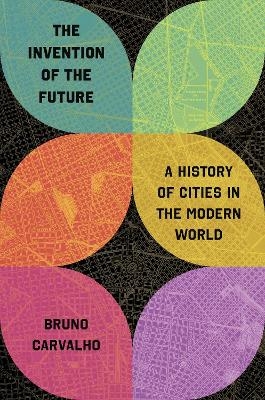
The Invention of the Future
A History of Cities in the Modern World
Seiten
2026
Princeton University Press (Verlag)
978-0-691-24655-0 (ISBN)
Princeton University Press (Verlag)
978-0-691-24655-0 (ISBN)
- Lieferbar (Termin unbekannt)
- Versandkostenfrei
- Auch auf Rechnung
- Artikel merken
A kaleidoscopic and original new history of urbanization—from Lisbon to New York, Paris to Rio de Janeiro, and Buenos Aires to Lagos
For the past three centuries, urban dwellers and planners have imagined future cities that would be radically different from those of the past. Planners pursued progress, whether focused on flying vehicles above, sewage systems below, or daily life in between. Yet, as Bruno Carvalho shows in this original and wide-ranging history, which features some sixty illustrations, modern cities continuously defied predictions. Visionary designs and technological innovations created dramatic, unforeseen outcomes, and the ongoing urban boom is a story of continuity as well as rupture. A compelling history of imagined futures and the transformation of urban life, The Invention of the Future also suggests what we might learn from the stories of our cities as we shape them for the twenty-first century.
Moving between large-scale changes and detailed examples, this captivating narrative tells the story of key moments and turning points: the rebuilding of Lisbon after the 1755 earthquake; the 1811 Commissioners’ Plan for Manhattan; Parisian reforms from 1853 to 1870; Le Corbusier’s plans for South American cities in the 1920s and 1930s; the postwar victory of the car; the utopian capital of Brasília; and urban growth in Africa.
In recent decades, Carvalho argues, the capacity to invent urban futures has become increasingly constrained. Social and environmental challenges loom large. But the story is not over. While cities helped create current problems, compact and transit-rich urbanization might be our best hope to combine high living standards with sustainability. Sometimes, moving forward can involve reaching back to the future.
For the past three centuries, urban dwellers and planners have imagined future cities that would be radically different from those of the past. Planners pursued progress, whether focused on flying vehicles above, sewage systems below, or daily life in between. Yet, as Bruno Carvalho shows in this original and wide-ranging history, which features some sixty illustrations, modern cities continuously defied predictions. Visionary designs and technological innovations created dramatic, unforeseen outcomes, and the ongoing urban boom is a story of continuity as well as rupture. A compelling history of imagined futures and the transformation of urban life, The Invention of the Future also suggests what we might learn from the stories of our cities as we shape them for the twenty-first century.
Moving between large-scale changes and detailed examples, this captivating narrative tells the story of key moments and turning points: the rebuilding of Lisbon after the 1755 earthquake; the 1811 Commissioners’ Plan for Manhattan; Parisian reforms from 1853 to 1870; Le Corbusier’s plans for South American cities in the 1920s and 1930s; the postwar victory of the car; the utopian capital of Brasília; and urban growth in Africa.
In recent decades, Carvalho argues, the capacity to invent urban futures has become increasingly constrained. Social and environmental challenges loom large. But the story is not over. While cities helped create current problems, compact and transit-rich urbanization might be our best hope to combine high living standards with sustainability. Sometimes, moving forward can involve reaching back to the future.
Bruno Carvalho is a professor at Harvard University, where he teaches courses on cities. He is the author of Porous City: A Cultural History of Rio de Janeiro.
| Erscheinungsdatum | 29.12.2025 |
|---|---|
| Zusatzinfo | 62 b/w illus. |
| Verlagsort | New Jersey |
| Sprache | englisch |
| Maße | 156 x 235 mm |
| Themenwelt | Geisteswissenschaften ► Geschichte ► Allgemeine Geschichte |
| Naturwissenschaften ► Geowissenschaften ► Geografie / Kartografie | |
| Technik ► Architektur | |
| ISBN-10 | 0-691-24655-6 / 0691246556 |
| ISBN-13 | 978-0-691-24655-0 / 9780691246550 |
| Zustand | Neuware |
| Informationen gemäß Produktsicherheitsverordnung (GPSR) | |
| Haben Sie eine Frage zum Produkt? |
Mehr entdecken
aus dem Bereich



aus dem Bereich
Siedler, Händler, Philosophen : eine globale Geschichte vom …
Buch | Hardcover (2024)
DVA (Verlag)
CHF 58,75
eine Reise um die Welt zu außergewöhnlichen Persönlichkeiten, …
Buch | Softcover (2023)
Piper (Verlag)
CHF 25,20


