Space Race (eBook)
51 Seiten
Charles River Editors (Verlag)
978-1-4753-3026-7 (ISBN)
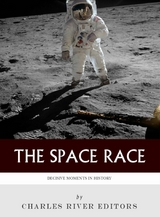
In the 19th century, the Scottish writer Thomas Carlyle famously wrote, 'The history of the world is but the biography of great men', popularizing the 'Great Man' theory that the course of history is shaped by a select few heroic individuals. While historians and others continue to debate the accuracy of the Great Man theory of history, there is no question that the course of history is permanently altered by decisive moments in time, where a different result would have produced drastically different outcomes. Charles River Editors' Decisive Moments in History examines the events that changed history forever and set the world down the path it finds itself on today.
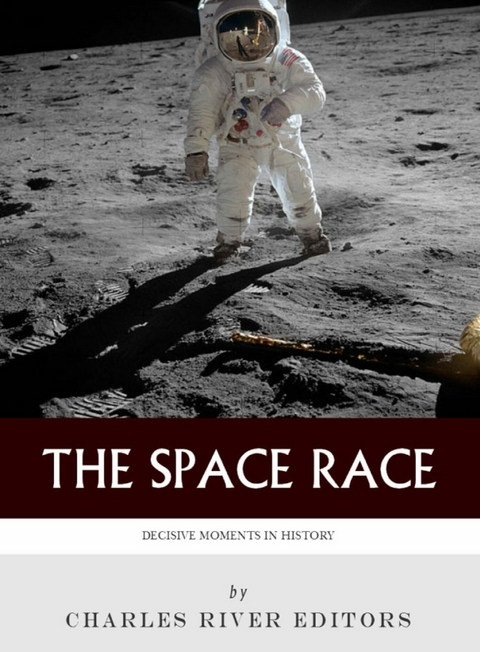
Today the Space Race is widely viewed poignantly and fondly as a race to the Moon that culminated with Apollo 11 'winning' the Race for the United States. In fact, it encompassed a much broader range of competition between the Soviet Union and the United States that affected everything from military technology to successfully launching satellites that could land on Mars or orbit other planets in the Solar System. Moreover, the notion that America 'won' the Space Race at the end of the 1960s overlooks just how competitive the Space Race actually was in launching people into orbit, as well as the major contributions the Space Race influenced in leading to today's International Space Station and continued space exploration.
In fact, the Soviet Union had spent much of the 1950s leaving the United States in its dust (and rocket fuel). President Eisenhower and other Americans who could view Soviet rockets in the sky were justifiably worried that Soviet satellites in orbit could soon be spying on them, or, even worse, dropping nuclear bombs on them. And in 1960, when Eisenhower's administration began planning and funding for the famous Apollo program that would land the first men on the Moon in 1969, the Soviet Union was already thinking further ahead, literally. In one of the worst kept secrets of the Space Race, the Soviet Union launched two probes, Korabl 4 and Korabl 5, toward Mars in October 1960.
Eventually, the Space Race produced some of the most iconic moments of the 20th century, including the landing of the first men on the Moon, and in the years after the Space Race and the Cold War ended, the competition itself had helped lay the groundwork for international cooperation in space, both in terms of space exploration and aboard the International Space Station, which continues to orbit Earth today.
Decisive Moments in History: The Space Race covers the history of the Race and the major milestones that both nations achieved during it, while ultimately analyzing how the Space Race continues to leave a lasting legacy to this day. Along with pictures of important people, places, and events, places, you will learn about the Space Race like you never have before, in no time at all.
In the 19th century, the Scottish writer Thomas Carlyle famously wrote, "e;The history of the world is but the biography of great men"e;, popularizing the "e;Great Man"e; theory that the course of history is shaped by a select few heroic individuals. While historians and others continue to debate the accuracy of the Great Man theory of history, there is no question that the course of history is permanently altered by decisive moments in time, where a different result would have produced drastically different outcomes. Charles River Editors' Decisive Moments in History examines the events that changed history forever and set the world down the path it finds itself on today.Today the Space Race is widely viewed poignantly and fondly as a race to the Moon that culminated with Apollo 11 winning the Race for the United States. In fact, it encompassed a much broader range of competition between the Soviet Union and the United States that affected everything from military technology to successfully launching satellites that could land on Mars or orbit other planets in the Solar System. Moreover, the notion that America won the Space Race at the end of the 1960s overlooks just how competitive the Space Race actually was in launching people into orbit, as well as the major contributions the Space Race influenced in leading to today s International Space Station and continued space exploration. In fact, the Soviet Union had spent much of the 1950s leaving the United States in its dust (and rocket fuel). President Eisenhower and other Americans who could view Soviet rockets in the sky were justifiably worried that Soviet satellites in orbit could soon be spying on them, or, even worse, dropping nuclear bombs on them. And in 1960, when Eisenhower s administration began planning and funding for the famous Apollo program that would land the first men on the Moon in 1969, the Soviet Union was already thinking further ahead, literally. In one of the worst kept secrets of the Space Race, the Soviet Union launched two probes, Korabl 4 and Korabl 5, toward Mars in October 1960.Eventually, the Space Race produced some of the most iconic moments of the 20th century, including the landing of the first men on the Moon, and in the years after the Space Race and the Cold War ended, the competition itself had helped lay the groundwork for international cooperation in space, both in terms of space exploration and aboard the International Space Station, which continues to orbit Earth today.Decisive Moments in History: The Space Race covers the history of the Race and the major milestones that both nations achieved during it, while ultimately analyzing how the Space Race continues to leave a lasting legacy to this day. Along with pictures of important people, places, and events, places, you will learn about the Space Race like you never have before, in no time at all.
| Erscheint lt. Verlag | 4.5.2025 |
|---|---|
| Sprache | englisch |
| Themenwelt | Naturwissenschaften ► Physik / Astronomie ► Astronomie / Astrophysik |
| Schlagworte | Apollo • Cold War • kennedy • Nazi • Rocket • soviet • World War |
| ISBN-10 | 1-4753-3026-X / 147533026X |
| ISBN-13 | 978-1-4753-3026-7 / 9781475330267 |
| Informationen gemäß Produktsicherheitsverordnung (GPSR) | |
| Haben Sie eine Frage zum Produkt? |
 EPUB (Ohne DRM)
Digital Rights Management: ohne DRM
Dieses eBook enthält kein DRM oder Kopierschutz. Eine Weitergabe an Dritte ist jedoch rechtlich nicht zulässig, weil Sie beim Kauf nur die Rechte an der persönlichen Nutzung erwerben.
Dateiformat: EPUB (Electronic Publication)
EPUB ist ein offener Standard für eBooks und eignet sich besonders zur Darstellung von Belletristik und Sachbüchern. Der Fließtext wird dynamisch an die Display- und Schriftgröße angepasst. Auch für mobile Lesegeräte ist EPUB daher gut geeignet.
Systemvoraussetzungen:
PC/Mac: Mit einem PC oder Mac können Sie dieses eBook lesen. Sie benötigen dafür die kostenlose Software Adobe Digital Editions.
eReader: Dieses eBook kann mit (fast) allen eBook-Readern gelesen werden. Mit dem amazon-Kindle ist es aber nicht kompatibel.
Smartphone/Tablet: Egal ob Apple oder Android, dieses eBook können Sie lesen. Sie benötigen dafür eine kostenlose App.
Geräteliste und zusätzliche Hinweise
Buying eBooks from abroad
For tax law reasons we can sell eBooks just within Germany and Switzerland. Regrettably we cannot fulfill eBook-orders from other countries.
aus dem Bereich