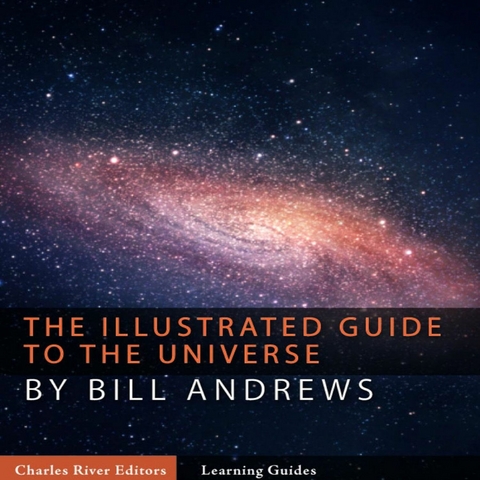
Illustrated Guide to the Universe (eBook)
42 Seiten
Charles River Editors (Verlag)
978-1-4753-3024-3 (ISBN)
Science has always been a daunting topic, but one field has never failed to fascinate people. From the moment life on Earth began, it has slept beneath the gaze of hundreds of little balls of light in the night sky, and a Moon that very noticeably changes its shape. For as long as people have been around, they could not help but notice the movements of the stars in the sky, the Moon's phases, and the coming of eclipses and comets hundreds of thousands of years before anyone determined what these bodies were.
At its most basic, astronomy is the study of the objects in space, which goes at least as far back as written history, beginning with the Sumerian and Babylonian civilizations in the 4th millennium B.C. Ancient civilizations were mystified by the stars and planets that they saw every night, and they attached religious and mythological importance to them, making it all the more important to closely track their movements. The Babylonians became the first recorded civilization to create a solar calendar, measuring time by the cyclical movements of the stars, and they were also the first to notice that planets moved differently compared to the stars in the sky.
Although ancient civilizations made great strides in astronomy, they could accomplish only so much without advanced instruments, physics, and more sophisticated measurements of light. Given our technological leaps and further understanding of the size of the universe and the different objects within it, astronomy is now one of the biggest sciences possible, easy to get both engrossed in and lost in at the same time.
In this comprehensive primer, The Illustrated Guide to the Universe by Bill Andrews of Astronomy magazine gives a complete overview of our universe, starting with our solar system before moving outward to explore the rest of the Milky Way Galaxy and beyond. Along with more than 20 pictures and illustrations, The Illustrated Guide to the Universe explains the workings of the universe and everything in it, from the planets and stars to quasars and black holes. Whether you are an experienced amateur or a complete novice, let The Illustrated Guide to the Universe be your guide to the stars.
Science has always been a daunting topic, but one field has never failed to fascinate people. From the moment life on Earth began, it has slept beneath the gaze of hundreds of little balls of light in the night sky, and a Moon that very noticeably changes its shape. For as long as people have been around, they could not help but notice the movements of the stars in the sky, the Moon's phases, and the coming of eclipses and comets hundreds of thousands of years before anyone determined what these bodies were. At its most basic, astronomy is the study of the objects in space, which goes at least as far back as written history, beginning with the Sumerian and Babylonian civilizations in the 4th millennium B.C. Ancient civilizations were mystified by the stars and planets that they saw every night, and they attached religious and mythological importance to them, making it all the more important to closely track their movements. The Babylonians became the first recorded civilization to create a solar calendar, measuring time by the cyclical movements of the stars, and they were also the first to notice that planets moved differently compared to the stars in the sky. Although ancient civilizations made great strides in astronomy, they could accomplish only so much without advanced instruments, physics, and more sophisticated measurements of light. Given our technological leaps and further understanding of the size of the universe and the different objects within it, astronomy is now one of the biggest sciences possible, easy to get both engrossed in and lost in at the same time. In this comprehensive primer, The Illustrated Guide to the Universe by Bill Andrews of Astronomy magazine gives a complete overview of our universe, starting with our solar system before moving outward to explore the rest of the Milky Way Galaxy and beyond. Along with more than 20 pictures and illustrations, The Illustrated Guide to the Universe explains the workings of the universe and everything in it, from the planets and stars to quasars and black holes. Whether you are an experienced amateur or a complete novice, let The Illustrated Guide to the Universe be your guide to the stars.
| Erscheint lt. Verlag | 4.5.2025 |
|---|---|
| Sprache | englisch |
| Themenwelt | Naturwissenschaften ► Physik / Astronomie ► Astronomie / Astrophysik |
| Schlagworte | Astronomy • Einstein • Galileo • Newton • Physics • Science • Solar System |
| ISBN-10 | 1-4753-3024-3 / 1475330243 |
| ISBN-13 | 978-1-4753-3024-3 / 9781475330243 |
| Informationen gemäß Produktsicherheitsverordnung (GPSR) | |
| Haben Sie eine Frage zum Produkt? |
 EPUB (Ohne DRM)
Digital Rights Management: ohne DRM
Dieses eBook enthält kein DRM oder Kopierschutz. Eine Weitergabe an Dritte ist jedoch rechtlich nicht zulässig, weil Sie beim Kauf nur die Rechte an der persönlichen Nutzung erwerben.
Dateiformat: EPUB (Electronic Publication)
EPUB ist ein offener Standard für eBooks und eignet sich besonders zur Darstellung von Belletristik und Sachbüchern. Der Fließtext wird dynamisch an die Display- und Schriftgröße angepasst. Auch für mobile Lesegeräte ist EPUB daher gut geeignet.
Systemvoraussetzungen:
PC/Mac: Mit einem PC oder Mac können Sie dieses eBook lesen. Sie benötigen dafür die kostenlose Software Adobe Digital Editions.
eReader: Dieses eBook kann mit (fast) allen eBook-Readern gelesen werden. Mit dem amazon-Kindle ist es aber nicht kompatibel.
Smartphone/Tablet: Egal ob Apple oder Android, dieses eBook können Sie lesen. Sie benötigen dafür eine kostenlose App.
Geräteliste und zusätzliche Hinweise
Buying eBooks from abroad
For tax law reasons we can sell eBooks just within Germany and Switzerland. Regrettably we cannot fulfill eBook-orders from other countries.
aus dem Bereich