Geomechanics of Coal Seams (eBook)
446 Seiten
Wiley-Iste (Verlag)
978-1-394-37261-4 (ISBN)
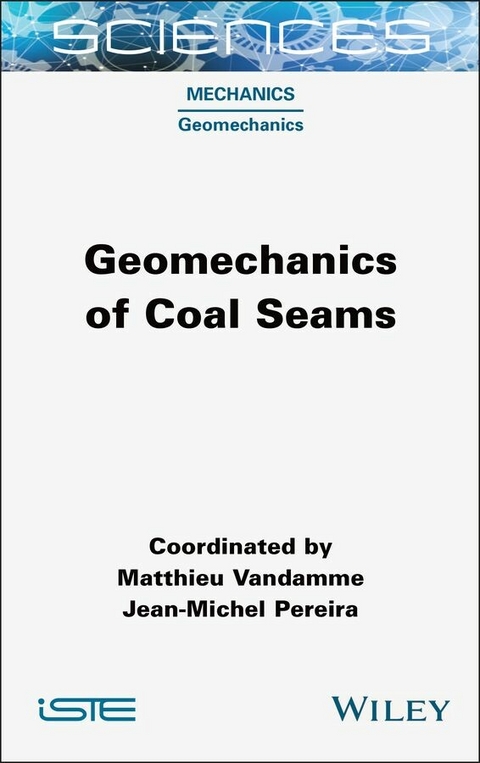
Geomechanics of Coal Seams explores the evolving role of coal, transitioning from a historically criticized energy source tied to the Industrial Revolution, to a material with the potential to play a significant role in achieving net-zero greenhouse gas emissions. Traditionally used as raw material, coal now serves as a reservoir for natural gas or carbon dioxide storage, offering a path toward reducing global greenhouse gas emissions. Despite its promise, challenges remain, particularly regarding its geomechanical behavior.
This book delves into the unique properties of coal, covering everything from geological foundations to numerical modeling. Aimed at students, researchers, and engineers, the book provides valuable insights applicable to other microporous materials.
Matthieu Vandamme is Professor at the École Nationale des Ponts et Chaussées and Researcher at the Navier Laboratory, France. His research interests include the mechanics and physics of porous materials for civil engineering and energy.
Jean-Michel Pereira is Professor of Geomechanics at the École Nationale des Ponts et Chaussées and Researcher at the Navier Laboratory, France. He is particularly interested in the coupled multiphysical behavior of geomaterials and geostructures, with applications in the environmental and energy fields.
Geomechanics of Coal Seams explores the evolving role of coal, transitioning from a historically criticized energy source tied to the Industrial Revolution, to a material with the potential to play a significant role in achieving net-zero greenhouse gas emissions. Traditionally used as raw material, coal now serves as a reservoir for natural gas or carbon dioxide storage, offering a path toward reducing global greenhouse gas emissions. Despite its promise, challenges remain, particularly regarding its geomechanical behavior. This book delves into the unique properties of coal, covering everything from geological foundations to numerical modeling. Aimed at students, researchers, and engineers, the book provides valuable insights applicable to other microporous materials.
1
Coal, Its Genesis, Its Characteristics
Didier BONIJOLY
Geology, mineral resources and geothermal energy expert, Retired from BRGM, Orléans, France
1.1. Definition
Coal is a combustible rock, defined as a sedimentary, stratified, brown to black rock, predominantly organogenic, and primarily composed of plant debris (Foucault and Raoult 1980). Coal is a carbonaceous rock with a carbon content exceeding 50% by mass.
This rock forms under very specific conditions, requiring the accumulation of a significant volume of plant material without being decomposed by soil microorganisms (which would oxidize the organic matter, converting it into humus and mineral matter).
Such conditions have occurred during various geological periods, when the right combination of climatic (hot and humid equatorial conditions), tectonic (subsidence of basins where plant debris accumulates), thermal (geothermal gradient enabling organic matter maturation) and biological factors were present.
Coals formed from woody material are known as “humic coals”, while those derived from algal material are referred to as “sapropelic coals”. The former are abundant and widely distributed across all continents, whereas the latter are much rarer.
At any scale of observation, coals are rocks with a complex and heterogeneous composition (Van Krevelen 1993). Their main constituents, known as macerals, are analogous to minerals in inorganic rocks.
The term “maceral” was introduced by M. C. Stopes in 1935 and later standardized in an International Energy Agency (IEA) publication in 1988 (Carpenter 1988).
These macerals possess specific physicochemical properties that determine the behavior of coals. They can be identified under optical microscopy based on their morphology and reflectance (Charcosset and Nickel-Pepin-Donat (1990); see Figure 1.1). They are as follows1:
- Vitrinite: this is derived from plant cell walls. It consists of a ligno-cellulosic gel whose polymers undergo physicochemical transformation during biochemical and thermal maturation. Carbon (“C”) is the primary component of coal (making up 50%–90% of its mass). Vitrinite is opaque under optical microscopy (in transmitted light) and exhibits increasing reflectance with higher coal ranks (see section 1.5).
- Exinite (or liptinite): this is derived from spores, cuticles and resins. It is mainly found in lignite, cannel coal (oil shales of continental origin) and boghead coal (coals of algal origin rich in volatile matter). This maceral vanishes with increasing temperature during burial and is absent in medium volatile bituminous coals (Pickel et al. (2017); see section 1.5).
- Inertinite: this is derived from oxidized plant material during peat formation. Inertinite is distinguished by its morphology (preserving cellular structures) and very high reflectance.
Although coal is predominantly composed of organic molecules containing carbon, hydrogen and oxygen, it also contains other elements inherited from its original material, such as sulfur, nitrogen and silicate or carbonate minerals, which may contain trace elements like cadmium and mercury.
The structure of coal is complex and has been modeled extensively (Prins et al. 1989; Charcosset and Nickel-Pepin-Donat 1990). Organic molecules form sheet-like structures, whose irregular arrangement creates porosity (see Figure 1.2). As a result, this material has a high porosity and specific surface area, both of which decrease as the coal rank increases.
Figure 1.1. Organic components of coal (Taylor et al. 1998)
Figure 1.2. Two-dimensional model of the structure of a coal macromolecule. The illustration shows the molecular network, exchange surfaces and porosity. Adapted from Atkins and Jones (1997).
Source: https://commons.wikimedia.org/wiki/File:Struktura_chemiczna_w%C4%99gla_kamiennego.svg (author: Karol Glab. License CC-BY-SA-4.0)
1.2. Deposition conditions
Coal is formed from the accumulation of plant matter in swamps (peat bogs), lakes or along the margins of ocean basins (lagoons) located in humid tropical climate zones that promote the growth of dense forests. Climatic changes can cause intense fluctuations in rainfall, leading to the flooding and destruction of tropical forests.
The resulting wood then accumulates in depressions, and its preservation depends on how quickly detrital sediments (such as sands and clays) can cover it. These sediments are typically mobilized from weathered materials following the destruction of vegetation cover (erosion). They are transported by rivers from upstream mountainous areas to their deposition in deltas at the mouths of these rivers.
If the available space (the depressions receiving these deposits) is consistently maintained by active tectonics (subsidence), this process can repeat as long as climatic and tectonic conditions are favorable, potentially leading to the formation of coal basins containing numerous layers of coal that can be preserved and fossilized (see Figure 1.3).
In contrast, if the deposits remain exposed to an oxygenated environment, the organic matter will be destroyed by microbial activity.
According to Boulvain (2022), coal deposition environments can be categorized into two main types: paralic environments and limnic environments. Most middle Pennsylvanian (e.g. Westphalian) coals, such as those in the coal basins of Belgium, the Ruhr or Saar-Lorraine, developed in paralic environments, likely of a coastal deltaic nature.
Later coal basins, such as those surrounding the Massif Central (upper Pennsylvanian age, e.g. Stephanian), developed in limnic environments associated with lakes, often located in rift valleys within the Variscan mountain range2. The coal basins of the Sillon Houiller (Massif Central, France) are iconic examples of these limnic environments.
Figure 1.3. Deposition model of coal measures.
Source: https://opentextbc.ca/geology/chapter/20-3-fossil-fuels/ (author: Steven Earle. License CC-BY-SA-4.0)
1.3. The major periods of coal deposition
Coal deposits are known from all geological eras, spanning from the end of the Primary Era to the end of the Tertiary Era.
However, the majority of these deposits formed in basins dating from the Devonian to the Permian, with a peak occurrence during the Carboniferous, as shown in Figure 1.4.
It was at the end of the Devonian period (−419.2 ± 3.2 to −358.9 ± 0.4 million years ago) that the necessary conditions for the formation of coal layers were first established on Earth (see Figure 1.5). During this time, vegetation began to proliferate on previously barren continents.
The first tree ferns appeared, followed by progymnosperms (precursors to modern conifers), thriving in areas with abundant water. This increased plant growth acted as a significant carbon sink, leading to a paradoxical situation where global temperatures rose, while atmospheric CO2 levels decreased (Le Hir et al. 2011).
During the Carboniferous period (see Figure 1.6), a combination of tectonic activity (formation of the supercontinent Pangea), a CO2-rich atmosphere (4,500 ppmv during the Ordovician-Silurian, 500 ppm by the end of the Carboniferous and approximately 280 ppmv before the industrial era according to Bernet and Kothavala (2001)) and climate conditions led to a boom in new vegetation mainly composed (Bournérias and Bock 2014) of pteridophytes (including giant lycopsids like Sigillaria, tree ferns and Calamites) as well as early paleo-conifers (Cordaites). These plants had a much higher bark-to-wood ratio compared to modern vegetation.
Moreover, they contained a high lignin content (ranging from 38% to 58%, according to Robinson (1990)), which facilitated the preservation of woody material – an essential precursor to coal formation.
Figure 1.4. Geological ages and geographical distribution of coal deposits (modified from Walker (2000), International Energy Agency)
The massive burial of atmospheric carbon during this time is likely responsible for the increase in atmospheric oxygen levels (around 38% according to Berner (1999); 15%–25% according to Lenton (2001), compared to 21% today). This elevated oxygen content may have contributed to the gigantism seen in both the flora and fauna of this era, with lycophytes reaching heights of 40 m, Calamites growing up to 10 m, Arthropleura (giant millipedes) stretching 2 m long and dragonflies with wingspans of 70 cm.
Figure 1.5. Paleogeography during the Devonian (–390 Ma): Europe and North America collide to form the continent Euramerica, with the resulting suture forming the Caledonian mountain range.
Source: http://www.scotese.com/newpage3.htm (credits: C.R. Scotese, Paleomap Project)
A key question remains unanswered: why was this massive amount of woody material preserved, while today it would be rapidly degraded by microorganisms?
The answer may lie in the absence of lignivorous (wood-decaying) fungi, which did not emerge until the late Carboniferous period (as...
| Erscheint lt. Verlag | 29.4.2025 |
|---|---|
| Reihe/Serie | ISTE Invoiced |
| Sprache | englisch |
| Themenwelt | Naturwissenschaften ► Geowissenschaften ► Geologie |
| Technik ► Elektrotechnik / Energietechnik | |
| Schlagworte | coal • Geomechanics • Greenhouse Gas Emissions • Industrial Revolution • microporous materials • numerical modeling |
| ISBN-10 | 1-394-37261-2 / 1394372612 |
| ISBN-13 | 978-1-394-37261-4 / 9781394372614 |
| Informationen gemäß Produktsicherheitsverordnung (GPSR) | |
| Haben Sie eine Frage zum Produkt? |
 EPUB (Adobe DRM)
Kopierschutz: Adobe-DRM
Adobe-DRM ist ein Kopierschutz, der das eBook vor Mißbrauch schützen soll. Dabei wird das eBook bereits beim Download auf Ihre persönliche Adobe-ID autorisiert. Lesen können Sie das eBook dann nur auf den Geräten, welche ebenfalls auf Ihre Adobe-ID registriert sind.
Details zum Adobe-DRM
Dateiformat: EPUB (Electronic Publication)
EPUB ist ein offener Standard für eBooks und eignet sich besonders zur Darstellung von Belletristik und Sachbüchern. Der Fließtext wird dynamisch an die Display- und Schriftgröße angepasst. Auch für mobile Lesegeräte ist EPUB daher gut geeignet.
Systemvoraussetzungen:
PC/Mac: Mit einem PC oder Mac können Sie dieses eBook lesen. Sie benötigen eine
eReader: Dieses eBook kann mit (fast) allen eBook-Readern gelesen werden. Mit dem amazon-Kindle ist es aber nicht kompatibel.
Smartphone/Tablet: Egal ob Apple oder Android, dieses eBook können Sie lesen. Sie benötigen eine
Geräteliste und zusätzliche Hinweise
Buying eBooks from abroad
For tax law reasons we can sell eBooks just within Germany and Switzerland. Regrettably we cannot fulfill eBook-orders from other countries.
aus dem Bereich