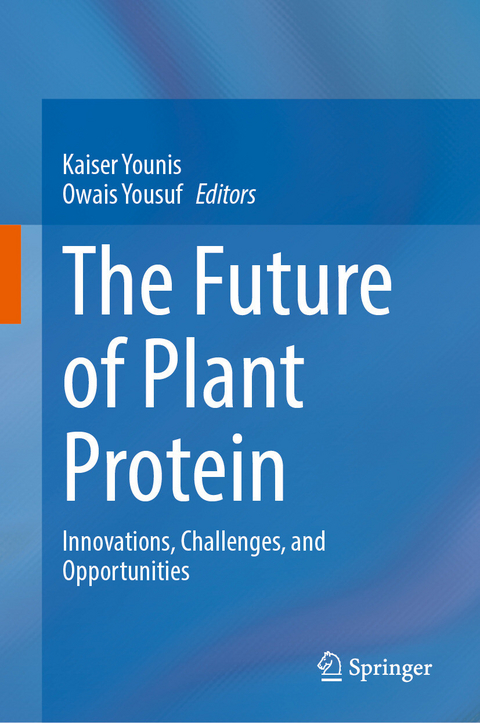
The Future of Plant Protein (eBook)
293 Seiten
Springer Nature Singapore (Verlag)
978-981-96-4190-1 (ISBN)
This book presents plant proteins as sustainable and healthy substitutes for animal proteins, highlighting innovations, challenges, and opportunities. Chapters cover emerging sources like duckweed, microalgae, quinoa, and hemp, comparing their nutritional aspects with traditional sources such as soybeans, beans, and nuts. Further chapters not only discuss the environmental impact, production methods, and potential applications of plant protein but also address barriers like consumer perception, affordability, and distribution. The book provides solutions from plant-based food companies to these challenges, tackling the rising global demand driven by population growth, income increase, urbanization, environmental awareness, health consciousness, and animal welfare concerns. Overall, it provides a summary of plant proteins, exploring their nutritional, environmental, and consumer-related aspects in the context of a shifting protein landscape.
The book is relevant forfood scientists and technologists, nutritionists, policymakers, and professionals alike providing insights into plant-based diets and the future of food.
This book presents plant proteins as sustainable and healthy substitutes for animal proteins, highlighting innovations, challenges, and opportunities. Chapters cover emerging sources like duckweed, microalgae, quinoa, and hemp, comparing their nutritional aspects with traditional sources such as soybeans, beans, and nuts. Further chapters not only discuss the environmental impact, production methods, and potential applications of plant protein but also address barriers like consumer perception, affordability, and distribution. The book provides solutions from plant-based food companies to these challenges, tackling the rising global demand driven by population growth, income increase, urbanization, environmental awareness, health consciousness, and animal welfare concerns. Overall, it provides a summary of plant proteins, exploring their nutritional, environmental, and consumer-related aspects in the context of a shifting protein landscape.The book is relevant forfood scientists and technologists, nutritionists, policymakers, and professionals alike providing insights into plant-based diets and the future of food.
| Erscheint lt. Verlag | 24.4.2025 |
|---|---|
| Zusatzinfo | XX, 293 p. 27 illus., 23 illus. in color. |
| Sprache | englisch |
| Themenwelt | Medizin / Pharmazie ► Gesundheitsfachberufe ► Diätassistenz / Ernährungsberatung |
| Naturwissenschaften ► Biologie ► Botanik | |
| Naturwissenschaften ► Chemie | |
| Technik ► Lebensmitteltechnologie | |
| Technik ► Umwelttechnik / Biotechnologie | |
| Schlagworte | Amino acid balance in plant protein • Bioreactor technology for plant protein production • Consumer trends in plant-based diets • Environmental benefits of plant-based diets • Extraction methods for plant protein • Health benefits of plant-based diets • Nutritional considerations for plant-based diets • Plant breeding and genetics for protein • Plant versus animal protein • Regulatory compliance of plant protein • Taste and texture of plant protein • vegan protein |
| ISBN-10 | 981-96-4190-X / 981964190X |
| ISBN-13 | 978-981-96-4190-1 / 9789819641901 |
| Informationen gemäß Produktsicherheitsverordnung (GPSR) | |
| Haben Sie eine Frage zum Produkt? |
 PDF (Wasserzeichen)
DRM: Digitales Wasserzeichen
Dieses eBook enthält ein digitales Wasserzeichen und ist damit für Sie personalisiert. Bei einer missbräuchlichen Weitergabe des eBooks an Dritte ist eine Rückverfolgung an die Quelle möglich.
Dateiformat: PDF (Portable Document Format)
Mit einem festen Seitenlayout eignet sich die PDF besonders für Fachbücher mit Spalten, Tabellen und Abbildungen. Eine PDF kann auf fast allen Geräten angezeigt werden, ist aber für kleine Displays (Smartphone, eReader) nur eingeschränkt geeignet.
Systemvoraussetzungen:
PC/Mac: Mit einem PC oder Mac können Sie dieses eBook lesen. Sie benötigen dafür einen PDF-Viewer - z.B. den Adobe Reader oder Adobe Digital Editions.
eReader: Dieses eBook kann mit (fast) allen eBook-Readern gelesen werden. Mit dem amazon-Kindle ist es aber nicht kompatibel.
Smartphone/Tablet: Egal ob Apple oder Android, dieses eBook können Sie lesen. Sie benötigen dafür einen PDF-Viewer - z.B. die kostenlose Adobe Digital Editions-App.
Buying eBooks from abroad
For tax law reasons we can sell eBooks just within Germany and Switzerland. Regrettably we cannot fulfill eBook-orders from other countries.
aus dem Bereich