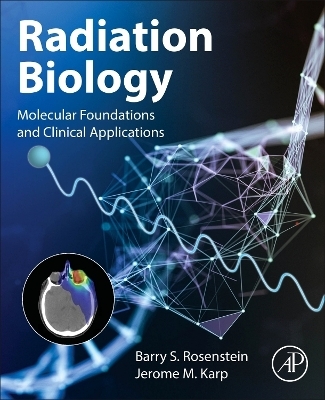
Radiation Biology
Academic Press Inc (Verlag)
978-0-443-13468-5 (ISBN)
- Noch nicht erschienen (ca. Juni 2026)
- Versandkostenfrei
- Auch auf Rechnung
- Artikel merken
In addition to its focus on molecular responses, the book covers topics like tumor microenvironment and metabolism, the role of epigenetics in radiation biology, and the hallmarks of cancer relevant to radiation therapy. It also provides discussions on chemotherapeutic agents, radiation carcinogenesis, and the complex interplay between radiation and cancer biology. The later sections extend the scope to tissue, organ, and systemic effects of radiation, making it an invaluable reference for professionals in molecular biology, oncology, and related fields striving to push the boundaries of radiation research.
Dr. Rosenstein is a Professor of Radiation Oncology and a Professor of Genetics & Genomic Sciences at the Icahn School of Medicine at Mount Sinai. The focus of Dr. Rosenstein’s research program for the past 25 years has been the identification of genetic/genomic markers associated with the development of adverse effects resulting from radiotherapy. In this context, he was one of the first investigators to hypothesize that possession of single nucleotide polymorphisms in certain genes may render some cancer patients more susceptible to injuries resulting from radiotherapy. Dr. Rosenstein established and co-led for 14 years the Radiogenomics Consortium (RGC), representing an international consortium currently with 240 members in 33 countries across 135 institutions. Through his efforts, Dr. Rosenstein, has been in the forefront of research in the use of big data in radiation oncology and has collaborated with investigators possessing expertise in bioinformatics and statistics to employ machine learning-based modeling approaches in radiogenomic studies. Dr. Karp is completing his training in radiation oncology at NYU where he is currently a Holman Research Fellow. Dr. Karp will provide a critical perspective to this book as he brings a focus on translational research in radiation oncology as well as experience as a clinician in training, part of the primary audience for this book. Dr. Karp’s research interests include molecular signatures of central nervous system tumors; machine learning methods for prediction of tumor characteristics and recurrence from liquid biopsies and biomolecular simulation.
1. Basics of Radiation Physics and Chemistry
2. Radiation-Induced DNA Damages and DNA Repair Processes
3. Molecular Pathways of Cell Death
4. Radiotherapy and Immune Checkpoint Blockade
5. Molecular Signaling in Irradiated Cells
6. Cell-Survival Curves
7. Impact of Cell Cycle Phase, Dose Rate and Kinetic Factors on Radiation Responses
8. The Role of Oxygen in Irradiated Cells
9. The Use of Hypofractionation, Hyperfractionation and Accelerated Treatment in Radiotherapy
10. Angiogenesis, Microenvironment and Metastasis and Radiation Responses
11. Linear Energy Transfer and Relative Biological Effectiveness
12. Radiation Sensitizers
13. Radioprotectors and Radiomitigators
14. Particle Beam Radiotherapy
15. Predictive Assays in Radiotherapy
16. Interaction of Heat and Radiation
17. Classical and Targeted Chemotherapeutic Agents and Interaction with Radiation
18. Radiation Carcinogenesis
19. Hereditary Effects of Radiation
20. In Utero Radiation Effects
21. Radiation Protection Guidelines
22. Normal Tissue and Organ Radiation Responses
23. Whole-Body Radiation Effects
24. Topics in Cancer Biology Relevant to Radiation Oncology
| Erscheint lt. Verlag | 1.6.2026 |
|---|---|
| Verlagsort | San Diego |
| Sprache | englisch |
| Maße | 191 x 235 mm |
| Gewicht | 450 g |
| Themenwelt | Naturwissenschaften ► Biologie ► Genetik / Molekularbiologie |
| ISBN-10 | 0-443-13468-5 / 0443134685 |
| ISBN-13 | 978-0-443-13468-5 / 9780443134685 |
| Zustand | Neuware |
| Informationen gemäß Produktsicherheitsverordnung (GPSR) | |
| Haben Sie eine Frage zum Produkt? |
aus dem Bereich