Molecular Pathology (eBook)
381 Seiten
Wiley (Verlag)
978-1-394-25465-1 (ISBN)
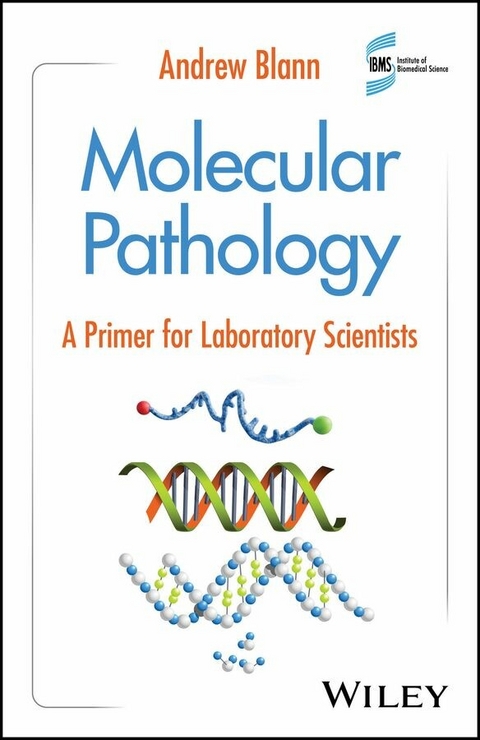
Comprehensive textbook on molecular pathology for newcomers to the field, covering history, analytics, types of cancers, and more
Molecular Pathology delivers an in-depth outline of molecular pathology appropriate for the undergraduate, postgraduate, or early-stage career lab scientist, drawing from authoritative sources such as NICE, the World Health Organisation, the Office of National Statistics, clinical guidelines, research publications and the National Genomic Test Directory. The text contains numerous tables, diagrams, and photos in each chapter to help elucidate key concepts.
The opening chapter provides a general introduction to the subject with a historical perspective of key findings that have led to our current view of molecular pathology. The introduction is followed by a look at the scope of chromosomal disease (such as Down's syndrome) and genetic disease (such as sickle cell disease). Chapter two describes the numerous analytical tools required in molecular pathology, and how complex genetic data is interpreted - i.e., bioinformatics. The remaining three chapters review the molecular pathology of focused groups of disease, including solid tumor cancer, blood cancer, and metabolic and other genetic diseases. Each of these three chapters explains the role of molecular pathology in the etiology, diagnosis, and management of each particular condition.
Sample topics explored in Molecular Pathology include:
- Generating DNA and RNA for analysis, amplification by PCR, and DNA sequencing through micro-arrays, libraries, and Next Generation Sequencing
- Chromosome structure, covering histones and the centromere, abnormal chromosome numbers, and errors within chromosomes such as translocations and deletions
- Myelofibrosis, myelodysplasia, essential thrombocythemia, polycythaemia, leukemia, lymphoma, myeloma, and haemopoiesis and maturation arrest
- Molecular pathology of single organ/organ system disease, such as Huntington's and cardiomyopathy, and multi-organ disease such as Barth syndrome
Molecular Pathology serves as an excellent introduction to the subject for first to third year undergraduate students. Healthcare professionals and biomedical scientists and researchers will also find it valuable.
Andrew Blann is Visiting Reader in Biomedical Science at Huddersfield University, UK and Chair of the Molecular Pathology Advisory Panel at the Institute of Biomedical Science in London, UK, a leading group that speaks for 20,000 laboratory scientists. He has six textbooks in press on clinical and biomedical science and has over 500 published research articles available on PubMed. He was Editor of the British Journal of Biomedical Science from 2015-2021, currently Assistant Chief Editor from 2021 to the present.
Comprehensive textbook on molecular pathology for newcomers to the field, covering history, analytics, types of cancers, and more Molecular Pathology delivers an in-depth outline of molecular pathology appropriate for the undergraduate, postgraduate, or early-stage career lab scientist, drawing from authoritative sources such as NICE, the World Health Organisation, the Office of National Statistics, clinical guidelines, research publications and the National Genomic Test Directory. The text contains numerous tables, diagrams, and photos in each chapter to help elucidate key concepts. The opening chapter provides a general introduction to the subject with a historical perspective of key findings that have led to our current view of molecular pathology. The introduction is followed by a look at the scope of chromosomal disease (such as Down s syndrome) and genetic disease (such as sickle cell disease). Chapter two describes the numerous analytical tools required in molecular pathology, and how complex genetic data is interpreted i.e., bioinformatics. The remaining three chapters review the molecular pathology of focused groups of disease, including solid tumor cancer, blood cancer, and metabolic and other genetic diseases. Each of these three chapters explains the role of molecular pathology in the etiology, diagnosis, and management of each particular condition. Sample topics explored in Molecular Pathology include: Generating DNA and RNA for analysis, amplification by PCR, and DNA sequencing through micro-arrays, libraries, and Next Generation SequencingChromosome structure, covering histones and the centromere, abnormal chromosome numbers, and errors within chromosomes such as translocations and deletionsMyelofibrosis, myelodysplasia, essential thrombocythemia, polycythaemia, leukemia, lymphoma, myeloma, and haemopoiesis and maturation arrestMolecular pathology of single organ/organ system disease, such as Huntington s and cardiomyopathy, and multi-organ disease such as Barth syndrome Molecular Pathology serves as an excellent introduction to the subject for first to third year undergraduate students. Healthcare professionals and biomedical scientists and researchers will also find it valuable.
| Erscheint lt. Verlag | 18.4.2025 |
|---|---|
| Sprache | englisch |
| Themenwelt | Naturwissenschaften ► Biologie ► Genetik / Molekularbiologie |
| Schlagworte | blood cancer • chromosomal disease • Downs Syndrome • Genetic Disease • Metabolic disease • molecular pathology diagnosis • molecular pathology etiology • molecular pathology management • molecular pathology textbook • solid tumor cancer |
| ISBN-10 | 1-394-25465-2 / 1394254652 |
| ISBN-13 | 978-1-394-25465-1 / 9781394254651 |
| Informationen gemäß Produktsicherheitsverordnung (GPSR) | |
| Haben Sie eine Frage zum Produkt? |
 PDF (Adobe DRM)
Kopierschutz: Adobe-DRM
Adobe-DRM ist ein Kopierschutz, der das eBook vor Mißbrauch schützen soll. Dabei wird das eBook bereits beim Download auf Ihre persönliche Adobe-ID autorisiert. Lesen können Sie das eBook dann nur auf den Geräten, welche ebenfalls auf Ihre Adobe-ID registriert sind.
Details zum Adobe-DRM
Dateiformat: PDF (Portable Document Format)
Mit einem festen Seitenlayout eignet sich die PDF besonders für Fachbücher mit Spalten, Tabellen und Abbildungen. Eine PDF kann auf fast allen Geräten angezeigt werden, ist aber für kleine Displays (Smartphone, eReader) nur eingeschränkt geeignet.
Systemvoraussetzungen:
PC/Mac: Mit einem PC oder Mac können Sie dieses eBook lesen. Sie benötigen eine
eReader: Dieses eBook kann mit (fast) allen eBook-Readern gelesen werden. Mit dem amazon-Kindle ist es aber nicht kompatibel.
Smartphone/Tablet: Egal ob Apple oder Android, dieses eBook können Sie lesen. Sie benötigen eine
Geräteliste und zusätzliche Hinweise
Buying eBooks from abroad
For tax law reasons we can sell eBooks just within Germany and Switzerland. Regrettably we cannot fulfill eBook-orders from other countries.
aus dem Bereich