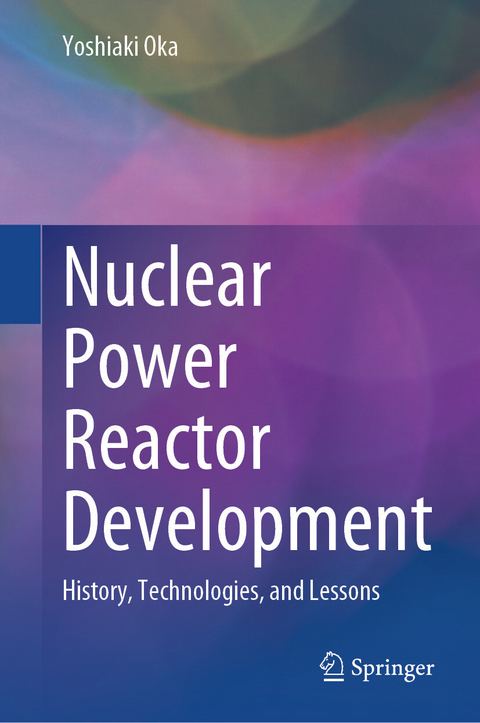
Nuclear Power Reactor Development (eBook)
209 Seiten
Springer Nature Singapore (Verlag)
978-981-96-2731-8 (ISBN)
This book offers a comprehensive exploration of the history and development of power reactors worldwide, from their inception to the present day. It provides an in-depth analysis of light water reactors and their global technology, while also delving into the evolution of gas-cooled, heavy water, liquid metal-cooled, aerospace, and nuclear fusion reactors. By examining past advancements, this book equips readers with the insights necessary to apply lessons learned to future reactor development and utilization.
Key concepts include the dominance of light water reactors in the global market, the progression of nuclear fuel cycle technologies, and the economic and political aspects of plutonium utilization. The book also addresses critical questions such as the potential depletion of uranium resources and the characteristics of Generation III and IV reactors. With contributions from government agencies and international organizations, this work is a must-read for those seeking a thorough understanding of nuclear reactor history and future challenges.
Intended for graduate students, university faculty, researchers, industry professionals, and anyone with a keen interest in nuclear power, this book serves as a vital resource for understanding the complexities of nuclear reactor development and the broader implications for society.
The translation was done with the help of artificial intelligence. A subsequent human revision was done primarily in terms of content.
This book offers a comprehensive exploration of the history and development of power reactors worldwide, from their inception to the present day. It provides an in-depth analysis of light water reactors and their global technology, while also delving into the evolution of gas-cooled, heavy water, liquid metal-cooled, aerospace, and nuclear fusion reactors. By examining past advancements, this book equips readers with the insights necessary to apply lessons learned to future reactor development and utilization.Key concepts include the dominance of light water reactors in the global market, the progression of nuclear fuel cycle technologies, and the economic and political aspects of plutonium utilization. The book also addresses critical questions such as the potential depletion of uranium resources and the characteristics of Generation III and IV reactors. With contributions from government agencies and international organizations, this work is a must-read for those seeking a thorough understanding of nuclear reactor history and future challenges.Intended for graduate students, university faculty, researchers, industry professionals, and anyone with a keen interest in nuclear power, this book serves as a vital resource for understanding the complexities of nuclear reactor development and the broader implications for society.The translation was done with the help of artificial intelligence. A subsequent human revision was done primarily in terms of content.
| Erscheint lt. Verlag | 15.4.2025 |
|---|---|
| Zusatzinfo | XXI, 209 p. 30 illus., 26 illus. in color. |
| Sprache | englisch |
| Original-Titel | Hatsudenyo Genshiro No Kaihatsu: Rekishi, Gijyutu, Kyokun |
| Themenwelt | Naturwissenschaften ► Chemie ► Physikalische Chemie |
| Naturwissenschaften ► Physik / Astronomie ► Atom- / Kern- / Molekularphysik | |
| Technik ► Elektrotechnik / Energietechnik | |
| Schlagworte | Economical and Nuclear Power • Environment and Nuclear Power • FAST REACTOR • Light Water Reactor • nuclear fuel • nuclear fusion • Nuclear Reactor Engineering • Plutonium • Policy of Using Nuclear Reactors • Research and Development • Safety of Nuclear Power Reactors • SCWR • Uranium |
| ISBN-10 | 981-96-2731-1 / 9819627311 |
| ISBN-13 | 978-981-96-2731-8 / 9789819627318 |
| Informationen gemäß Produktsicherheitsverordnung (GPSR) | |
| Haben Sie eine Frage zum Produkt? |
 PDF (Wasserzeichen)
DRM: Digitales Wasserzeichen
Dieses eBook enthält ein digitales Wasserzeichen und ist damit für Sie personalisiert. Bei einer missbräuchlichen Weitergabe des eBooks an Dritte ist eine Rückverfolgung an die Quelle möglich.
Dateiformat: PDF (Portable Document Format)
Mit einem festen Seitenlayout eignet sich die PDF besonders für Fachbücher mit Spalten, Tabellen und Abbildungen. Eine PDF kann auf fast allen Geräten angezeigt werden, ist aber für kleine Displays (Smartphone, eReader) nur eingeschränkt geeignet.
Systemvoraussetzungen:
PC/Mac: Mit einem PC oder Mac können Sie dieses eBook lesen. Sie benötigen dafür einen PDF-Viewer - z.B. den Adobe Reader oder Adobe Digital Editions.
eReader: Dieses eBook kann mit (fast) allen eBook-Readern gelesen werden. Mit dem amazon-Kindle ist es aber nicht kompatibel.
Smartphone/Tablet: Egal ob Apple oder Android, dieses eBook können Sie lesen. Sie benötigen dafür einen PDF-Viewer - z.B. die kostenlose Adobe Digital Editions-App.
Buying eBooks from abroad
For tax law reasons we can sell eBooks just within Germany and Switzerland. Regrettably we cannot fulfill eBook-orders from other countries.
aus dem Bereich