


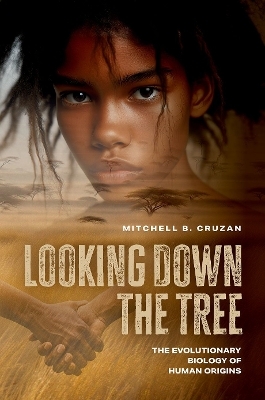
Looking Down the Tree
The Evolutionary Biology of Human Origins
Seiten
2025
Oxford University Press Inc (Verlag)
978-0-19-780515-2 (ISBN)
Oxford University Press Inc (Verlag)
978-0-19-780515-2 (ISBN)
Cruzan draws upon evidence from fossils, genomics, phylogenetics, coalescence theory, and the anatomy and physiology of human ancestors and other animals to arrive at an understanding of the origin of human appearance and behavior.
We know much about our history from bones and DNA, but these studies do not tell us about the characteristics that are not preserved in the fossil record — the fleshy parts and behaviors. Evolutionary biologists are more interested in the processes of evolution than the patterns; what caused the changes we see in the fossil record? Looking Down the Tree applies evolutionary principles to understand the history of our species and the pressures of natural selection which led to our unique appearance and behaviors.
Cruzan draws upon evidence from fossils, genomics, phylogenetics, coalescence theory, and the anatomy and physiology of our human ancestors and other animals to arrive at an understanding of the origin of human appearance and behavior. This evidence is discussed in the context of comparative biology, natural and sexual selection, evolutionary constraints, inbreeding and inclusive fitness, and genetic and cultural evolution.
The story of our past that we piece together provides a novel view of how savanna habitats favored a unique set of adaptations including bipedalism and the loss of fur in our early australopithecine ancestors. Other characteristics were outcomes of increasing brain size, which led to the birth of helpless infants that required years of childcare. Cooperation was favored through inbreeding and inclusive fitness in the clans of our ancestors as they struggled to survive through extensive periods of severe drought in eastern Africa. We end this discussion with an evaluation of the increasing importance of cultural evolution, as the transmission of skills and knowledge became ever-more important for human life. Like any other species, we discover that we are the product of the environments that our ancestors experienced.
We know much about our history from bones and DNA, but these studies do not tell us about the characteristics that are not preserved in the fossil record — the fleshy parts and behaviors. Evolutionary biologists are more interested in the processes of evolution than the patterns; what caused the changes we see in the fossil record? Looking Down the Tree applies evolutionary principles to understand the history of our species and the pressures of natural selection which led to our unique appearance and behaviors.
Cruzan draws upon evidence from fossils, genomics, phylogenetics, coalescence theory, and the anatomy and physiology of our human ancestors and other animals to arrive at an understanding of the origin of human appearance and behavior. This evidence is discussed in the context of comparative biology, natural and sexual selection, evolutionary constraints, inbreeding and inclusive fitness, and genetic and cultural evolution.
The story of our past that we piece together provides a novel view of how savanna habitats favored a unique set of adaptations including bipedalism and the loss of fur in our early australopithecine ancestors. Other characteristics were outcomes of increasing brain size, which led to the birth of helpless infants that required years of childcare. Cooperation was favored through inbreeding and inclusive fitness in the clans of our ancestors as they struggled to survive through extensive periods of severe drought in eastern Africa. We end this discussion with an evaluation of the increasing importance of cultural evolution, as the transmission of skills and knowledge became ever-more important for human life. Like any other species, we discover that we are the product of the environments that our ancestors experienced.
Mitchell B. Cruzan is Professor of Biology at Portland State University. He received his BA and MA in Biology from California State University, Fullerton, and his PhD from Stony Brook University. He is currently an associate editor for Molecular Ecology, a leading journal in the field. He has previously published an advanced textbook, Evolutionary Biology: A Plant Perspective (OUP, 2018).
1: How we do science
2: Life on the savanna
3: Walking out of the forest
4: In the heat of the day
5: A new life
6: It takes a clan
7: Among the clans
8: The good life
9: A mixing of peoples
10: The strangers
11: Settling in
| Erscheinungsdatum | 04.11.2025 |
|---|---|
| Zusatzinfo | 41 illustrations |
| Verlagsort | New York |
| Sprache | englisch |
| Maße | 156 x 13 mm |
| Gewicht | 352 g |
| Themenwelt | Naturwissenschaften ► Biologie ► Evolution |
| Naturwissenschaften ► Biologie ► Humanbiologie | |
| ISBN-10 | 0-19-780515-9 / 0197805159 |
| ISBN-13 | 978-0-19-780515-2 / 9780197805152 |
| Zustand | Neuware |
| Informationen gemäß Produktsicherheitsverordnung (GPSR) | |
| Haben Sie eine Frage zum Produkt? |
Mehr entdecken
aus dem Bereich


aus dem Bereich
die Evolution des Seins, die Menschwerdung des Menschen und die Frage …
Buch | Softcover (2025)
Büchner-Verlag
CHF 41,90


