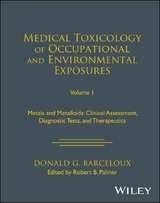
Medical Toxicology of Occupational and Environmental Exposures, Volume 1 (eBook)
Medical Toxicology of Occupational and Environmental Exposures is the only reference which comprehensively covers the clinical, analytical, and monitoring information needed by clinicians, students and investigators with interests in metals, radiation, and cancer. The information in all chapters is presented in a cogent, standardized format which greatly simplifies the use of the text as a reference. Reviewed by a distinguished panel of well-known toxicology experts, the information is critically evaluated and authoritative. The interdisciplinary, evidence-based approach is designed to reach beyond clinical settings to increase the scientific understanding of those in associated fields (analytical laboratories, universities, federal and state regulatory and environmental agencies) involved with decisions regarding metals, radiation, and chemical carcinogens. The consistent and concise style allows the reader to quickly locate the appropriate information necessary for informed decisions regarding the sources, host susceptibility, dose-response, clinical effect, health surveillance, and management of exposures to these substances. Additional information is readily available to the interested reader through the detailed bibliography at the end of each chapter.
Volume 1 'Metals and Metalloids: Clinical Assessment, Diagnostic Tests, and Therapeutics' is written to be clinically-oriented with a consistent template, allowing easier access to detailed information on specific metals.
Medical Toxicology of Occupational and Environmental Exposures is the only reference which comprehensively covers the clinical, analytical, and monitoring information needed by clinicians, students and investigators with interests in metals, radiation, and cancer. The information in all chapters is presented in a cogent, standardized format which greatly simplifies the use of the text as a reference. Reviewed by a distinguished panel of well-known toxicology experts, the information is critically evaluated and authoritative. The interdisciplinary, evidence-based approach is designed to reach beyond clinical settings to increase the scientific understanding of those in associated fields (analytical laboratories, universities, federal and state regulatory and environmental agencies) involved with decisions regarding metals, radiation, and chemical carcinogens. The consistent and concise style allows the reader to quickly locate the appropriate information necessary for informed decisions regarding the sources, host susceptibility, dose-response, clinical effect, health surveillance, and management of exposures to these substances. Additional information is readily available to the interested reader through the detailed bibliography at the end of each chapter. Volume 1 "e;Metals and Metalloids: Clinical Assessment, Diagnostic Tests, and Therapeutics"e; is written to be clinically-oriented with a consistent template, allowing easier access to detailed information on specific metals.
Chapter 1
ALUMINUM
HISTORY
Although the identification of aluminum as a metal occurred in 1827, the Romans used alum (hydrated aluminum sulfate) for the purification of water and the preparation and staining of hides.1 In Europe, the commercial production of aluminum as a metallic pigment began shortly after the development of the Hall–Heroult electrolytic process in 1886. This process became the major industrial process for smelting aluminum by dissolving aluminum oxide (alumina from bauxite ore) in molten cryolite and electrolyzing the molten salt bath.2 The first reported case associating aluminum toxicity with memory loss, ataxia, tremor, and muscle tics occurred in 1921.3 Massive exposure to finely divided pyrotechnical aluminum flake powders during World War II in Germany caused fibrotic lung disease (aluminosis); ∼20 years later, McLaughlin et al. reported the case of a ball mill operator with an occupational exposure to aluminum and aluminum oxide (Al2O3) during the production of flake powders; he presented with pulmonary fibrosis and encephalopathy (poor memory, speech disorder, myoclonic jerks, convulsion, focal weakness).4
In the middle of the 20th century (1944–1979), aluminum powder (e.g., McIntyre powder) was released in mines as a prophylactic agent to coat silica particles and prevent silicon‐induced fibrotic reactions. Mortality studies of Australian cohorts exposed to aluminum dust prophylactically did not support the effectiveness of aluminum as a protective agent for silicosis.5 This study suggested the possibility of increased risk of cardiovascular disease and Alzheimer's disease in the exposed cohort; however, the increase was small (SMR = 1.38) and not statistically significant with wide confidence intervals. An analysis of postmortem aluminum concentrations suggested pulmonary aluminum concentrations were similar in eight workers receiving McIntyre Powder and occupationally exposed workers.6 The medical use of aluminum increased significantly in the 1950s when aluminum was prescribed as a phosphate binder to patients with chronic renal failure. By 1972, Alfrey et al. recognized an encephalopathy in patients on dialysis characterized by progressive dementia, myoclonus, facial grimacing, diffuse pain, and seizures.7 This epidemic of dialysis dementia vanished when excess aluminum was eliminated from the dialysate.8 In the early 1980s, a syndrome of encephalopathy, metabolic bone disease, and microcytic anemia occurred in dialysis‐dependent children receiving aluminum‐containing antacids.9 Calcium carbonate gradually replaced aluminum‐containing antacids in patients with chronic renal failure because of the lack of toxicity and the superior binding of calcium carbonate to phosphates compared with aluminum.10 Parenteral solutions (e.g., total parenteral nutrition) were recognized as sources of aluminum loading, particularly in children; in 1990, the US FDA recommended that the aluminum concentration of these solutions not exceed 25 μg/L followed in 2004 by a daily recommended intake of 5 μg/kg.
PHYSIOCHEMICAL PROPERTIES
Aluminum is the third most abundant element in the earth's crust after oxygen and silicon, comprising about 8% of the earth's crust and belonging to Group 13 (Group IIIa) along with boron, gallium, indium, and thallium.11 Most aluminum compounds are solids with high melting points. Pure aluminum is a light, malleable, silvery‐white metal that easily conducts both heat and electricity; however, the high reactivity of aluminum limits the existence of the metallic state in the earth's crust. The only natural oxidation state of aluminum is Al3+ with an ionic radius and chemical behavior similar to Fe3+. Because aluminum has a small radius and an avid affinity for oxygen, this metal exists almost exclusively as aluminum oxides (bauxite) or aluminosilicate compounds (clays, feldspars, and micas). The resistance of aluminum to corrosion results from the rapid formation of aluminum oxide following exposure to oxygen, water, or other oxidants.
The pH determines the solubility of aluminum compounds; therefore, the physiological milieu strongly affects the affinity of Al3+ for hydroxide ions and the subsequent precipitation of the complex. Only small amounts of free aluminum exist in solutions within pH 6.5–7.4. Aluminum salts of chloride, nitrate, and sulfate are water‐soluble, whereas metallic aluminum, aluminum oxide, and other aluminum salts (hydroxide, phosphate, silicate) are very poorly water‐soluble. Aluminum hydroxides and aluminum phosphates are some of the least soluble aluminum salts, but both compounds contribute to aluminum exposure.12 Aluminum oxide nanoparticles (<100 μm) more easily diffuse across biological membranes than larger particles.13 At pH 7.0, the solubility of aluminum hydroxide and aluminum sulfate is limited (2.5 mg/L);14 however, the solubility of aluminum salts increases as the pH deviates from neutral. Aluminum hydroxide binds hydrogen ions in an acid medium, whereas aluminum hydroxide releases hydrogen ions in an alkaline medium. In acidic aqueous conditions of the stomach (i.e., pH 2), aluminum occurs primarily as a monomolecular hexahydrate, Al(H2O)6, which is the “free” form of Al3+. As pH increases to near‐neutral conditions in the intestines, the insoluble precipitate (aluminum hydroxide, Al(OH)3) forms. Table 1.1 lists the physical properties and identifying information of aluminum and common aluminum salts.
EXPOSURE
Commercial Processes
Aluminum exists naturally in bauxite, cryolite, feldspars, micas, and silicates. The major source of commercial aluminum is bauxite; this mineral contains aluminum hydroxide, silica, ferrous oxide, and smaller amounts of cryolite (Na3AlF6). The production of this metal via electrolytic reduction of the raw material involves the following: 1) the refining of bauxite (Bayer Process) under high temperature, pressure, and strong caustic solution to form alumina (aluminum oxide), 2) the electrolytic reduction of the hydrate by the Hall–Heroult process to produce aluminum in the reduction cells (pots), and 3) the casting of aluminum into ingots. During this chemical process, the aluminum leaches from the bauxite as sediment containing aluminum oxide (alumina). During the electrolysis of molten cryolite, the electrothermal process produces pure aluminum that precipitates on carbon cathodes in the furnace of a carbon‐lined steel reservoir. Typically, ∼200 pots are arranged in potlines within buildings called potrooms. Prebake technology has gradually replaced the older Søderberg pots, resulting in more efficient hooding, improved fume extraction, and reduced exposure to a variety of dust, fumes, and gases. Potential exposures to chemicals during the electrolysis of aluminum include tar oils, polyaromatic hydrocarbons (3,4‐benzo(a)pyrene),15 carbon monoxide, sulfur dioxide, and airborne fluorides (F−, HF, sodium aluminum tetrafluoride).16 In a study of 17,089 aluminum smelter workers followed from 1950–2004, the incidence of lung, bladder, and buccal cancer increased significantly (P < 0.001) with exposure to benzo(a)pyrene.17
Uses
Aluminum is an extremely versatile metal with myriad of uses as a structural material in the manufacture of food containers, insulating materials, automobile and airplane manufacturing, machinery, electrical products, and cooking utensils. Because pure aluminum lacks strength, most aluminum used in metallurgy involves the production of aluminum‐based alloy castings and wrought aluminum products. The wire form of aluminum is used in welding, whereas the powder form is a constituent of paints, pyrotechnic flakes, and solid rocket propellants. Other applications for aluminum compounds include the following: antacids (hydroxide, phosphate), deodorants (chloride hexahydrate, hydroxide, phosphate, carbonate, silicate), abrasives (trioxide), petroleum cracking (anhydrous chloride), water purification (sulfate, alums), leavening agent (acidic sodium phosphate), grain fumigant (aluminum phosphide), emulsifying agent (basic sodium phosphate), acidifying agent (sulfate), anti‐caking agent (silicate), color additives (aluminum lakes), the brewing and paper industry (bentonite, zeolite), the catalyst for the manufacture of rubber and wood preservatives (chloride), glass and ceramic production (borate), soap and paint industry, and food processing. Alum is a series of double sulfate salts of monovalent cations (i.e., principally aluminum, potassium, other aluminum sulfates) used to reduce the turbidity of drinking water. The sulfate of aluminum dissolves in water to form aluminum hydroxide, resulting in precipitation along with suspended organic matter. Aluminum chloride (AlCl3) is a skin and mucous membrane irritant used as a fine powder in the petroleum cracking and polyisoprene production industries. Military applications have the greatest potential for aluminum nanoparticles, particularly coatings, fuels, and propellants.
TABLE 1.1 Physical properties and identifying information of aluminum and aluminum salts.
| Physical Characteristic | Aluminum | Aluminum Carbonate | Aluminum Chloride | Aluminum Fluoride | Aluminum Hydroxide |
|---|
| Erscheint lt. Verlag | 4.4.2025 |
|---|---|
| Sprache | englisch |
| Themenwelt | Naturwissenschaften ► Chemie |
| Schlagworte | Environmental Health • Human Health Risk Assessment • human teratogen • lead • Mercury • Occupational hygiene • occupational physicians • rare earth metals • Toxicokinetics • Vol 1 Metals and Metalloids Arsenic |
| ISBN-13 | 9781119881285 / 9781119881285 |
| Informationen gemäß Produktsicherheitsverordnung (GPSR) | |
| Haben Sie eine Frage zum Produkt? |
 EPUB (Adobe DRM)
Kopierschutz: Adobe-DRM
Adobe-DRM ist ein Kopierschutz, der das eBook vor Mißbrauch schützen soll. Dabei wird das eBook bereits beim Download auf Ihre persönliche Adobe-ID autorisiert. Lesen können Sie das eBook dann nur auf den Geräten, welche ebenfalls auf Ihre Adobe-ID registriert sind.
Details zum Adobe-DRM
Dateiformat: EPUB (Electronic Publication)
EPUB ist ein offener Standard für eBooks und eignet sich besonders zur Darstellung von Belletristik und Sachbüchern. Der Fließtext wird dynamisch an die Display- und Schriftgröße angepasst. Auch für mobile Lesegeräte ist EPUB daher gut geeignet.
Systemvoraussetzungen:
PC/Mac: Mit einem PC oder Mac können Sie dieses eBook lesen. Sie benötigen eine
eReader: Dieses eBook kann mit (fast) allen eBook-Readern gelesen werden. Mit dem amazon-Kindle ist es aber nicht kompatibel.
Smartphone/Tablet: Egal ob Apple oder Android, dieses eBook können Sie lesen. Sie benötigen eine
Geräteliste und zusätzliche Hinweise
Buying eBooks from abroad
For tax law reasons we can sell eBooks just within Germany and Switzerland. Regrettably we cannot fulfill eBook-orders from other countries.
aus dem Bereich