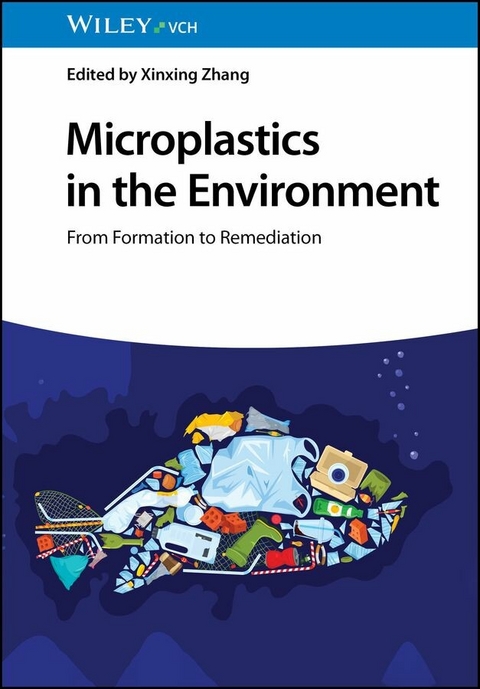
Microplastics in the Environment (eBook)
760 Seiten
Wiley-VCH (Verlag)
978-3-527-84211-7 (ISBN)
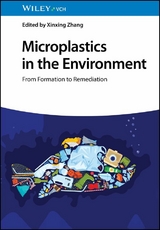
Authoritative reference addressing the characteristics, technologies, and solutions surrounding the most concerning environmental pollutant
Microplastics in the Environment delivers a systematic and in-depth overview of microplastics generation mechanisms, risk prevention, and control solutions.
Written by a highly qualified academic with significant research experience in microplastic pollution treatment, green polymer material functionalization, and recycling of solid waste, Microplastics in the Environment explores sample topics including:
- Characteristics of microplastics, such as their large specific surface area and small size, resulting in the formation of composite contamination
- New microplastics blocking approaches and technologies, and the mechanism of microplastics generation under the coupling effect of multiple environmental factors
- Transport and migration of microplastics, as well as their ecotoxicity to organisms in various environments, especially the complex estuarine environment
- The current state of plastic production, with insight on how society can find solutions to the expanding plastics industry
Microplastics in the Environment is an essential reference on the subject for polymer chemists, materials scientists, environmental chemists, plastics technologists, and ecotoxicologists, as well as all professionals in the plastics industry, especially those focused on sustainability.
Xinxing Zhang is a Doctor of Engineering, Doctoral Supervisor, and Professor at Sichuan University. He was a Chief Expert of the China National Key R&D Program during the 13th Five-year Plan and recipient of the Sichuan Science Fund for Outstanding Young Scholars. He is currently the director of the Sichuan Tire Rubber Powder Functionalization and Modification Engineering Laboratory and the guest editor of Materials and other journals.
1
Microplastics Formation
Xinxing Zhang, Qinke Cui, and Zhuo Huang
Polymer Research Institute of Sichuan University, State Key Laboratory of Polymer Materials Engineering, No. 24, South Section of 1st Ring Road, Chengdu, 610065, China
1.1 Definition of Microplastics
Over the last few decades, plastic contamination has become a major cause of concern among scientists, politicians, and the public. The world production of plastic surpassed the 320 million tons mark in 2016, most of which is intended for packaging, i.e. for immediate disposal. Consequently, these materials significantly contribute to waste generation, and it is estimated that between 5 and 13 million tons leak into the world's oceans every year [1]. When inappropriately dumped or mismanaged, plastic waste can accumulate in both terrestrial and marine environments, and once released, it may be subjected to degradation by several agents or routes, such as solar radiation, mechanical forces, and microbial action. This leads to fragmentation and breakdown of larger materials into plastic debris and eventually nanoplastics (NPs), though the latter has only been recently identified as potentially deleterious toward the environment, and research is currently underway. In addition, these particles can be intentionally produced with micro‐ and nano‐sizes and disposed of directly into the environment [2]. Microplastics (MPs) are defined as debris smaller than 5 mm. Mesoplastics are defined as plastic debris within the 5 mm−20 cm range, while MPs are defined to be less than 5 mm in size, according to the National Oceanic and Atmospheric Administration (NOAA) workshop consensus definition. However, as far as the authors are aware, the lower limit for defining MPs remained undefined for a long time. Recently, two categories have been proposed: large MPs in the 1–5 mm range and small MPs defined as micrometric particles, that is, below 1 mm [3]. These categories were confirmed by Galgani et al. [4] and suggested for adoption by the European Marine Strategy Framework Directive (MSFD) (precisely, large MPs were defined by the range 1–5 mm and small MPs by the range 20 μm–1 mm). Nanosized plastic particles are referred to as NPs (1–1000 nm size range) [5]. In 2008, Klaine et al. defined NPs as particles with at least two‐dimensional diameters between 1 and 100 nm[6]. However, some studies defined NPs as plastics with particle sizes between 1 and 1000 nm [7, 8]. Although there are some controversies about the definition of NPs, the definition of NPs with a particle size of 1–1000 nm is generally accepted by researchers. Here, MPs are defined as debris smaller than 5 mm, and our book defines NPs as plastics with particle sizes between 1 and 1000 nm.
When discussed in detail, MPs in the environment are usually categorized as primary or secondary MPs (PMPs or SMPs) depending on their source [9]. PMPs are MPs produced without aging, whose primary source is particulates specifically manufactured for commercial applications such as personal care products and cosmetics [10, 11]. In general, they include plastic pellets used as raw polymer materials, cosmetic microbeads, and sandblasted plastic microbeads [9]. SMP are smaller fragments formed from larger plastic products (e.g. fishing nets, plastic bottles, and films) that have been broken up through the effects of aging processes, biological action, and mechanical wear [12, 13]. Notably, SMPs are being generated in an increasing number of obsolete consumer products, and many studies have shown that SMPs account for the majority of MPs in the environment, including oceans, rivers, mountains, landfills, and even drinking water [14–19].
Due to the small particle size, high specific surface area, remote migration, and contaminant adsorption capacity, these particles can be ingested by several species, leading to direct physical damage and potential toxicity effects [2]. MPs may also leach plastic additives, including persistent organic pollutants (POPs) and potentially toxic elements that are adsorbed in higher concentrations than those found in the surrounding environment. These pollutants may transfer and accumulate in different tissues of organisms, possibly undergoing biomagnification along the food chain. Hence, the consumption of contaminated seafood poses a route for human exposure to MPs, POPs, and potentially toxic elements [20]. POPs, including polychlorinated biphenyls (PCBs) and polycyclic aromatic hydrocarbons (PAHs), have also been shown to accumulate on MPs, thus enhancing their potential toxic effect in the environment [21–23]. Recently, Jovanović reported potential negative effects of the ingestion of MPs and NPs by fish, including possible translocation of MPs to the liver and intestinal blockage, yielding not only physical damage but also histopathological alterations in the intestines and modification in lipid metabolism [24]. Hence, it is of urgent and significant importance to clarify formation mechanisms, transport processes, toxicity of composite pollutants, and control technologies, which can provide meaningful guidance for production and use of plastics and thus prevent MP pollution.
1.2 Types of Microplastics
Many studies have given information about the most widespread species of MPs in terms of the distribution of plastic debris in systems such as soil, freshwater, and oceans. It reveals that polyethylene (PE), polypropylene (PP), polystyrene (PS), polyvinyl chloride (PVC), polyester, polyamide (PA), and polylactic acid (PLA) are found in a variety of locations, and the majority of environmental MPs are concentrated in the top five, which are also the most common types of plastic products [25–29]. Plastics with simple composition are basically composed of polymers without any additives. Some types require only small amounts of additives, such as PE and PP. However, most plastics are multicomponent systems that contain a wide range of additives, in addition to the basic polymer component (generally 40–100% polymer). The most important additives can be divided into four types: lubricants to help with processing; fillers, enhancers, impact modifiers, plasticizers, etc., to improve the mechanical properties of the material; flame retardants to provide the flame resistance; and various stabilizers to improve the aging resistance during use. Understanding the composition of plastics is essential for the study of MP formation mechanisms, generation behavior, and even toxicological effects.
1.2.1 Polyethylene
PE has sufficient sources of raw materials and has excellent chemical corrosion resistance, low‐temperature resistance, and good processing fluidity. Therefore, the production of PE and its products has developed very rapidly. Since 1966, the production of PE has been the first in the world in terms of plastic production. Due to the simple molecular structure of PE and its good flowability at high temperatures, only small amounts of plasticizers need to be added during the molding process. Excellent processing properties and low cost are the advantages of PE being used in a wide range of film products.
1.2.2 Polypropylene
PP and PE are both polyolefins with similar properties and use. Compared to PE, the molecular chain of PP is less flexible and more rigid, so PP is stronger and harder than PE, presenting a more rigid performance. Another characteristic of PP plastic in performance is its low density, which is the lightest of the commonly used plastics and can float on water. The heat resistance of PP is also better, with a long‐term use temperature of 100–110 °C. Even PP does not deform when heated to 150 °C without external forces.
The biggest disadvantage of PP films is the poor aging resistance than PE, mainly owing to the fact that PP has many methyl groups on its main chain, and the hydrogen on the tertiary carbon atoms connected to the methyl groups is easily attacked by oxygen [30]. Therefore, PP plastics are usually subject to the addition of antioxidants and UV absorbers, which greatly affect the generation behavior of PP MPs. For example, variable‐valent metal ions such as copper and manganese ions accelerate the oxidative aging process of PP. Metal ion inhibitors are a class of additives that can complex with the variable‐valent metal ions to reduce the catalytic oxidative activity of these metal ions. Some of the commonly used ion inhibitors are aldehydes and diamine condensates, oxamide compounds, hydrazide compounds, and so on. Light shielding agents, such as titanium dioxide, are also frequently added to PP to protect the polymer, which will directly reflect light or absorb specific light waves and then convert light energy into heat to scatter. The introduction of metal ion inhibitors and titanium dioxide will greatly slow down the photo‐aging process of PP plastic products in nature and reduce the generation of PPMPs.
1.2.3...
| Erscheint lt. Verlag | 13.2.2025 |
|---|---|
| Sprache | englisch |
| Themenwelt | Naturwissenschaften ► Chemie ► Organische Chemie |
| Schlagworte | microplastics control solutions • microplastics environment • microplastics generation mechanisms • microplastics prevention • microplastics risk • microplastics sustainability • microplastics transportation • Microplastic transport • Plastic |
| ISBN-10 | 3-527-84211-X / 352784211X |
| ISBN-13 | 978-3-527-84211-7 / 9783527842117 |
| Informationen gemäß Produktsicherheitsverordnung (GPSR) | |
| Haben Sie eine Frage zum Produkt? |
 EPUB (Adobe DRM)
Kopierschutz: Adobe-DRM
Adobe-DRM ist ein Kopierschutz, der das eBook vor Mißbrauch schützen soll. Dabei wird das eBook bereits beim Download auf Ihre persönliche Adobe-ID autorisiert. Lesen können Sie das eBook dann nur auf den Geräten, welche ebenfalls auf Ihre Adobe-ID registriert sind.
Details zum Adobe-DRM
Dateiformat: EPUB (Electronic Publication)
EPUB ist ein offener Standard für eBooks und eignet sich besonders zur Darstellung von Belletristik und Sachbüchern. Der Fließtext wird dynamisch an die Display- und Schriftgröße angepasst. Auch für mobile Lesegeräte ist EPUB daher gut geeignet.
Systemvoraussetzungen:
PC/Mac: Mit einem PC oder Mac können Sie dieses eBook lesen. Sie benötigen eine
eReader: Dieses eBook kann mit (fast) allen eBook-Readern gelesen werden. Mit dem amazon-Kindle ist es aber nicht kompatibel.
Smartphone/Tablet: Egal ob Apple oder Android, dieses eBook können Sie lesen. Sie benötigen eine
Geräteliste und zusätzliche Hinweise
Buying eBooks from abroad
For tax law reasons we can sell eBooks just within Germany and Switzerland. Regrettably we cannot fulfill eBook-orders from other countries.
aus dem Bereich