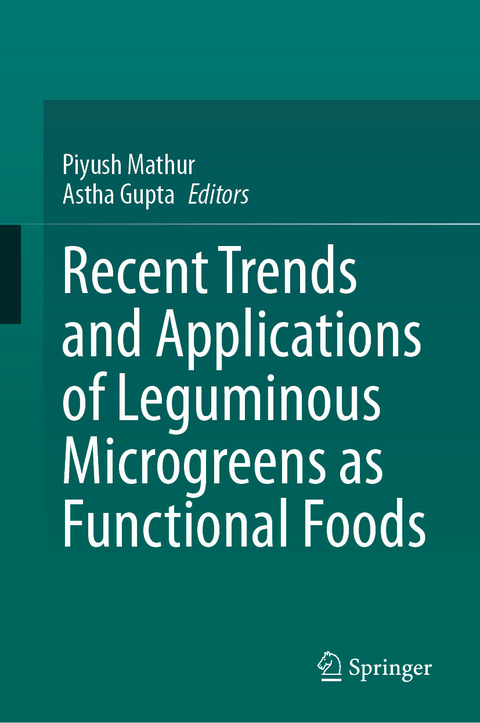
Recent Trends and Applications of Leguminous Microgreens as Functional Foods (eBook)
XXXII, 624 Seiten
Springer-Verlag
978-3-031-75678-8 (ISBN)
Microgreens are the name given to the small, soft, green parts of plants that develop from seedlings and do not bear any real leaves. These microgreens are known to have high nutritional content and are composed of phytoconstituents such as carotenes, phenolics and polysterols which allow for their usage in dietary programs. Legumes provide high nutritional value by enhancing dietary fibre, vitamins and minerals, and are one of the most important sources of plant protein in the human diet. Leguminous microgreens can play a significant role in fulfilling the nutritional requirement of world's population and will assist in completing the United Nations' global goal of 'zero hunger' (Sustainable Development Goal 2).
Recent Trends and Applications of Leguminous Microgreens as Functional Foods provides an in-depth look at the development of leguminous microgreens, such as chickpea, lentils, beans and peas. It covers potential germplasm containing high iron and zinc levels; biomass and nutritive traits that can be used to produce a bio-fortified functional food with appropriate proportions of nutritive components. The book also discusses the increasing interest in production and consumption of microgreens due to their nutritional content, yield rate, rapid production time frame and aroma qualities among other factors. The book also covers management methods for production of biofortified food through conventional, molecular and biotechnological approaches such as hydroponics and aquaponics systems. Additionally, it contains assessments on safety during storage as well information on how to develop value-added products that can supplement food needs/requirements. This book is a valuable tool for anyone looking to gain a comprehensive understanding of this growing sector within agriculture and will provide readers with all they need to know about developing leguminous microgreens for enriched functional foods.
| Erscheint lt. Verlag | 17.1.2025 |
|---|---|
| Zusatzinfo | XXXII, 624 p. 61 illus., 60 illus. in color. |
| Sprache | englisch |
| Themenwelt | Naturwissenschaften ► Biologie |
| Naturwissenschaften ► Chemie | |
| Technik | |
| Schlagworte | Biofortified foods • food security • Functional Foods • Legumes • Microgreens • Zero hunger |
| ISBN-10 | 3-031-75678-9 / 3031756789 |
| ISBN-13 | 978-3-031-75678-8 / 9783031756788 |
| Informationen gemäß Produktsicherheitsverordnung (GPSR) | |
| Haben Sie eine Frage zum Produkt? |
 PDF (Wasserzeichen)
DRM: Digitales Wasserzeichen
Dieses eBook enthält ein digitales Wasserzeichen und ist damit für Sie personalisiert. Bei einer missbräuchlichen Weitergabe des eBooks an Dritte ist eine Rückverfolgung an die Quelle möglich.
Dateiformat: PDF (Portable Document Format)
Mit einem festen Seitenlayout eignet sich die PDF besonders für Fachbücher mit Spalten, Tabellen und Abbildungen. Eine PDF kann auf fast allen Geräten angezeigt werden, ist aber für kleine Displays (Smartphone, eReader) nur eingeschränkt geeignet.
Systemvoraussetzungen:
PC/Mac: Mit einem PC oder Mac können Sie dieses eBook lesen. Sie benötigen dafür einen PDF-Viewer - z.B. den Adobe Reader oder Adobe Digital Editions.
eReader: Dieses eBook kann mit (fast) allen eBook-Readern gelesen werden. Mit dem amazon-Kindle ist es aber nicht kompatibel.
Smartphone/Tablet: Egal ob Apple oder Android, dieses eBook können Sie lesen. Sie benötigen dafür einen PDF-Viewer - z.B. die kostenlose Adobe Digital Editions-App.
Buying eBooks from abroad
For tax law reasons we can sell eBooks just within Germany and Switzerland. Regrettably we cannot fulfill eBook-orders from other countries.
aus dem Bereich