


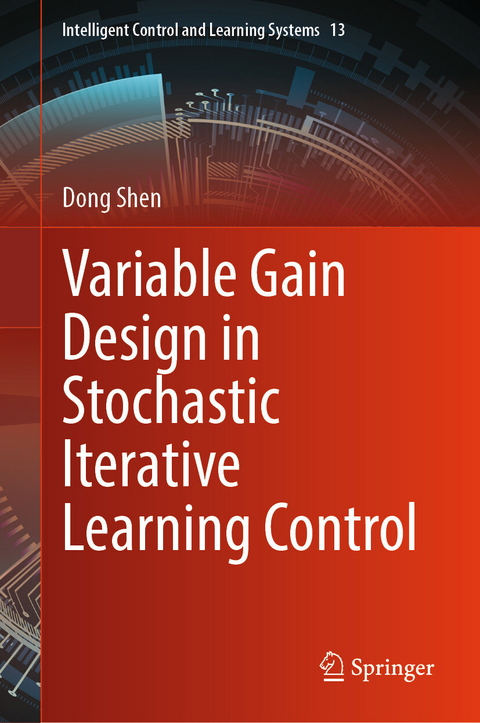
Variable Gain Design in Stochastic Iterative Learning Control (eBook)
350 Seiten
Springer Nature Singapore (Verlag)
978-981-97-8281-9 (ISBN)
This book investigates the critical gain design in stochastic iterative learning control (SILC), including four specific gain design strategies: decreasing gain design, adaptive gain design, event-triggering gain design, and optimal gain design. The key concept for the gain design is to balance multiple performance indices such as high tracking precision, effective noise reduction, and fast convergence speed. These gain design techniques can be applied to various control algorithms for stochastic systems to realize a high tracking performance. This book provides a series of design and analysis techniques for the establishment of a systematic framework of gain design in SILC. The book is intended for scholars and graduate students who are interested in stochastic control, recursive algorithms design, and iterative learning control.
This book investigates the critical gain design in stochastic iterative learning control (SILC), including four specific gain design strategies: decreasing gain design, adaptive gain design, event-triggering gain design, and optimal gain design. The key concept for the gain design is to balance multiple performance indices such as high tracking precision, effective noise reduction, and fast convergence speed. These gain design techniques can be applied to various control algorithms for stochastic systems to realize a high tracking performance. This book provides a series of design and analysis techniques for the establishment of a systematic framework of gain design in SILC. The book is intended for scholars and graduate students who are interested in stochastic control, recursive algorithms design, and iterative learning control.
| Erscheint lt. Verlag | 2.1.2025 |
|---|---|
| Reihe/Serie | Intelligent Control and Learning Systems |
| Zusatzinfo | XI, 350 p. 101 illus., 100 illus. in color. |
| Sprache | englisch |
| Themenwelt | Mathematik / Informatik ► Informatik ► Theorie / Studium |
| Mathematik / Informatik ► Mathematik ► Statistik | |
| Mathematik / Informatik ► Mathematik ► Wahrscheinlichkeit / Kombinatorik | |
| Naturwissenschaften | |
| Technik ► Elektrotechnik / Energietechnik | |
| Technik ► Maschinenbau | |
| Schlagworte | Adaptive gain design • Decreasing gain design • Event-triggering gain design • Fading communication • Iterative Learning Control • large-scale systems • Multi-agent Systems • multi-sensor systems • Networked control structure • Optimal gain design • Point-to-point tracking systems • Variable gain • Varying trial lengths |
| ISBN-10 | 981-97-8281-3 / 9819782813 |
| ISBN-13 | 978-981-97-8281-9 / 9789819782819 |
| Informationen gemäß Produktsicherheitsverordnung (GPSR) | |
| Haben Sie eine Frage zum Produkt? |
 PDF (Wasserzeichen)
DRM: Digitales Wasserzeichen
Dieses eBook enthält ein digitales Wasserzeichen und ist damit für Sie personalisiert. Bei einer missbräuchlichen Weitergabe des eBooks an Dritte ist eine Rückverfolgung an die Quelle möglich.
Dateiformat: PDF (Portable Document Format)
Mit einem festen Seitenlayout eignet sich die PDF besonders für Fachbücher mit Spalten, Tabellen und Abbildungen. Eine PDF kann auf fast allen Geräten angezeigt werden, ist aber für kleine Displays (Smartphone, eReader) nur eingeschränkt geeignet.
Systemvoraussetzungen:
PC/Mac: Mit einem PC oder Mac können Sie dieses eBook lesen. Sie benötigen dafür einen PDF-Viewer - z.B. den Adobe Reader oder Adobe Digital Editions.
eReader: Dieses eBook kann mit (fast) allen eBook-Readern gelesen werden. Mit dem amazon-Kindle ist es aber nicht kompatibel.
Smartphone/Tablet: Egal ob Apple oder Android, dieses eBook können Sie lesen. Sie benötigen dafür einen PDF-Viewer - z.B. die kostenlose Adobe Digital Editions-App.
Buying eBooks from abroad
For tax law reasons we can sell eBooks just within Germany and Switzerland. Regrettably we cannot fulfill eBook-orders from other countries.
aus dem Bereich


