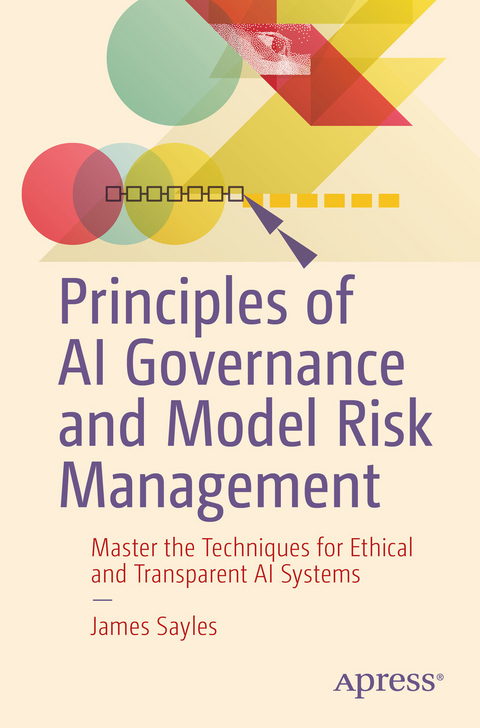
Principles of AI Governance and Model Risk Management (eBook)
XXXI, 472 Seiten
Apress (Verlag)
979-8-8688-0983-5 (ISBN)
Navigate the complex landscape of Artificial Intelligence (AI) governance and model risk management using a holistic approach encompassing people, processes, and technology. This book provides practical guidance, oversight structure and centers of excellence, and actionable insights for organizations seeking to harness the power of AI responsibly, ethically, and transparently. By addressing the technical, ethical, and societal dimensions of AI governance, organizations will be empowered to build trustworthy AI systems that benefit both their bottom line and the broader community.
Featuring successful mitigating controls based on proven use cases, the book underscores the importance of aligning AI strategy with AI governance, striking a balance between AI innovation, risk mitigation as well as broader business goals. You'll receive pointers for designing a well-governed AI development lifecycle, emphasizing transparency, accountability, and continuous monitoring throughout the AI development lifecycle. This book highlights the importance of collaboration between stakeholders, i.e., boards of directors, CxOs, corporate counsel, compliance officers, audit executives, data scientists, developers, validators, etc.
You'll gain practical advice on addressing the challenges related to the ownership of AI-generated content and models, stressing the need for legal frameworks and international collaboration. You'll also learn the importance of auditing AI systems, developing protocols for rapid response in case of AI-related crises, and building capacity for AI actors through education. Principles of AI Governance and Model Risk Management demonstrates its value-added uniqueness by detailing a strategy to ensure a cohesive approach to managing AI-related risks, global compliance, policy, privacy, and AI-human collaboration and oversight.
What You Will Learn
- Different approaches to AI adoption, from building in-house AI capabilities to partnering with external providers
- Key factors to consider when choosing an AI solution and how to ensure its successful integration into existing workflows
- AI technologies, their business impact, and ethical considerations to make informed decisions and foster responsible AI
- The environmental impacts of AI systems and the need for sustainable practices in AI development and deployment.
Who This Book is For
Business executives and process owners/representatives, risk officers, cybersecurity professionals, legal counsel and ethics officers, human resource professionals, data scientists, AI developers, and CTOs.
Navigate the complex landscape of Artificial Intelligence (AI) governance and model risk management using a holistic approach encompassing people, processes, and technology. This book provides practical guidance, oversight structure and centers of excellence, and actionable insights for organizations seeking to harness the power of AI responsibly, ethically, and transparently. By addressing the technical, ethical, and societal dimensions of AI governance, organizations will be empowered to build trustworthy AI systems that benefit both their bottom line and the broader community.Featuring successful mitigating controls based on proven use cases, the book underscores the importance of aligning AI strategy with AI governance, striking a balance between AI innovation, risk mitigation as well as broader business goals. You ll receive pointers for designing a well-governed AI development lifecycle, emphasizing transparency, accountability, and continuous monitoring throughout the AI development lifecycle. This book highlights the importance of collaboration between stakeholders, i.e., boards of directors, CxOs, corporate counsel, compliance officers, audit executives, data scientists, developers, validators, etc.You ll gain practical advice on addressing the challenges related to the ownership of AI-generated content and models, stressing the need for legal frameworks and international collaboration. You ll also learn the importance of auditing AI systems, developing protocols for rapid response in case of AI-related crises, and building capacity for AI actors through education. Principles of AI Governance and Model Risk Management demonstrates its value-added uniqueness by detailing a strategy to ensure a cohesive approach to managing AI-related risks, global compliance, policy, privacy, and AI-human collaboration and oversight. What You Will Learn Different approaches to AI adoption, from building in-house AI capabilities to partnering with external providers Key factors to consider when choosing an AI solution and how to ensure its successful integration into existing workflows AI technologies, their business impact, and ethical considerations to make informed decisions and foster responsible AI The environmental impacts of AI systems and the need for sustainable practices in AI development and deployment.Who This Book is ForBusiness executives and process owners/representatives, risk officers, cybersecurity professionals, legal counsel and ethics officers, human resource professionals, data scientists, AI developers, and CTOs.
| Erscheint lt. Verlag | 27.12.2024 |
|---|---|
| Zusatzinfo | XXXI, 472 p. 16 illus. |
| Sprache | englisch |
| Themenwelt | Informatik ► Netzwerke ► Sicherheit / Firewall |
| Informatik ► Theorie / Studium ► Künstliche Intelligenz / Robotik | |
| Mathematik / Informatik ► Mathematik ► Statistik | |
| Naturwissenschaften | |
| Wirtschaft ► Betriebswirtschaft / Management ► Allgemeines / Lexika | |
| Wirtschaft ► Betriebswirtschaft / Management ► Unternehmensführung / Management | |
| Schlagworte | AI Development • AI Ethics and Transparency • AI governance • AI Governance and Model Risk Management • AI incident report • ai strategy • data governance • Key Performance Indicators and Metrics • model versioning |
| ISBN-13 | 979-8-8688-0983-5 / 9798868809835 |
| Informationen gemäß Produktsicherheitsverordnung (GPSR) | |
| Haben Sie eine Frage zum Produkt? |
 PDF (Wasserzeichen)
DRM: Digitales Wasserzeichen
Dieses eBook enthält ein digitales Wasserzeichen und ist damit für Sie personalisiert. Bei einer missbräuchlichen Weitergabe des eBooks an Dritte ist eine Rückverfolgung an die Quelle möglich.
Dateiformat: PDF (Portable Document Format)
Mit einem festen Seitenlayout eignet sich die PDF besonders für Fachbücher mit Spalten, Tabellen und Abbildungen. Eine PDF kann auf fast allen Geräten angezeigt werden, ist aber für kleine Displays (Smartphone, eReader) nur eingeschränkt geeignet.
Systemvoraussetzungen:
PC/Mac: Mit einem PC oder Mac können Sie dieses eBook lesen. Sie benötigen dafür einen PDF-Viewer - z.B. den Adobe Reader oder Adobe Digital Editions.
eReader: Dieses eBook kann mit (fast) allen eBook-Readern gelesen werden. Mit dem amazon-Kindle ist es aber nicht kompatibel.
Smartphone/Tablet: Egal ob Apple oder Android, dieses eBook können Sie lesen. Sie benötigen dafür einen PDF-Viewer - z.B. die kostenlose Adobe Digital Editions-App.
Buying eBooks from abroad
For tax law reasons we can sell eBooks just within Germany and Switzerland. Regrettably we cannot fulfill eBook-orders from other countries.
aus dem Bereich