


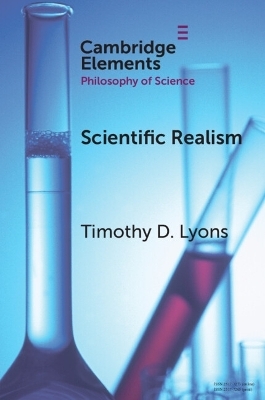
Scientific Realism
Seiten
2025
Cambridge University Press (Verlag)
978-1-108-70665-0 (ISBN)
Cambridge University Press (Verlag)
978-1-108-70665-0 (ISBN)
This Element begins at the most foundational level of scientific realism, the endeavor to justify belief in the existence of unobservables by way of abduction. Because it takes scientific realism to be the default position of many-scientific realists themselves often assuming it is the default position of scientists-the challenges are emphasis.
The scientific realism debate directly addresses the relation between human thought and the reality in which it finds itself. A core question: Can we justifiably believe that science accurately describes the reality that lies beneath the limits of human experience? Exploring this question, this Element begins at the most foundational level of scientific realism, the endeavor to justify belief in the existence of unobservables by way of abduction. Raising anti-realist challenges, some much discussed in the literature but also some generally overlooked, it works its way toward more refined variants of scientific realism. Because scientific realism is the default position of many scientific realists themselves often assuming it is the default position of scientists– the emphasis will be on the challenges. Those challenges will also motivate the variants of scientific realism traced. The Element concludes with a brief articulation of the author's own position, Socratic scientific realism.
The scientific realism debate directly addresses the relation between human thought and the reality in which it finds itself. A core question: Can we justifiably believe that science accurately describes the reality that lies beneath the limits of human experience? Exploring this question, this Element begins at the most foundational level of scientific realism, the endeavor to justify belief in the existence of unobservables by way of abduction. Raising anti-realist challenges, some much discussed in the literature but also some generally overlooked, it works its way toward more refined variants of scientific realism. Because scientific realism is the default position of many scientific realists themselves often assuming it is the default position of scientists– the emphasis will be on the challenges. Those challenges will also motivate the variants of scientific realism traced. The Element concludes with a brief articulation of the author's own position, Socratic scientific realism.
1. Believing existence abductions; 2. Believing the best explanation: the realist's move to comparative inference; 3. Supraempirical virtues and their prospects for justifiably excluding competitors; 4. Truth and the argument from the bad lot; 5. The realist justification for epistemic privilege: the No-Miracles argument; 6. Conclusion and epilogue: Socratic scientific realism; References.
| Erscheinungsdatum | 11.02.2025 |
|---|---|
| Reihe/Serie | Elements in the Philosophy of Science |
| Zusatzinfo | Worked examples or Exercises |
| Verlagsort | Cambridge |
| Sprache | englisch |
| Maße | 150 x 228 mm |
| Gewicht | 130 g |
| Themenwelt | Naturwissenschaften |
| ISBN-10 | 1-108-70665-7 / 1108706657 |
| ISBN-13 | 978-1-108-70665-0 / 9781108706650 |
| Zustand | Neuware |
| Informationen gemäß Produktsicherheitsverordnung (GPSR) | |
| Haben Sie eine Frage zum Produkt? |
Mehr entdecken
aus dem Bereich

aus dem Bereich
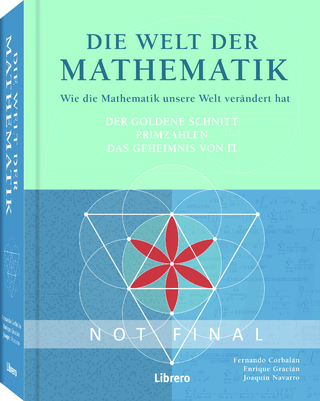
Wie die Mathematik unsere Welt verändert hat
Buch | Hardcover (2024)
Librero b.v. (Verlag)
CHF 27,90


